
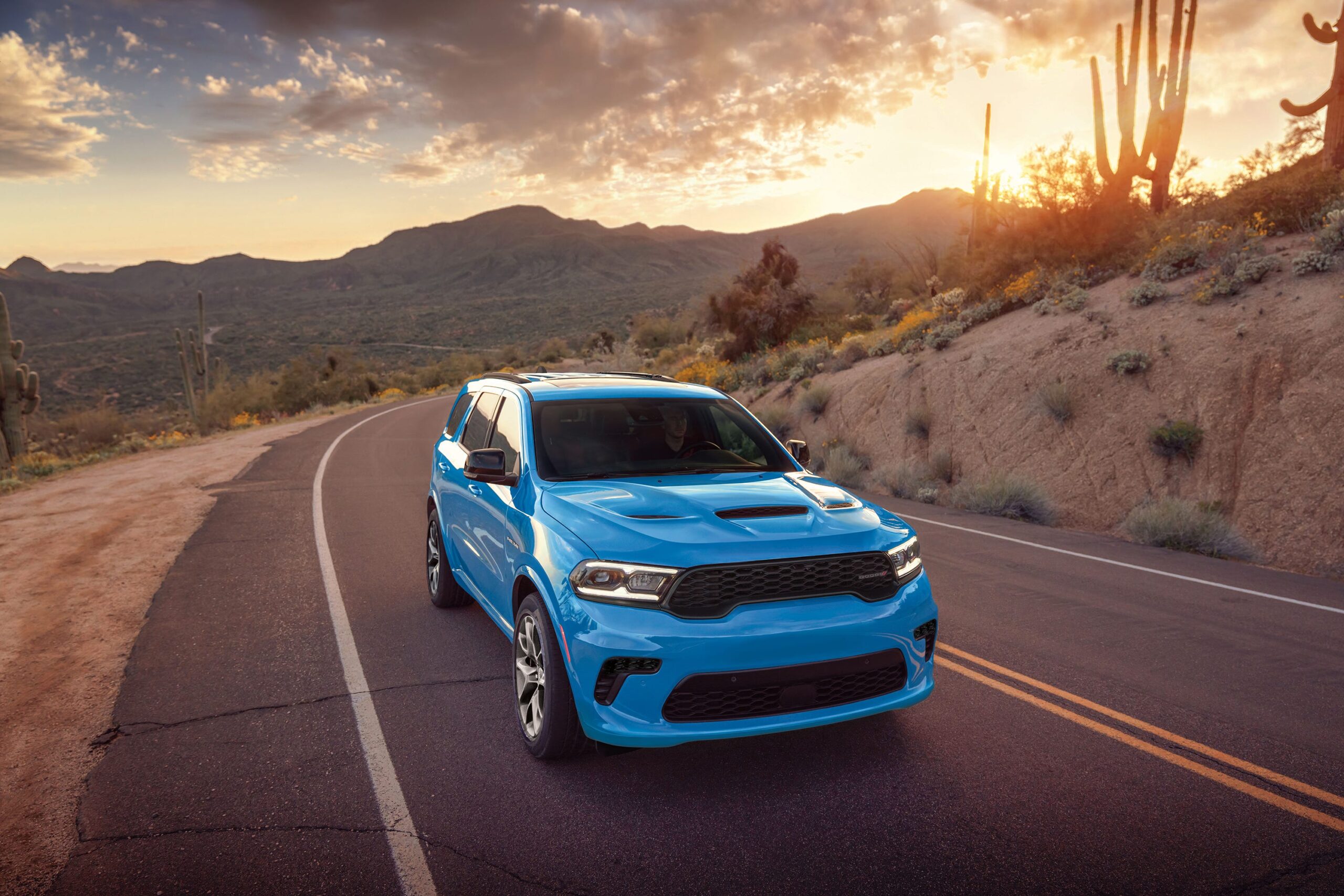


Dodge just made a bet that flies in the face of every fuel-economy trend in the industry. The 2027 Durango drops its base V-6 entirely, making a 360-horsepower 5.7-liter V-8 the minimum ante for entry into this three-row SUV. Pricing starts at $45,670, and the lineup stretches all the way to an $82,490 supercharged Hellcat that makes 710 horsepower and hits 60 mph in 3.6 seconds.
This is happening while gas prices are at their highest point in four years.
The timing is almost confrontational. Every other automaker in the three-row segment is chasing electrification, hybridization, or at least turbocharged four-cylinders to meet tightening emissions standards and consumer anxiety at the pump. Dodge’s answer is to kill its cheapest engine and give everyone a Hemi.
The base GT Hemi pairs its 360 horses with an eight-speed automatic and standard all-wheel drive. That $45,670 price tag is roughly $3,000 more than the outgoing V-6 model, but you’re also getting 65 more horsepower and the kind of exhaust note that no turbocharged crossover can fake. Higher GT trims layer on comfort features, while a new Brass Monkey package adds distinct fender badges and 20-inch wheels for those who want their family hauler to look a little meaner in the school pickup line.
The middle child is the R/T 392, powered by a 6.4-liter V-8 making 475 horsepower and 470 pound-feet of torque. It starts at $52,990 and climbs to $59,590 in Premium trim. Dodge added a new Plus version for 2027 with nappa leather, heated and ventilated seats, and a Blacktop Redline package with forged 20-inch wheels, racing stripes, and suede interior bits.
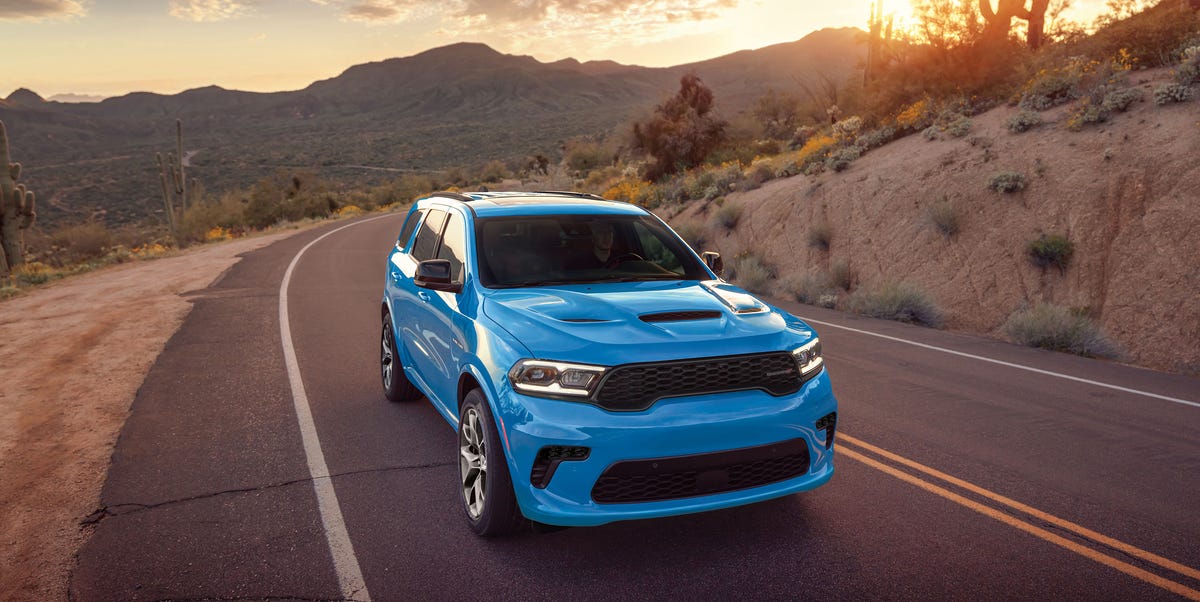
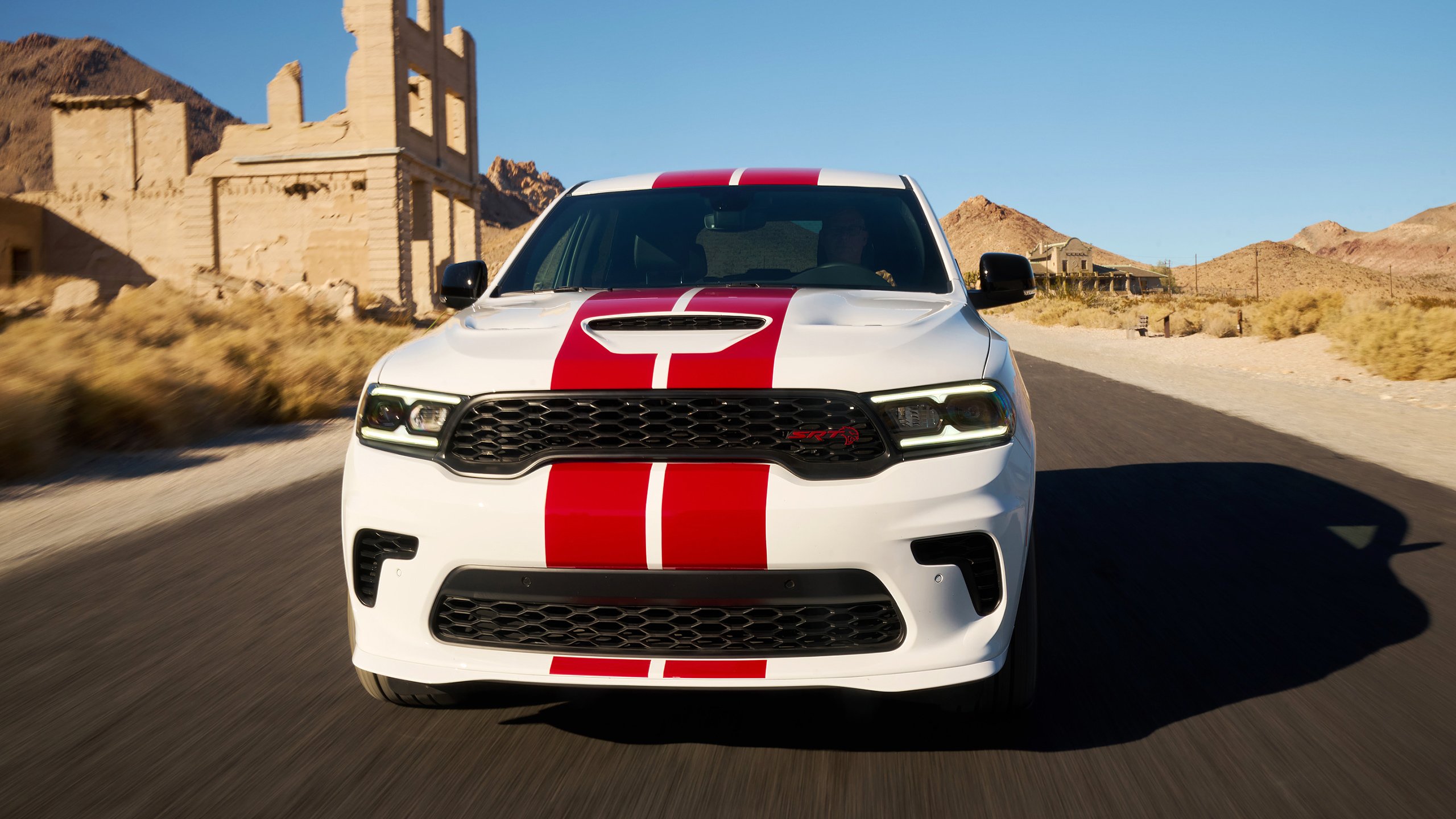
Then there’s the Hellcat, the one that exists purely to answer the question nobody in a boardroom would dare ask: What if a seven-passenger SUV had 710 horsepower? The supercharged 6.2-liter V-8 produces 645 pound-feet of torque and propels this full-size family bus through the quarter-mile in 12.0 seconds flat at 115 mph. An additional $995 unlocks the Jailbreak package, which opens the floodgates on customization — paint, wheels, interior colors, even seating configurations.
The Durango itself is not a new vehicle. It rides on a platform that dates back over a decade, and its age shows in ways that spec sheets can’t hide. But Dodge isn’t pretending it’s something it’s not. There’s no half-hearted mild-hybrid system bolted on, no apologetic press release about sustainability targets.
Whether this is brilliant contrarianism or a last gasp depends entirely on your perspective. The market for naturally aspirated V-8s is shrinking by the model year. The Stellantis portfolio itself is lurching toward electrification with the Charger Daytona EV, which just received a significant price hike for 2027 — a move that doesn’t exactly scream confident demand.
But the Durango occupies a space no competitor even attempts to fill. Nobody else sells a seven-seat SUV with a V-8 under $46,000. Nobody else offers a 710-hp three-row for any price. Dodge found a niche by refusing to evolve, and for now, it has the segment entirely to itself.
The 2027 Durango goes on sale this fall. Bring your gas card.


Share this Story