
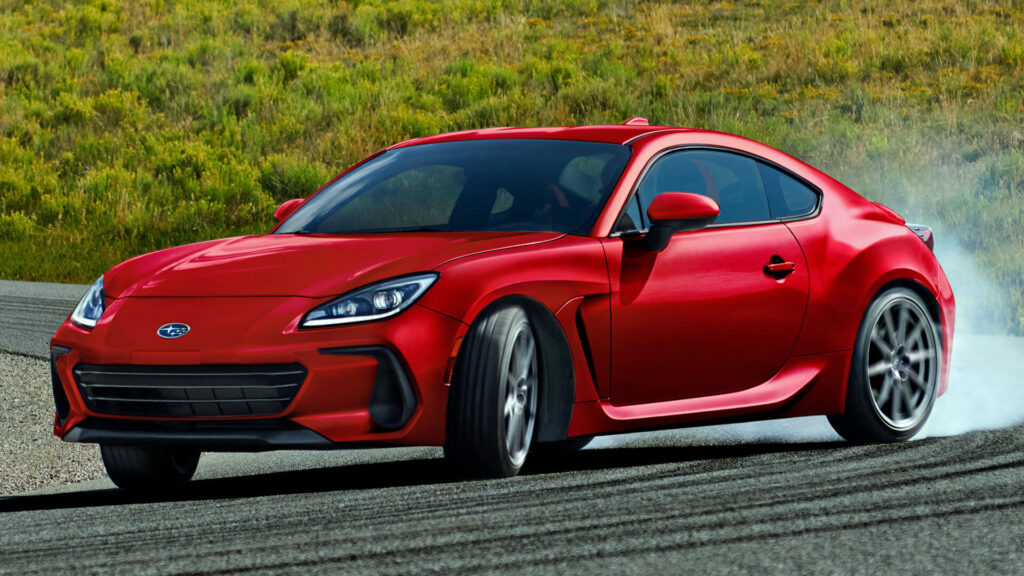


Subaru just priced the 2027 BRZ at $36,140 to start, a $330 bump over last year, and the list of changes fits on a Post-it note. A new wide-angle mono camera for the EyeSight system. Rear parking sensors on the tS. Done.
That would be unremarkable corporate housekeeping in any other segment. But the BRZ isn’t any other car. It’s a slow-selling, rear-drive, naturally aspirated sports coupe clinging to existence in a market that increasingly doesn’t want it. Every model year without meaningful improvement feels like borrowed time.
The timing makes it worse. Toyota rolled out the 2027 GR86 just days earlier, and the two cars share a platform, a factory, and a 2.4-liter boxer four making 228 horsepower. They are, beneath the skin, the same machine. Yet Toyota found reasons to touch the throttle calibration for smoother response, shave 0.02 inches off the shifter interlock between fourth and fifth for a cleaner throw, add a new paint color, and refresh the interior trim.
Subaru matched Toyota on the camera. That’s where the parallels end.
No throttle recalibration. No shifter refinement. No new color, no interior refresh. Subaru didn’t even mention the powertrain. The BRZ tS, the supposed halo variant at $38,770 before destination, gets parking sensors and nothing else for its $460 price increase.
The six-speed manual remains standard. A six-speed automatic is available on the Limited for $850. The engine is unchanged, the chassis is unchanged, and the exterior is unchanged. Subaru’s press materials were so thin you could read them in the time it takes to downshift from third to second.
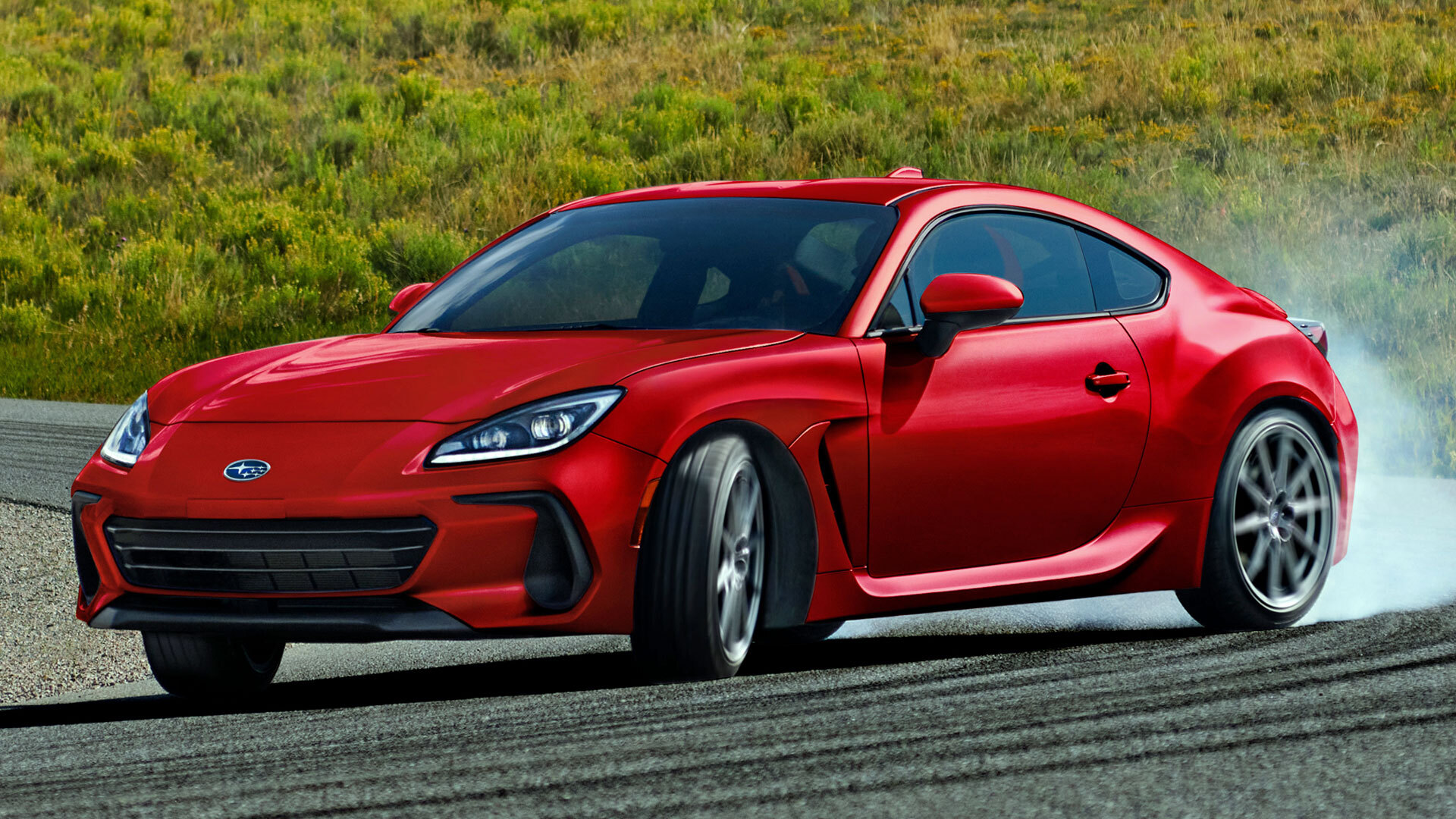
This is the quiet neglect that precedes a model’s death. The BRZ has never been a volume play — Subaru sold just over 4,000 of them last year in the U.S. — and the business case for real investment gets thinner with every quarterly sales report. But a sports car lives or dies on enthusiasm, and enthusiasm requires feeding.
Toyota understands this. The GR86 gets incremental but deliberate attention each cycle, the kind of tweaks that signal engineers still care about the driving experience. A couple thousandths of an inch on a shift gate sounds trivial until you’re banging through gears on a canyon road and everything clicks.
Subaru, meanwhile, seems content to let the BRZ coast on its existing merits. And those merits are real — the boxer four sits low, the chassis balance is genuinely excellent, and the manual gearbox is one of the best in the business at any price. But coasting isn’t a strategy. It’s a countdown.
The broader question hangs over both cars. Rumors of a turbocharged next generation have circulated for years. Neither company has confirmed anything. What we know is that right now, in this model year, Toyota is polishing while Subaru is standing still.
For $36,140, the BRZ remains one of the most affordable rear-drive sports cars you can buy with a proper manual transmission. That alone keeps it relevant. But relevance and momentum are different things, and Subaru just showed up to the 2027 model year with a camera and a price increase, hoping nobody notices the gap between its car and its twin is growing wider than a couple of parking sensors can cover.
Share this Story