
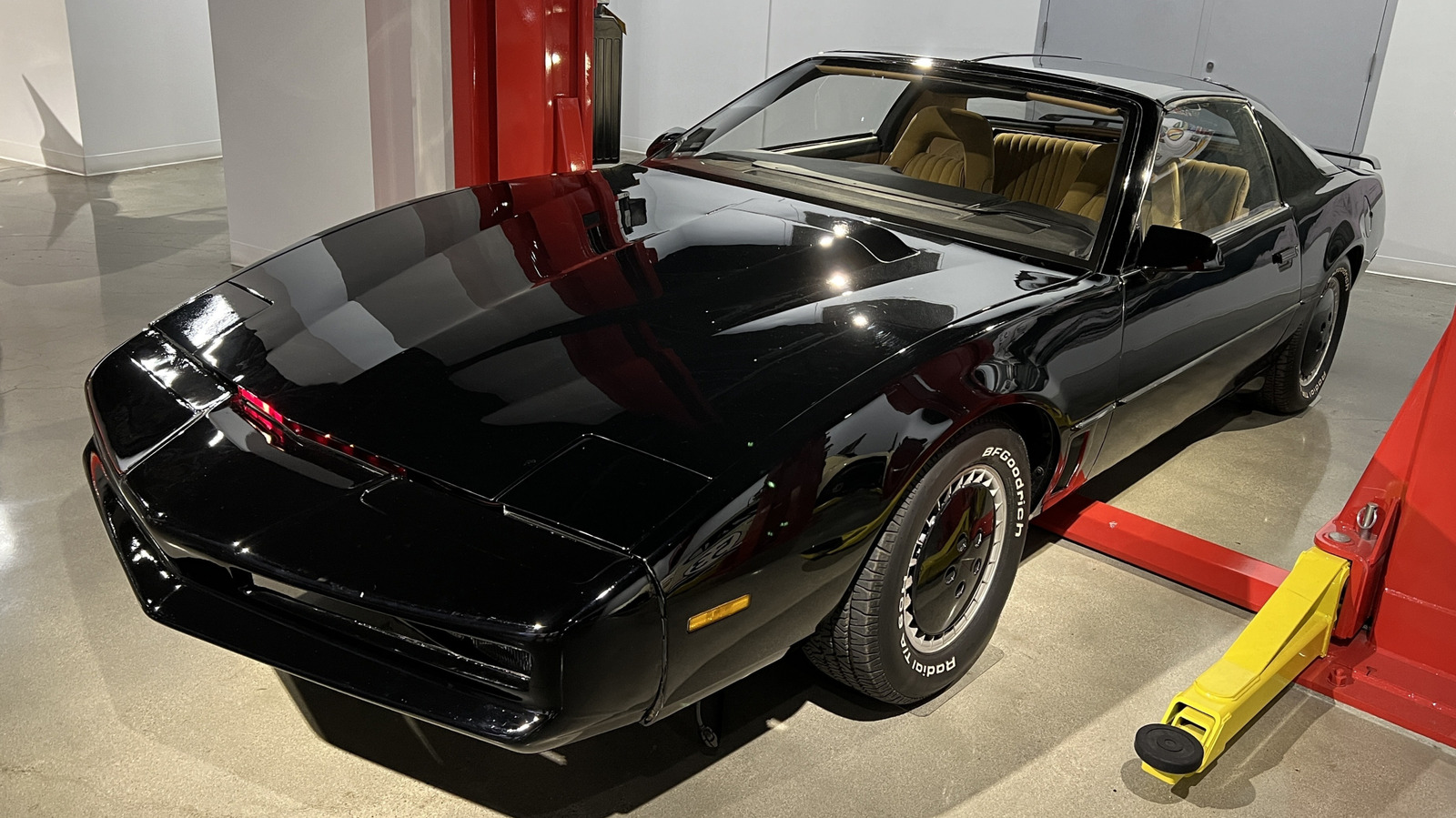


A black Pontiac Trans Am bearing the California vanity plate “KNIGHT” was clocked doing 36 in a 25 mph school zone on Ocean Parkway in New York City. The city’s automated speed camera dutifully snapped the photo and generated a ticket. Then the system sent it to a car museum in Volo, Illinois.
The car in question, a KITT replica from the 1980s television series “Knight Rider,” has been sitting on a museum floor at Volo Auto Sales for several years. It hasn’t moved. It hasn’t turbo boosted anywhere. It is, by every measure, a stationary display piece surrounded by other pop culture vehicles and a Jurassic Park-themed adventure attraction.
Yet New York City’s automated ticketing apparatus decided this was the offender.
The real culprit is almost certainly someone driving around New York with a novelty “KNIGHT” plate on a black Trans Am, which is exactly the kind of thing a certain breed of enthusiast would do. Speed cameras don’t check registrations in real time. They photograph a plate, run it through a database, and mail a ticket to whatever address comes back.
How the system connected a California vanity plate to an Illinois museum is the part nobody can explain. Volo Auto Sales operates a collector car dealership alongside its museum and theme park. There’s no obvious reason the NYC system would have Volo’s address associated with that plate.
It’s not even the only KITT replica floating around the country. There’s one at the Celebrity Car Museum in Branson, Missouri. A screen-used car sits at the Petersen Museum in Los Angeles. The “KNIGHT” plate is a cultural artifact that’s been replicated countless times on countless cars by fans who never outgrew David Hasselhoff’s talking Pontiac.
The deeper issue here isn’t a fictional car getting a ticket. It’s the machinery behind automated enforcement stumbling over its own logic. New York City’s speed camera program has been dogged by accuracy questions for years. More than 40 percent of NYC speed camera tickets are ultimately thrown out, a failure rate that would get a human traffic cop reassigned to a desk.
Automated enforcement is supposed to be the dispassionate, efficient future of traffic safety. No bias, no bad days, no judgment calls, just cameras and computers doing math. But when the system can’t distinguish between a car on a New York street and one bolted to a museum floor 800 miles away, the math needs work.
Volo will presumably contest the ticket and win. That’s not hard when your defense is “the car hasn’t moved since the Obama administration.” But somewhere in New York, an actual black Trans Am with a replica “KNIGHT” plate is still rolling through school zones at 36 mph, and the camera system has already burned its one shot at accountability on a museum piece in rural Illinois.
The Foundation for Law and Government, KITT’s fictional employer, doesn’t exist. Neither, apparently, does a reliable chain of custody between a speed camera photo and the correct vehicle owner. New York’s system took a picture, made an assumption, and mailed a ticket to the wrong state, the wrong car, and the wrong century.
Michael Knight would have talked his way out of it. The museum probably just needs a stamp.


Share this Story