
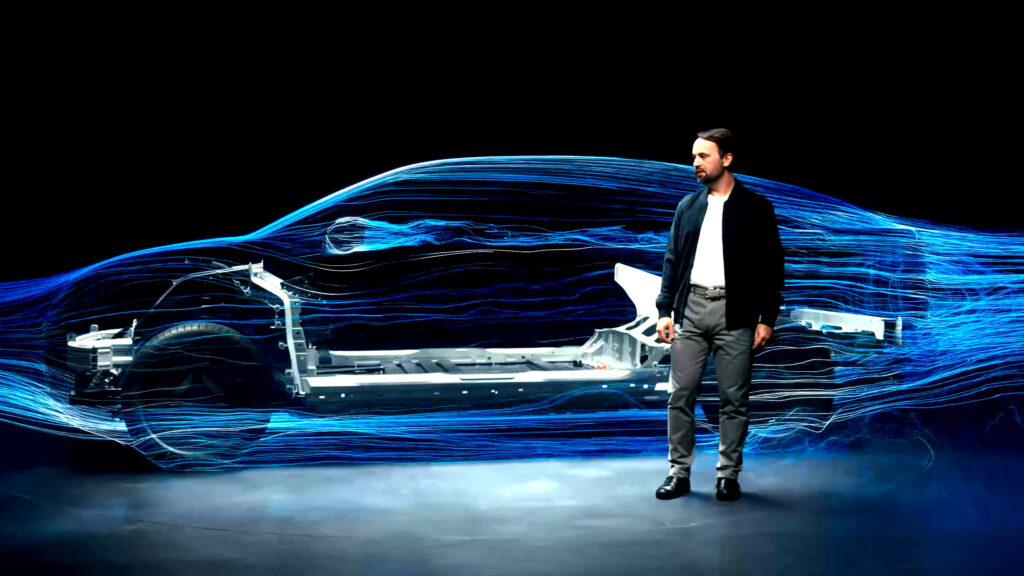


Ford gave a handful of reporters just enough to start guessing — and not nearly enough to stop speculating. During a curated visit to the company’s Electric Vehicle Development Center in Long Beach, California, a heavily camouflaged development mule rolled through the yard between buildings and disappeared behind a door. That fleeting glimpse, combined with component displays and a palm-sized plastic model handed out as swag, is the closest anyone outside Ford has gotten to the $30,000 electric pickup expected to debut next year.
The truck rides on Ford’s new Universal Electric Vehicle platform, which stitches together large front and rear castings — Ford avoids Tesla’s “megacasting” terminology — bolted to a battery pack and subframe. A floorless body drops over the top. Reporters saw the three main chassis components up close and two-thirds of the body structure, the rest hidden under cloth. No cameras allowed.
This is a real truck — vertical cab back, horizontal bedsides, no sail panels, no Ridgeline-style compromises. Ford appears to have learned from Chevrolet’s Avalanche-inspired Silverado EV styling, which confused truck buyers who wanted their pickup to look like a pickup.
Overall size lands near the current Maverick, maybe slightly larger, with a longer cab and wider front doors offsetting a shorter, possibly beveled nose. Ford repeatedly told reporters the interior offers “more volume than a RAV4,” a comparison aimed squarely at crossover shoppers who might be lured into their first truck. The bedsides appear taller than the Maverick’s, closer to the 2004 F-150 — a choice that likely serves aerodynamics as much as aesthetics.
The real engineering story sits beneath the skin. Ford is running 48-volt electrical systems for most ancillaries beyond the high-voltage battery and drivetrain, shrinking wiring harness weight and complexity. The onsite wiring shop has processed more than 1,400 separate harness component requests in the past year alone. That kind of iteration speed is the whole point of concentrating development in Long Beach rather than spreading it across Dearborn’s sprawling campus.
Repairability got direct attention. Chief engineer Vlad Bogachuk said every casting was designed with cutlines allowing damaged subsections to be removed and replaced without scrapping the entire piece. Ford used insurance collision data to map where impacts typically occur and engineered repair paths accordingly. It’s a preemptive answer to the question that has dogged Tesla’s castings and spooked insurers.
The EVDC itself is a 250,000-square-foot bet that Ford’s EV future requires California talent. The team blends engineers from EV startups, established automaker programs, and Ford lifers hungry for a moonshot assignment. Ford executives admitted openly that some of the people they needed simply refused to move to Detroit.
Whether the facility lasts is another question. Ford has a habit of planting flags in California and then retreating to Michigan. The Premier Auto Group office in Irvine, launched with great fanfare around 2000, was effectively dead within a decade after Ford shed Jaguar, Land Rover, Aston Martin, and Volvo. This time, Ford has sunk serious capital into tooling, test labs, and development infrastructure — not just leased office space.
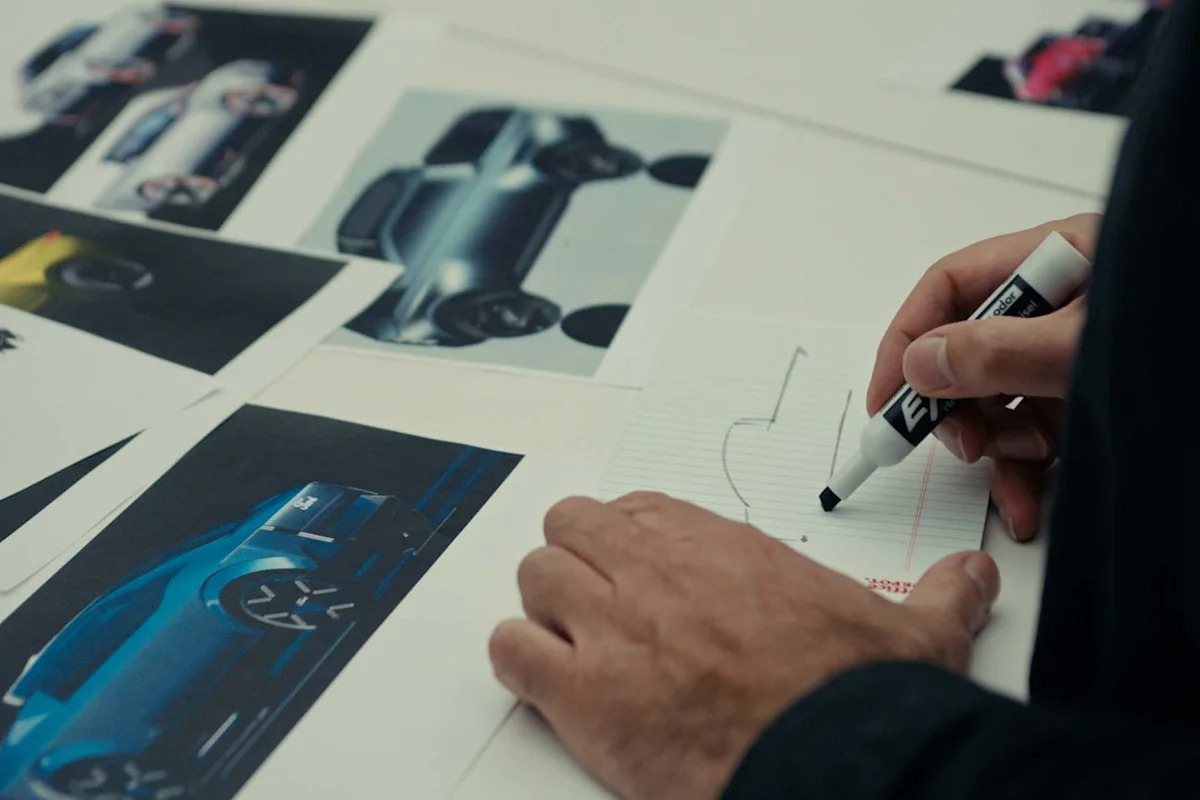
The platform won’t stop at one truck. Ford says it can scale from subcompact to commercial van. Reporters spotted five covered vehicle shapes in the design studio, most appearing to be SUV variants, plus a wooden frame holding three rows of prototype seats.
A small Escape-like SUV seems inevitable. Ford renewed its trademark on the Ranchero name last August, hinting the pickup could revive a badge from the 1960s.
Alan Clarke, Ford’s vice president of advanced development projects, drew a direct line to 1907, when Henry Ford walled off part of his Piquette Avenue plant to develop the Model T in secret. The comparison is ambitious, perhaps dangerously so. But if Ford actually delivers a competent electric truck at $30,000, the audacity of the analogy won’t matter. The price will do the talking.



Share this Story