
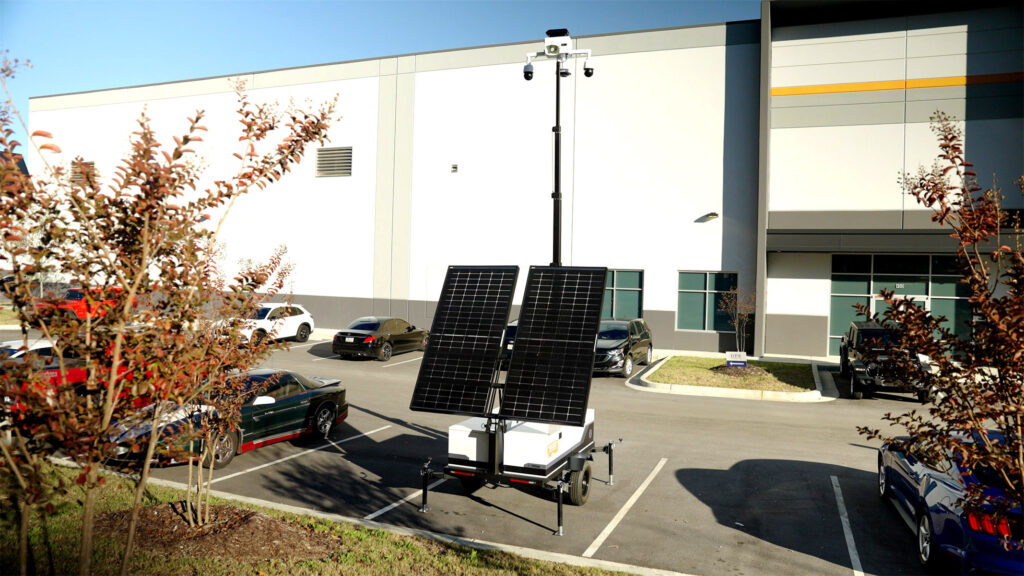


You drive into a Lowe’s parking lot in Derby, Connecticut, to grab some mulch. Before you even park, a camera has already photographed your license plate, logged the time, and fed the data into a system that police departments across the country can search. You never agreed to it. You probably don’t even know it happened.
More than two dozen police departments in Connecticut use automated license plate reader cameras along public roads. That’s been known for a while. What CT Insider has now confirmed is that Flock Safety cameras are also installed in the parking lots of Lowe’s and Home Depot stores across the state, privately owned surveillance infrastructure operating outside the reach of public records laws.
The cameras snap your plate as you enter or exit. The retailers say it’s about theft prevention and safety. But police departments have negotiated access to that data, sometimes continuous and automatic.
In Waterford, cops sent a written request to the local Lowe’s in 2024 and got a standing feed. Berlin police said they’ve tapped into both Lowe’s and Home Depot cameras statewide, folding that private data into their own searches.
CT Insider previously reported that out-of-state law enforcement agencies conducted thousands of searches on Connecticut plate data, some tagged with reasons like “ICE,” “Assist ICE,” and “ICE support.” Florida Highway Patrol ran hundreds of those searches alone. The pipeline from a Lowe’s parking lot to a federal immigration dragnet is not theoretical. It’s a matter of how many clicks.
Home Depot issued a statement saying it does not share data directly with federal immigration authorities and that its website bars federal law enforcement from accessing its plate readers. The company declined to answer whether out-of-state agencies could reach its data indirectly through local police networks. Lowe’s didn’t respond to multiple requests for comment.
Lowe’s posted privacy policy says it will disclose personal information “if required by law or legal process.” That’s a wide door.
Flock Safety, the company behind the cameras, confirmed there are no hard-coded technical restrictions preventing private companies from sharing data with any law enforcement agency that asks. Holly Beilin, a Flock spokesperson, said private clients typically share with local police but acknowledged that “jurisdictions do often cross.”
Home Depot is already facing a class action lawsuit in California over how it collects and shares plate data, alleging violations of state privacy law. The case was filed last month and recently moved to federal court. No hearings are scheduled yet.
Connecticut’s governor signed legislation this week limiting how police departments can share plate data with out-of-state agencies, imposing retention limits, and banning the use of the systems for immigration enforcement. The law was triggered by the ICE search revelations. But it applies only to public agencies. Private companies operating the same technology in the same state are untouched.
State Rep. Matt Blumenthal acknowledged the gap. “We can control very readily what state and local public agencies do,” he said. “It may be a thornier issue to deal with private owners and users.”
Ken Barone, who manages UConn’s Racial Profiling Prohibition Project, put it more bluntly. “I think it’s entirely a black box,” he said of private-sector plate reader data. How long they keep it, who they share it with, how many searches are run — none of it is subject to public disclosure.
Berlin police Lt. Shawn Solek defended the technology, citing a case where Florida plate data helped solve a robbery of an elderly woman. He also warned that Connecticut’s new restrictions on interstate sharing could limit the tool’s effectiveness.
Nobody disputes that plate readers help solve crimes. The question is whether shopping for patio furniture should automatically enroll you in a surveillance network that can be searched by agencies you’ve never heard of, in states you’ve never visited, for reasons no one is required to disclose.

Share this Story