
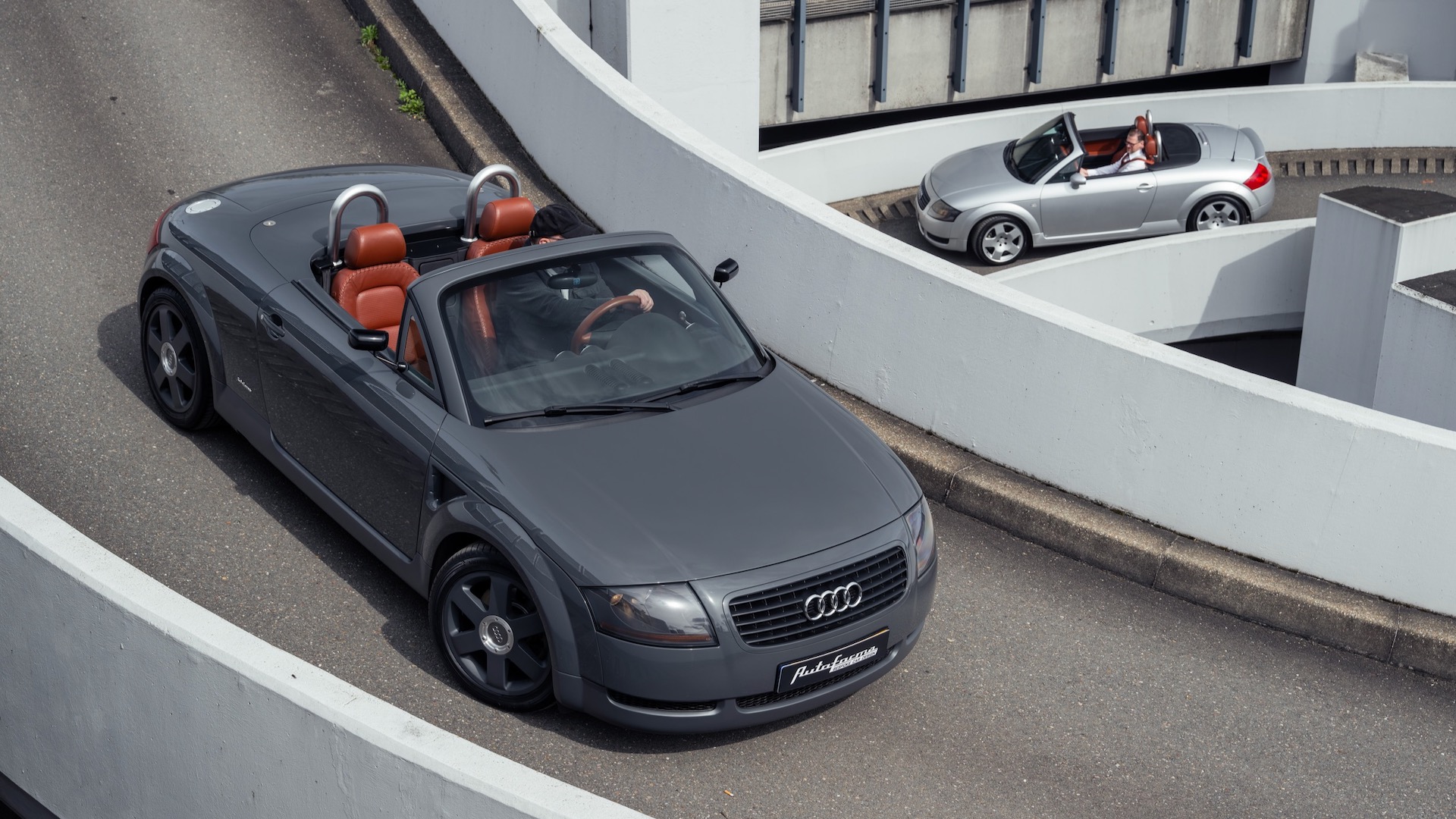


Jos Baijens bought his Audi TT Roadster new in 1998. Twenty-seven years later, the Dutch designer handed it to Autoforma and asked them to make it look more like the car Audi should have built in the first place.
The result is a one-off restomod that strips the first-generation TT back toward the purity of the 1995 TTS Roadster concept — the show car that made the world lose its mind before Audi’s production engineers inevitably softened it. Autoforma, a division of Niels van Roij Design, reverse-engineered the compromises, peeling away the concessions that separate a concept from a showroom car.
The folding convertible top is gone. In its place sits a sculptural composite tonneau panel that extends into the door surfaces, giving the car a monolithic profile that echoes the original show car’s clean silhouette. The antenna is gone, the rear spoiler is gone, and weld seams behind the trunk lid have been shaved smooth.
Up front, the bumper has been flattened with more horizontal air intakes to emphasize width. New fender vents conceal the turn signals behind mesh grilles — a change so tightly packaged that it required relocating the windshield washer reservoir to the trunk. That’s the kind of obsessive detail that separates a real restomod from a body kit bolted on in a weekend.
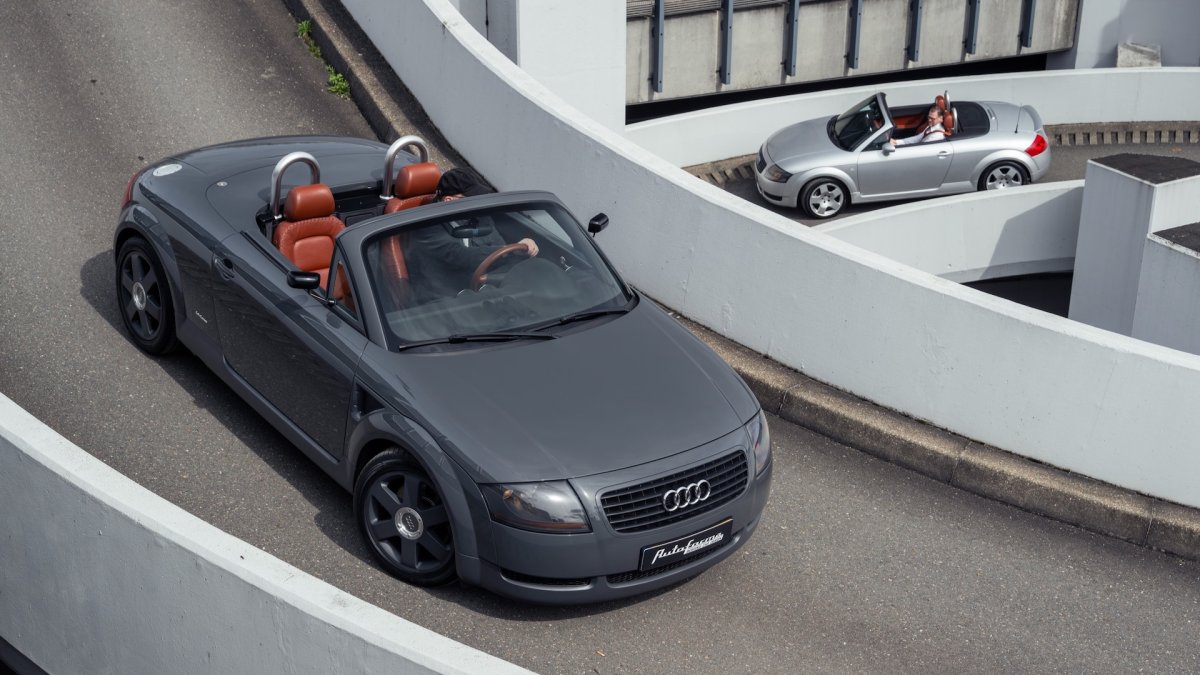
Clip-on racing mirrors mount directly to the glass rather than the door shoulders. A small intake ahead of each rear wheel punctuates the side sills. At the back, a new diffuser swallows the exhaust tips into the bumper itself, eliminating the underbody pipes.
Every new component uses 3D-printed carbon structures or carbon-fiber-backed panels. The exposed torx screws on the fender vents and sill intakes are left deliberately visible — an honest, almost Bauhaus admission that these parts were added, not born with the car.
The finish is a two-tone Nimbus Gray Pearl Effect, gloss on the upper body and matte on the lower sections, A-pillars, and windshield surround. Lowered suspension and a wider track give it the planted stance the original always deserved. Inside, brown leather — the classic TT combination, left mostly alone.
Autoforma didn’t touch the powertrain. No engine swap, no turbo upgrade, no headline-grabbing horsepower number. The weight savings from ditching the convertible top and switching to carbon-backed body panels are the only performance gains, and that restraint is the most interesting thing about this build. In a restomod culture obsessed with cramming LS engines into everything, Autoforma bet that the TT’s real deficit was visual, not mechanical.
They may be right. Freeman Thomas and J Mays designed the original TT concept as a near-perfect object — all circles and arcs, Bauhaus geometry made automotive. The production car that followed diluted that clarity with regulatory requirements and cost realities.
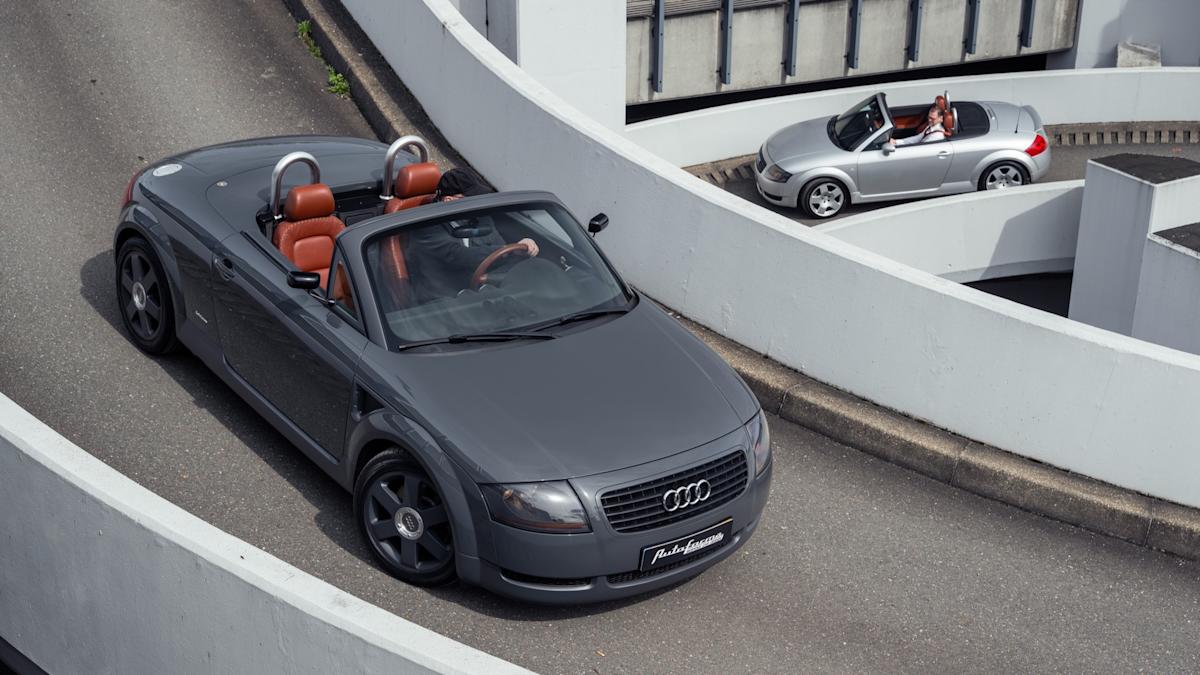
Autoforma’s thesis is that the first-gen TT was always close enough to greatness that it only needed editing, not reinvention. Niels van Roij put it plainly: the goal was to bring the production model closer to the purity of the concept using CAD scanning, rapid prototyping, and traditional craft. The language is measured, but the ambition is not — this is coachbuilding applied to a Volkswagen platform car that originally stickered under $35,000.
That an early TT is now getting the bespoke treatment tells you something about where the collector market is headed. The cars that defined late-1990s design — the TT, the new Beetle, the Plymouth Prowler — are crossing the threshold from used-car lots into the hands of people who want them preserved and perfected. Autoforma says it will build more TT restomods if clients come calling. Given how cleanly this one turned out, they will.



Share this Story