
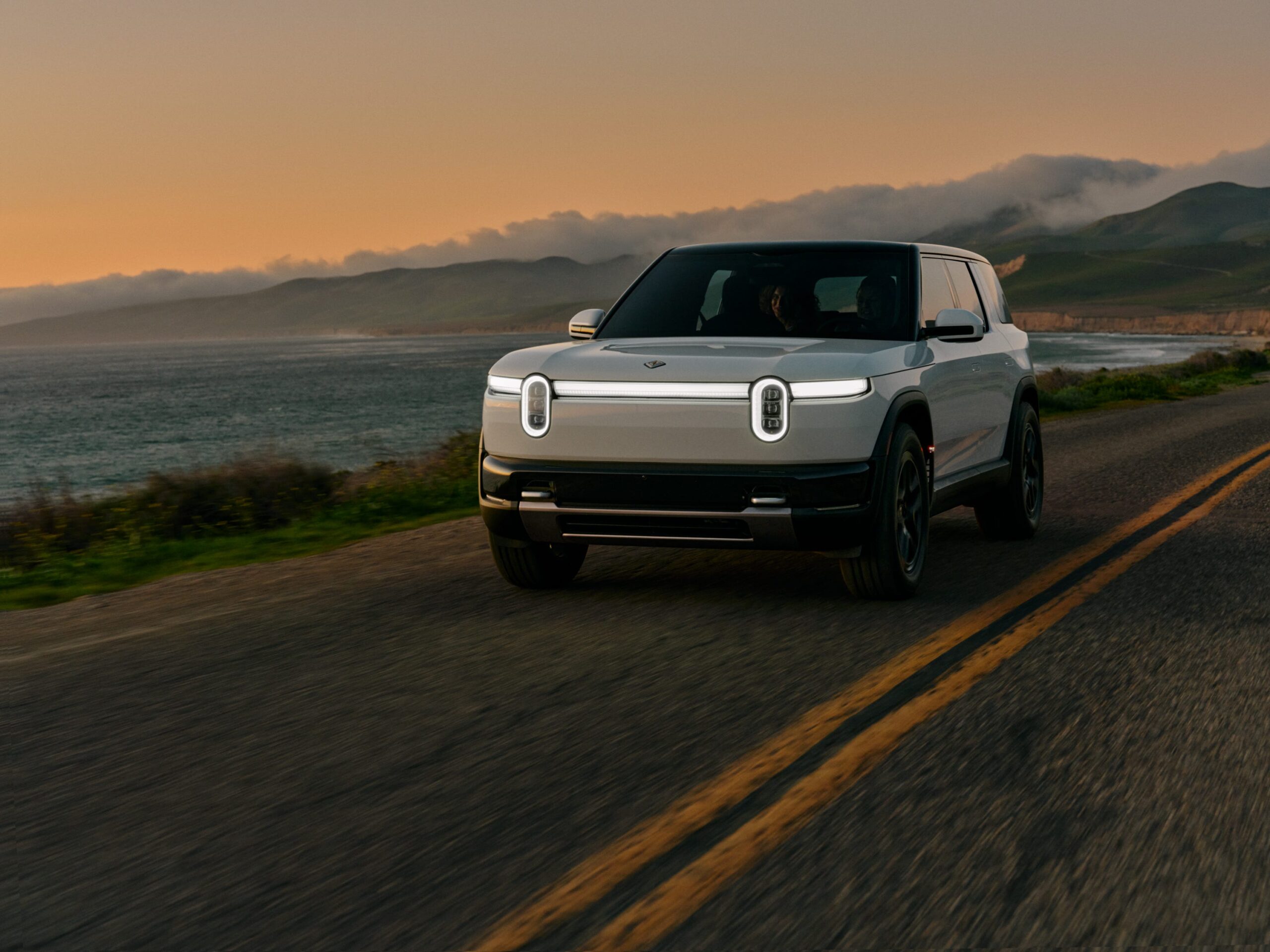


Rivian told everyone in March to expect 330 miles of range from the R2. Leaked EPA certification documents suggest the company sandbagged — by five miles, at least.
Screenshots posted to Rivian Forums appear to show the full EPA filing for the upcoming R2 SUV. The numbers: 335 miles on 21-inch wheels with performance tires, 314 miles on 20-inch wheels fitted with knobby all-terrains. For a company that has struggled at times to hit its own targets, quietly exceeding one is a small but meaningful signal.
The all-terrain tire result is the more interesting number. Normally, smaller wheels on an EV mean better range — less rotational mass, less aerodynamic disturbance. But the chunky rubber Rivian is speccing for the 20-inch option eats into those gains, costing 21 miles versus the street-oriented 21s.
Anyone who’s ever swapped a set of all-terrains onto a truck already knows the fuel economy penalty. Physics doesn’t care about your powertrain.
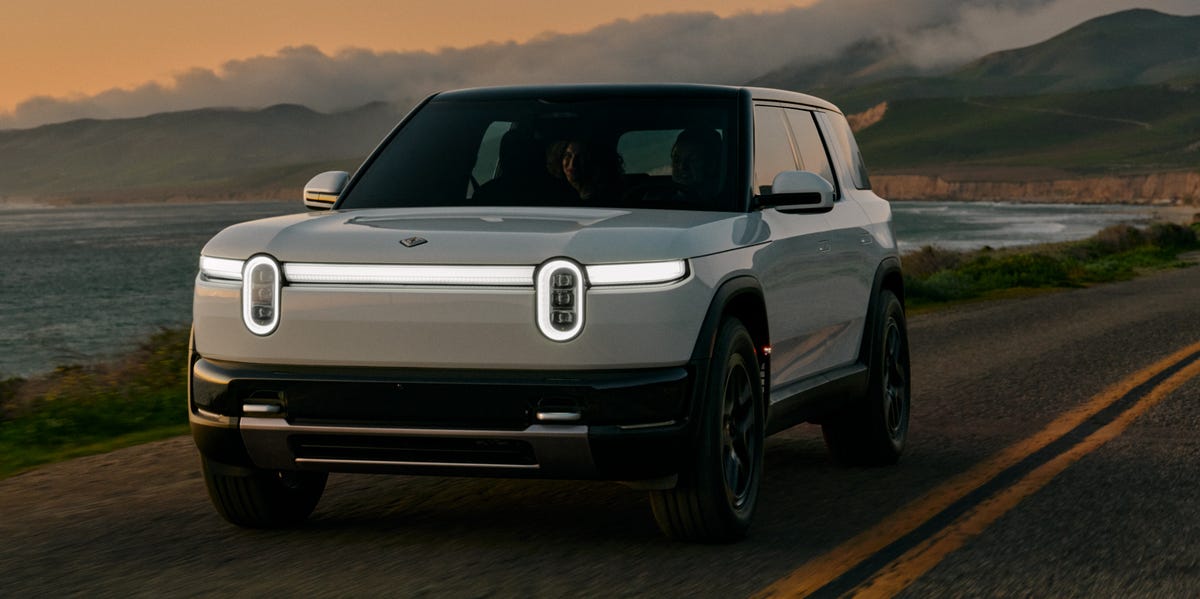
The leaked filing also pins the R2’s battery capacity at 86.8 kWh, slightly below the 87.9 kWh figure Rivian published in its official specs. That gap is minor and likely reflects usable versus gross capacity, but it underscores how carefully these numbers get parsed in the EV segment, where every kilowatt-hour is a competitive talking point. DC fast charging tops out at 210 kW, and Level 2 AC maxes at 11.5 kW.
A heat pump — improved over the R1’s unit — comes standard.
Curb weight sits just under 5,000 pounds, with an as-tested weight of 5,250. That’s heavy, but not out of line for the class. The Tesla Model Y Long Range weighs around 4,400 pounds with a smaller footprint and less capability.
Rivian is playing a different game — adventure-branded, built to look like it belongs on a trail even if most will never leave pavement.
The R2 Performance arrives first this spring at $57,990, packing north of 600 horsepower. That’s the only variant available initially. The $53,990 R2 Premium follows in late 2026, sharing the same battery.
Neither is cheap, but both slot well below the R1 lineup and directly into Tesla Model Y and Ioniq 5 territory — where volume lives.
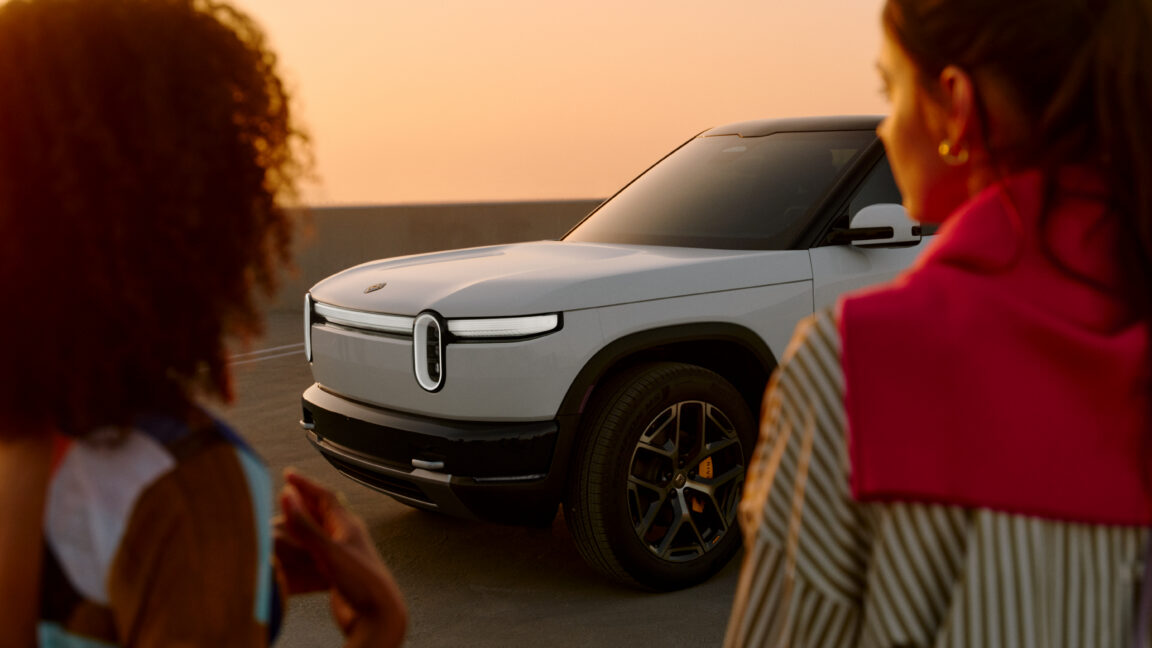
The real mass-market play remains distant. Rivian’s $45,000 R2 Standard, with a smaller battery and an estimated 275 miles of range, isn’t expected until late 2027. That’s the version that could genuinely threaten the segment leaders on price. Until then, Rivian is selling to its base: early adopters willing to pay a premium for something that isn’t a Tesla.
Five extra miles of range over the company’s own estimate won’t win any wars. But underpromising and overdelivering is a rare trick in the EV startup world, where the usual pattern runs hard in the opposite direction. Rivian has stumbled before on production ramps and cost targets.
Nailing the range number — and then some — on a vehicle this critical to its financial survival suggests the engineering side of the house is holding up its end.
The R2 doesn’t need to be perfect. It needs to be real, competitive, and on time. So far, the leaked numbers say it’s at least two out of three.
Share this Story