
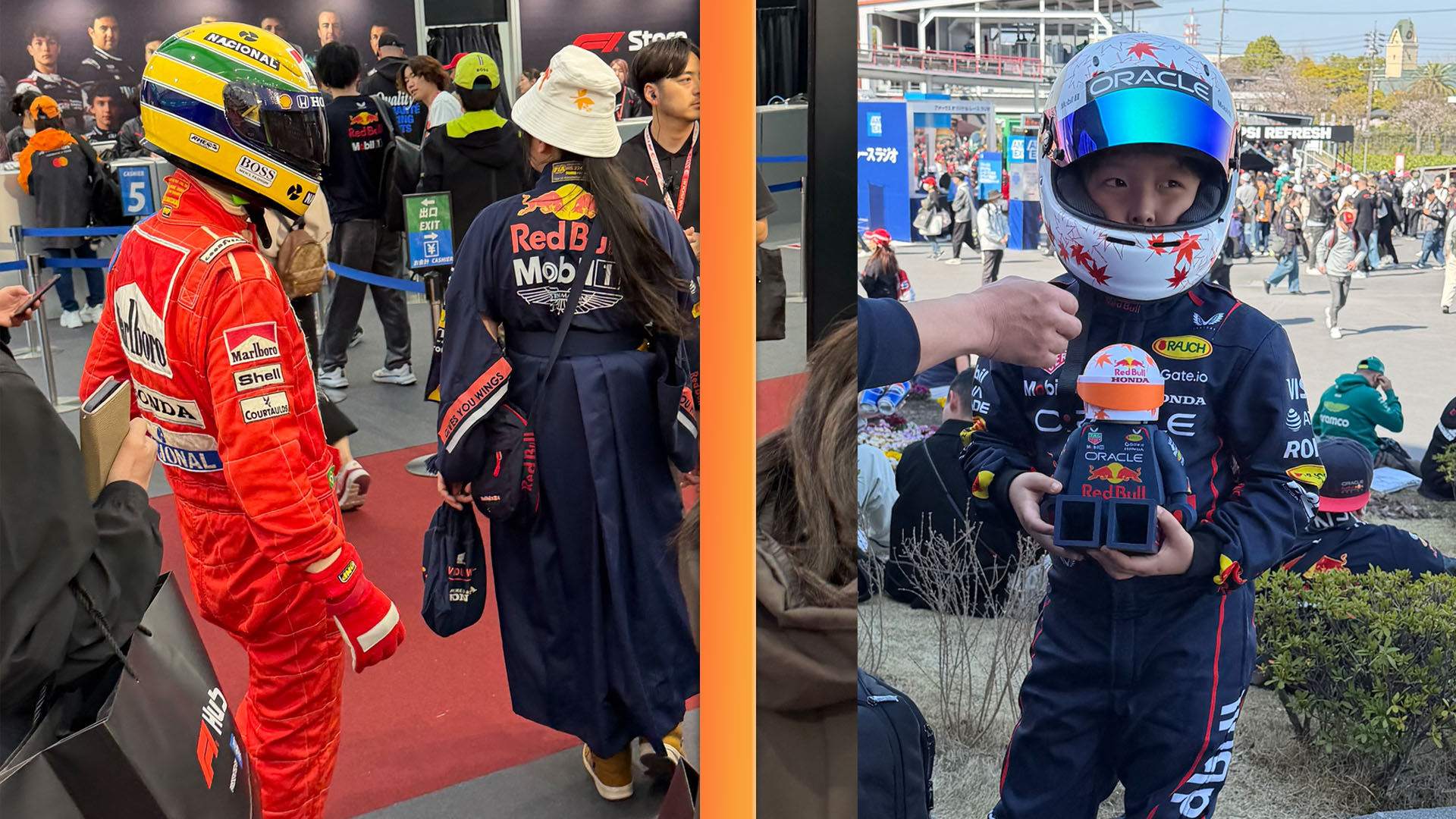


The Japanese Grand Prix doesn’t need a dramatic last-lap overtake to generate electricity. It just needs Thursday morning, when no cars are even on track, and thousands of fans are already packed around Suzuka Circuit in full costume.
That’s the scene that greeted The Drive’s Jerry Perez on his first visit to the race this year, and his account lines up with what anyone who’s spent time at Suzuka already knows: no fanbase in Formula 1 comes close. Not Monza’s tifosi, not Silverstone’s beer-soaked grandstands, not the celebrity-choked paddock at Miami. Suzuka is different because the devotion is handmade, literal, and borderline obsessive.
We’re talking full-scale rear wings mounted on heads. Mario Kart costumes. Babies in driver liveries. Elderly fans in meticulous recreations of Ayrton Senna’s McLaren suit, down to the sponsor patches. This isn’t casual merch-wearing. This is craftsmanship as fandom.
The Senna worship is its own phenomenon. Three decades after his death, multiple generations of Japanese fans still show up dressed as the Brazilian, mostly in McLaren white-and-red, but some in the Williams livery from his final season. No other sport, anywhere, sustains that kind of tribute for that long with that level of detail.
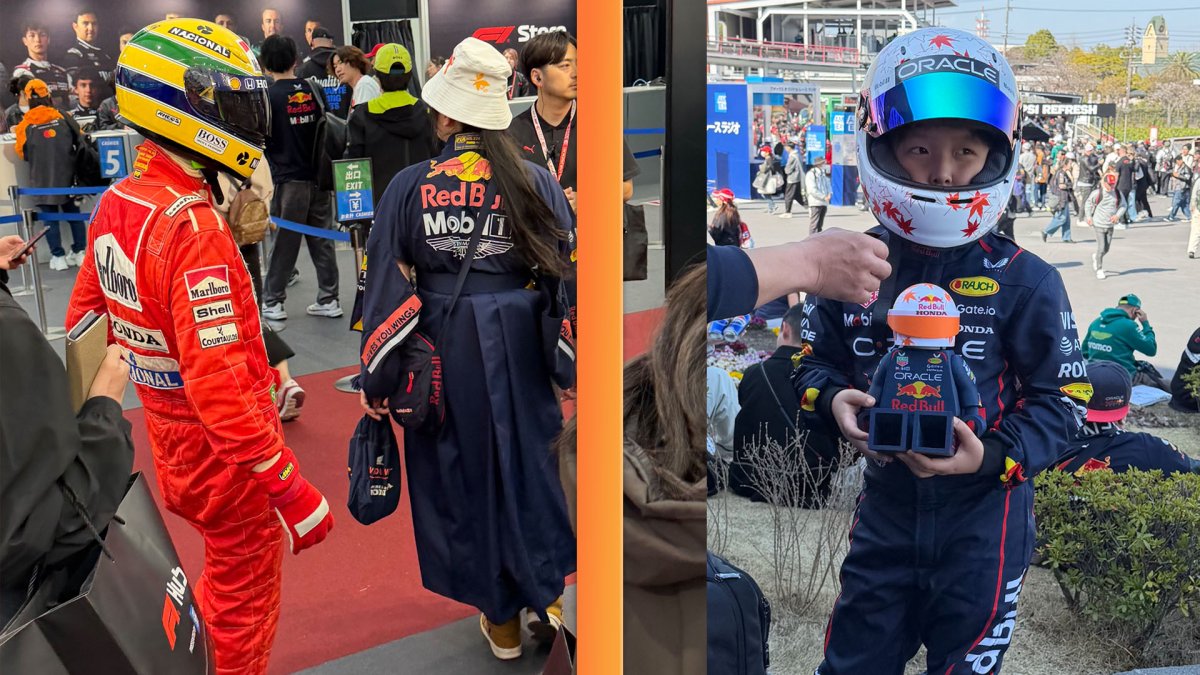
What makes 2026 particularly interesting is the Honda factor. Suzuka Circuit is Honda-owned, and the company’s fingerprints are everywhere, from track signage to the surrounding complex of Honda-branded attractions. The crowd reflects that loyalty with an almost tribal intensity. Red Bull Honda gear is everywhere. McLaren Honda throwbacks get nods. Even Aston Martin Honda apparel showed up in force, which takes real commitment given that team’s recent slide through the midfield.
Saturday’s fan forum underscored the breadth of the audience. Drivers from Cadillac, Aston Martin, Audi, McLaren, Racing Bulls, and Williams all took the stage, and the reception was enormous across the board. Japanese fans don’t just support one team. They support the sport itself, a distinction that gets lost at circuits where tribalism drowns out appreciation.
The circuit deserves credit too. Suzuka remains the only figure-eight layout on the F1 calendar, a relic of fearless track design that modern safety-obsessed architects would never approve. Its corners have produced some of the most replayed moments in the sport’s history, from Senna and Prost’s twin collisions to Raikkonen’s impossible outside pass at Turn 1. The track rewards bravery and punishes mistakes, which is exactly why drivers consistently rank it among their favorites.
But tracks don’t cosplay. Tracks don’t show up two days before a single wheel turns. Tracks don’t hand-build cardboard Formula 1 cars and wear them on their heads in 80-degree humidity.
The fans do.
F1’s expansion into new markets keeps adding races to the calendar. Las Vegas, Saudi Arabia, wherever Liberty Media finds the next sovereign wealth fund. Most of them generate Instagram content and corporate hospitality revenue, but Suzuka generates something money can’t manufacture: genuine, multigenerational love for racing.
That’s not nostalgia talking. It’s observable fact, documented by every journalist who’s ever walked through Suzuka’s gates on a quiet Thursday and found 10,000 people already waiting, dressed for the occasion, hours before anything happens.
The Japanese Grand Prix isn’t just one of the best races on the calendar. It’s proof that the soul of the sport still lives somewhere specific, and it wears a homemade Senna helmet.


Share this Story