
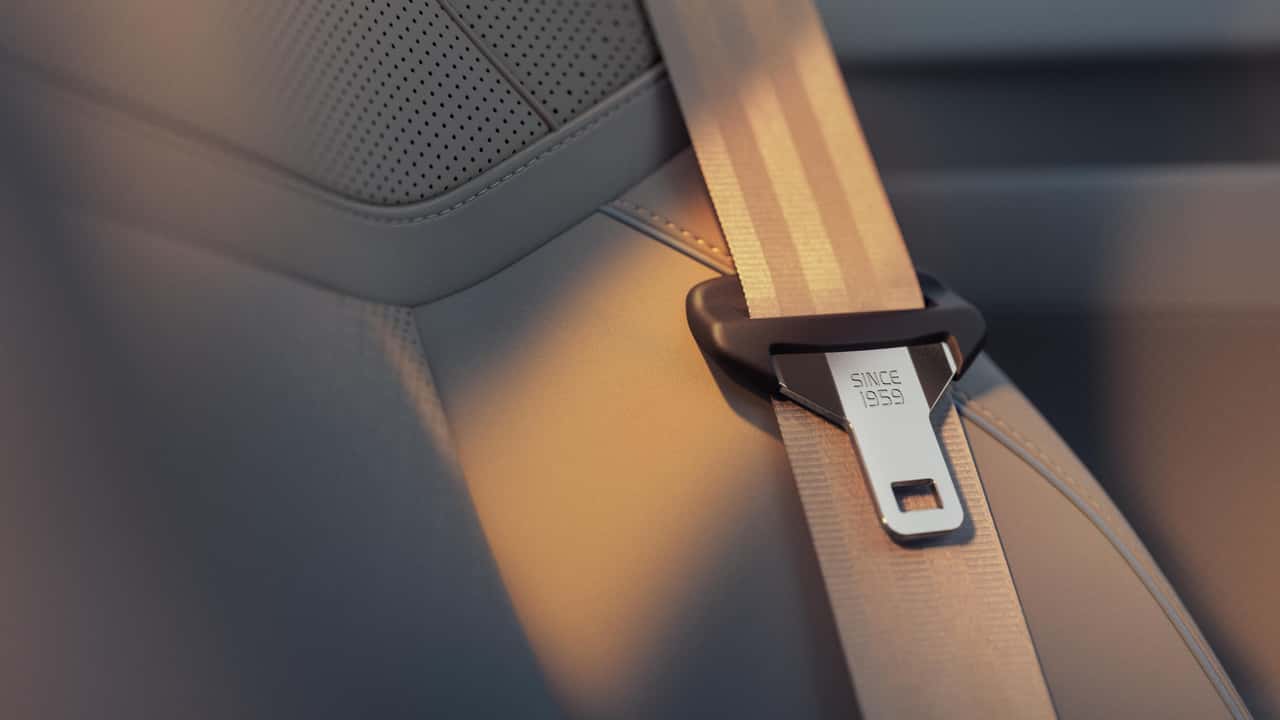


Seventy years ago, a Volvo Amazon prototype rolled out of Gothenburg wearing a two-point, cross-chest diagonal belt — a contraption most drivers had never seen. Three years later, in 1959, Volvo engineer Nils Bohlin perfected the three-point seatbelt and the company did something no automaker would dream of today: it opened the patent to every competitor on the planet, free of charge.
That single decision arguably saved more lives than any other act in automotive history.
Now Volvo is back with its next move. The company is debuting what it calls the “multi-adaptive” seatbelt in the upcoming EX60 electric SUV, scheduled to go on sale later this year. It is, by Volvo’s account, the first seatbelt system that tailors its restraining force to the individual wearing it — in real time, during a crash.
The technology uses a network of interior and exterior sensors to read each occupant’s height, weight, and seating position, then cross-references that data with the severity and type of impact. A heavier passenger in a high-speed frontal collision gets more belt load to prevent the head from traveling too far forward. A lighter occupant in a lower-speed event gets less tension to reduce the risk of broken ribs.
For seven decades, the seatbelt has been the same device Bohlin sketched on paper in the late 1950s. Pretensioners and load limiters arrived over the years, but the fundamental approach never changed: one belt, one setting, hope for the best. The multi-adaptive system breaks that logic by treating each crash as a unique event and each body as a unique problem.
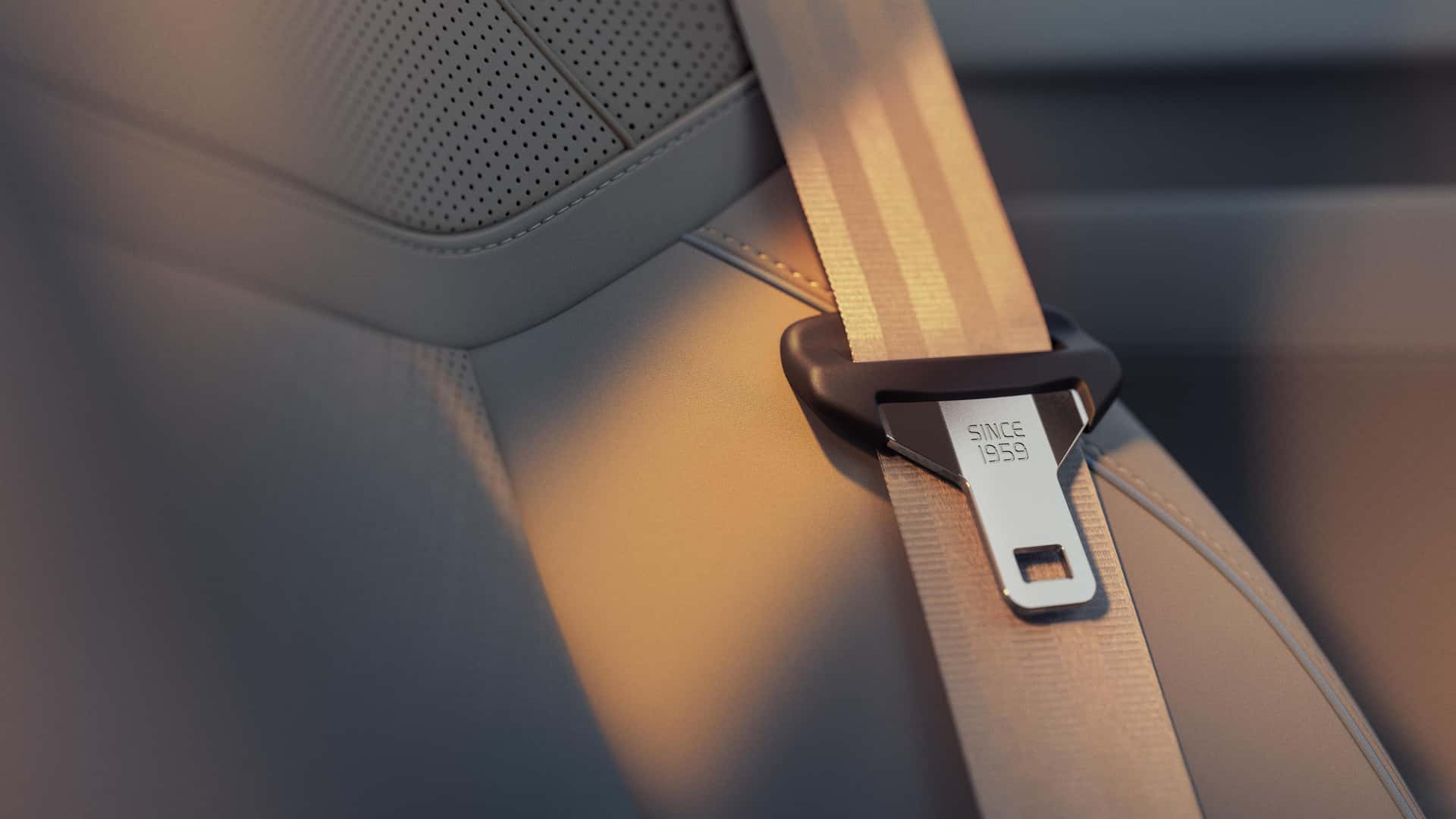
Volvo says the system will also improve after the car leaves the factory. Over-the-air software updates will refine restraint strategies as the company collects more crash data, meaning an EX60 bought in 2026 could theoretically offer better seatbelt protection in 2029 without a single hardware change.
“Volvo has always been at the forefront of safety evolution and innovation, and we’re pleased that we can continue to make new developments on such vital features like the seatbelt,” said Nicole Melillo Shaw, Managing Director of Volvo Car UK.
The timing is deliberate. Volvo turns 100 in 2027, and the company is clearly positioning the EX60 as a flagship moment — proof that a brand now owned by China’s Geely can still lead on the thing that built its reputation in the first place.
There is a broader tension here. The auto industry is pouring billions into autonomy and driver-assistance systems designed to prevent crashes altogether. Volvo has invested heavily in that space too.
But the multi-adaptive belt is an acknowledgment that crashes still happen, and that the last line of defense — the strap across your chest — has been coasting on 1959 engineering for far too long.
It also raises a question nobody in the industry wants to answer: if a seatbelt can now be personalized through software, what happens when that software fails? Volvo hasn’t addressed edge cases publicly, and regulators in Europe and North America will want answers before rubber-stamping anything novel in a restraint system.
Still, Volvo earned its credibility the hard way. When Bohlin’s three-point belt was offered to the world without a licensing fee, it wasn’t marketing. It was conviction. The multi-adaptive seatbelt is the first genuine rethinking of that invention in seven decades, and it arrives in an electric SUV — not a flagship sedan, not a concept car.
That choice tells you where Volvo thinks safety needs to go next: everywhere, for everyone, starting now.


Share this Story