
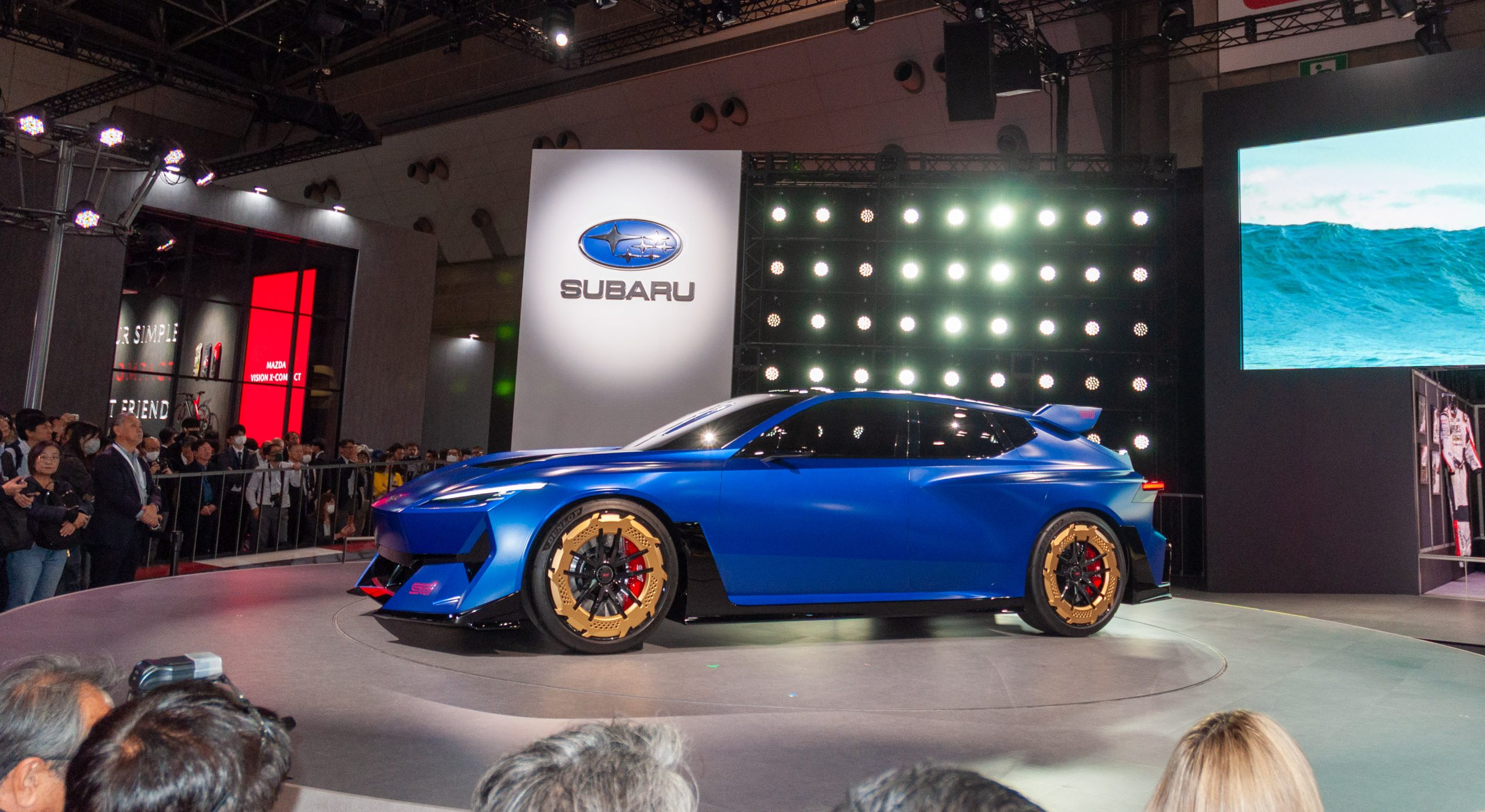


Subaru of Australia General Manager Scott Lawrence just said the quiet part out loud. “There has been a significant volume of feedback” about a new STI, he told media, adding that “the tempo of news and activity out of STI publicly is picking up.” Translation: the demand is real, and Subaru knows it can’t keep dodging the question.
The comment lands after a year of escalating breadcrumbs. In October, Subaru rolled out two STI-badged concepts at a Japanese show — one electric, one gas-powered. Then another STI-badged car surfaced in January. Lawrence pointed directly at them: “As those concepts proved, lots of work in that space. STI isn’t dead.”
That last line is doing a lot of heavy lifting. The WRX STI was officially killed off in 2021 when Subaru launched the current-generation WRX without its high-performance sibling. The company cited tightening emissions regulations and the cost of certifying the EJ25 turbo flat-four that had powered STIs for two decades. Enthusiasts mourned, forums raged, and Subaru’s performance credibility took a hit it has never fully recovered from.
Three years later, the automaker appears to be engineering its way back. But the path is anything but straightforward. Showing both an EV and a combustion concept under the STI banner signals internal debate about what the next STI actually is.
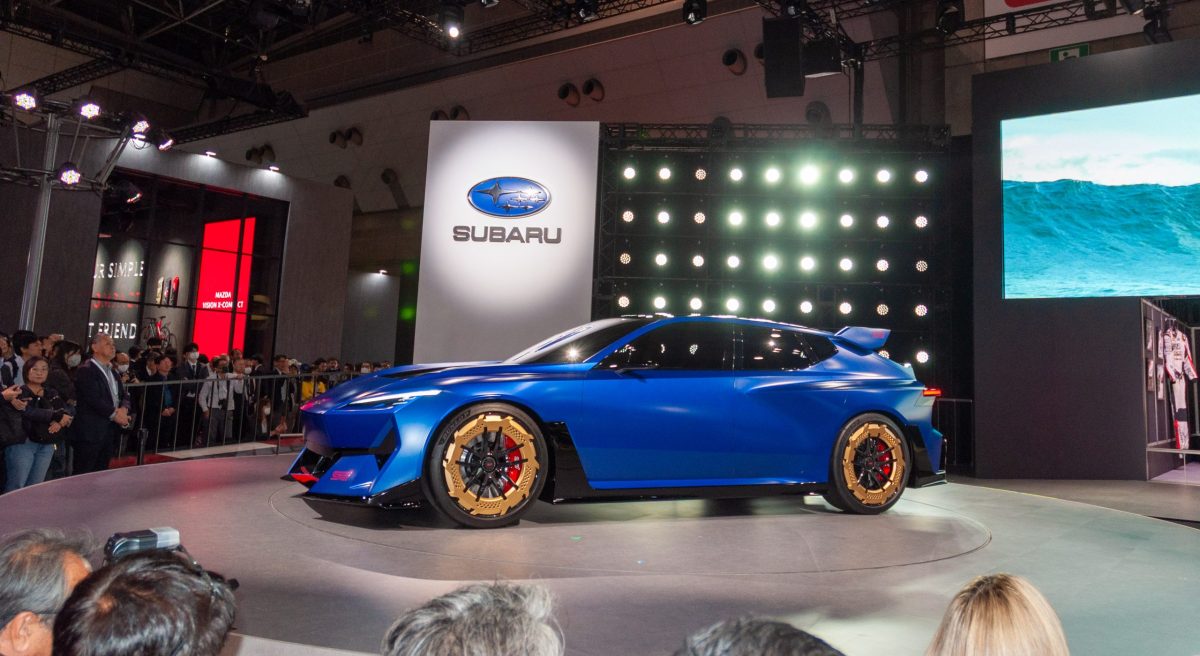
An electric STI would align with the industry’s direction and sidestep emissions headaches entirely. A gas-powered STI would be a love letter to the faithful — and a regulatory headache Subaru already walked away from once.
The tension between those two directions is the real story. Subaru is a small automaker. It doesn’t have Toyota’s resources or Hyundai’s volume to fund parallel performance programs across powertrains.
It will almost certainly have to pick one, at least initially. And whichever it picks will define how seriously the enthusiast community takes the STI name going forward.
Lawrence’s remarks also carry a geographic subtext. Australia has historically been one of Subaru’s strongest performance markets, a place where the WRX and STI earned almost cult status. When a regional GM starts publicly stoking expectations, it usually means the global product planning team has given at least a tacit green light to talk.
None of this guarantees a production car with an STI badge arrives anytime soon. Concepts are cheap promises. But the frequency and consistency of the signals have shifted. Subaru isn’t just acknowledging demand — it’s actively showcasing hardware and letting senior executives fan the flames.
The competitive landscape has also changed since 2021. Toyota launched the GR Corolla. Honda is building a new Civic Type R that can’t stay on dealer lots. Hyundai’s Elantra N punches hard for the money.
The hot compact performance segment is thriving, and Subaru is watching from the sideline with nothing to sell against any of them. That vacuum matters.
The WRX, without its STI halo, is just another turbocharged sedan struggling to justify its existence in a crossover-obsessed market. Subaru needs the STI not just for enthusiast credibility but for showroom gravity — the kind of car that pulls people through the door even if most of them leave in a Crosstrek.
Lawrence stopped short of confirming timelines or specifications. He didn’t have to. The message was clear enough: Subaru hears the noise, and somebody inside the company is building something.
Whether it plugs in or burns premium, the STI nameplate is being pulled off the shelf and dusted off. The only remaining question is whether Subaru has the nerve to actually put it on a window sticker.
Share this Story