



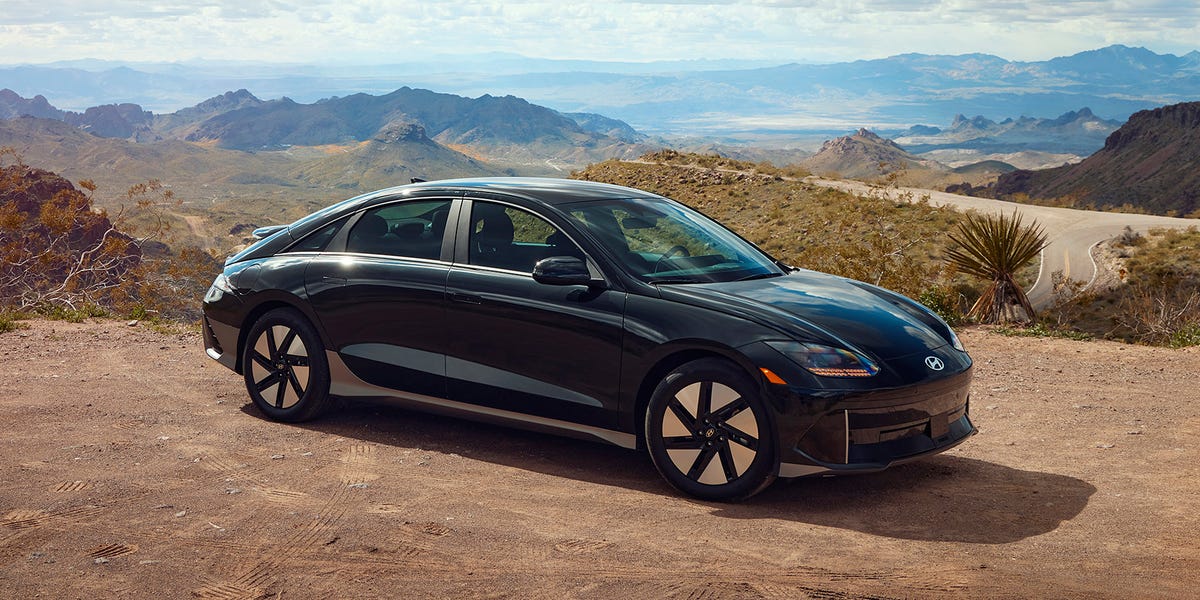
Hyundai sold 229 Ioniq 6 sedans in February. That’s a 77 percent drop from a year ago. The refreshed version, unveiled in April 2025, still has no 2026 model-year listing on Hyundai’s U.S. consumer site. The media page says “details to come.” At this point, silence is the detail.
The Ioniq 6 isn’t alone. Kia’s EV6 has moved just 1,140 units through the end of February, down from 2,817 in the same period last year. There is no 2026 EV6 listed on Kia’s consumer or media websites. A Kia spokesperson told Car and Driver the EV6 “remains in the lineup” and promised “more news shortly,” but also confirmed the high-performance GT variant is dead.
Strip away the corporate reassurances and the picture is stark. Of the entire Hyundai-Kia-Genesis electric portfolio in the U.S., only three models have been confirmed for 2026: the Ioniq 5, Ioniq 9, and EV9. Genesis has technically confirmed the GV60 and Electrified GV70, but those two combined have sold just 75 units through February, down from 788 a year ago. That’s not a lineup. That’s a rounding error.
The culprit everyone points to is the elimination of the federal EV tax credit last fall. And the numbers back it up. The Ioniq 9, Hyundai’s flagship electric SUV, managed only 505 sales in February after routinely clearing 1,000 units a month when the credit existed. The EV9 is down 42 percent year to date.
One bright spot exists: the Ioniq 5 posted 3,239 sales in February, a 33 percent year-over-year increase. It’s built in Georgia, which insulates it from import tariffs. It’s also the one EV in this stable that Americans consistently showed up for, even before incentives made the math easier.
That Georgia production detail matters more than ever. Every struggling model on the list — the Ioniq 6, EV6, and the planned EV3 and EV4 from Kia — is built in South Korea. Trump administration import tariffs add another layer of cost pressure on vehicles already losing their tax-credit tailwind. Kia confirmed the EV4 sedan’s U.S. release was “delayed until further notice” back in October, and nearly all information about it has been scrubbed from the media site. The EV3 compact SUV, announced for a 2026 U.S. arrival, has gone similarly quiet.
Hyundai says the Ioniq 6 N, a track-focused variant related to the acclaimed Ioniq 5 N, will still come stateside in 2026, but only in “extremely limited quantities.” That’s a halo car gesture, not a sales strategy.
Genesis is faring worst of all. The Electrified G80 sedan was axed in August 2025. The GV60 Magma performance model is expected this summer but will be a low-volume affair. The GV90, teased with the Neolun concept in 2024, remains a phantom with no production version shown.
What’s happening across Hyundai Motor Group isn’t a pause. It’s a retreat to defensible ground. The company is circling its wagons around U.S.-built vehicles that have proven demand — the Ioniq 5, Ioniq 9, and EV9 — while quietly letting Korean-built EVs drift toward irrelevance in this market.
The Korean automakers spent the last several years building one of the most credible EV portfolios in the industry. The Ioniq 5 won awards. The EV6 won awards. The engineering was genuinely excellent. But engineering doesn’t sell cars when the price math changes overnight, when tariffs punish your supply chain, and when American buyers still overwhelmingly want SUVs over sedans.
A contracted market rewards discipline, not ambition. Hyundai and Kia appear to have gotten that memo. The models that survive will be the ones built on American soil for American tastes. Everything else is negotiable — and increasingly, expendable.
Share this Story