
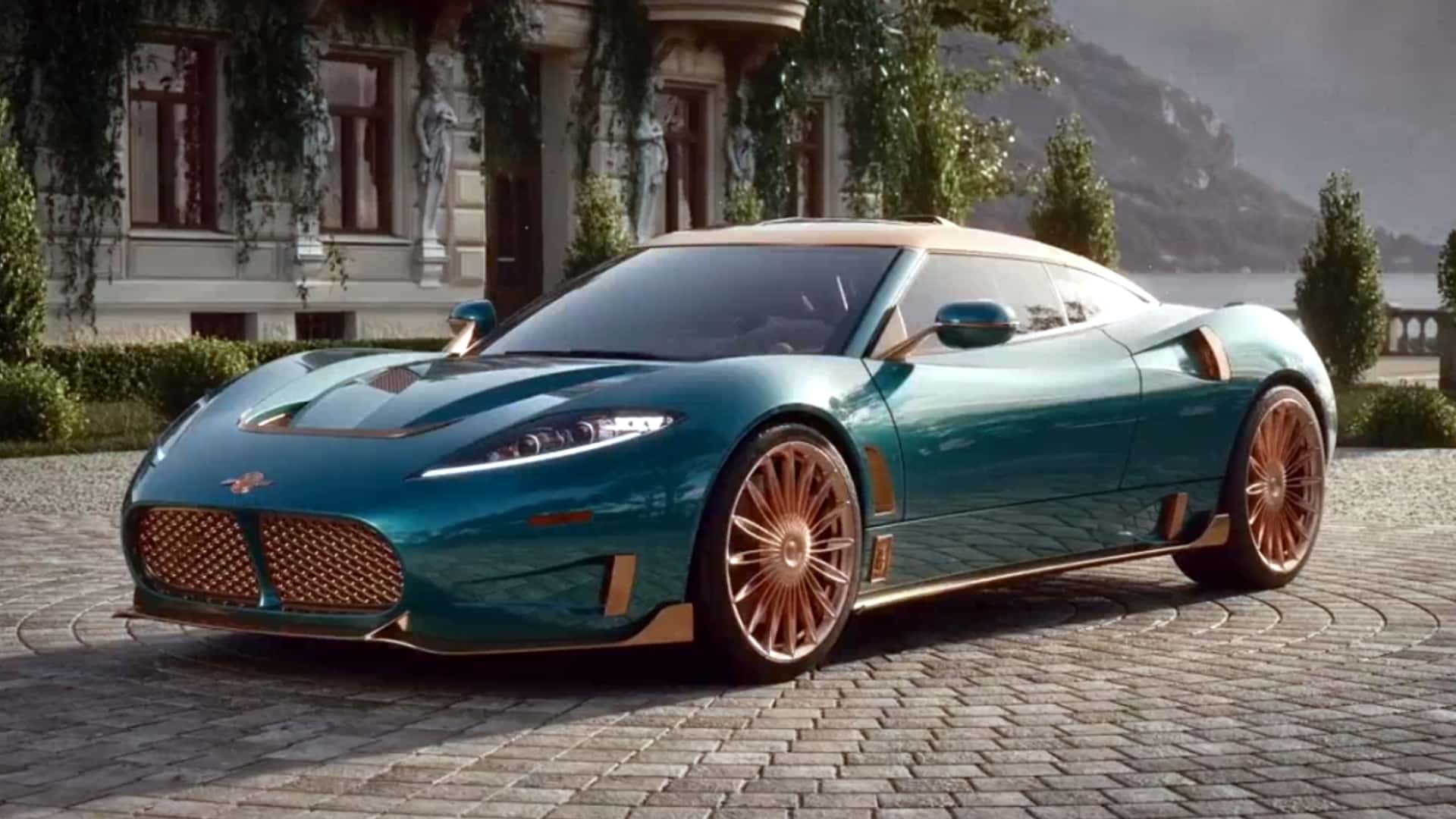


Victor Muller has 25 cars to build, two bankruptcies behind him, and a stated target at the very top of the hypercar market.
The Spyker C8 Preliator XXV Coupe is his opening move. Twenty-five examples, an 800-horsepower twin-turbocharged V8, and a six-speed manual gearbox. The company says the first deposits have already cleared.
“We will position ourselves at the very top of the market, where Pagani, Koenigsegg, Bugatti, and Gordon Murray Automotive are the established brands,” Muller told CarScoops, which first reported the plan.
That is a long reach for a name that has died twice.
Spyker went under in 2014. It went under again in 2021. Muller only secured the rights to the brand in October 2025, and he now says the funding and engineering are done.
Deliveries are scheduled to begin in the second quarter of 2027. All 25 cars are due before the end of that year.
The hardware reads like a deliberate refusal of where the segment has gone. The 4.0-liter V8 makes 800 horsepower and 737 pound-feet of torque, sent to the rear wheels only. There is no dual-clutch and no automatic option.
Most of the rivals Muller named have moved to paddle shifters. Spyker is betting that a clutch pedal still sells at this price.
The body is built from hand-formed aluminum panels rather than machine-stamped sheet metal. It is slower and costlier work. Each car takes roughly 2,100 hours to complete.
Do the math and the picture gets clearer. At 2,100 hours apiece, a 25-car run is less a marketing choice than a hard ceiling.
Muller is not selling this car on lap times or top speed. He is selling heritage.
“There is a clearly defined group of buyers who are drawn to Spyker’s distinctive aviation-inspired design, our craftsmanship and our Dutch identity,” he said.
The griffin badge and cockpit-style cabins have carried that aviation theme since the brand’s earliest models. It is the same pitch Spyker made before. The question was never whether people liked the cars, but whether the company could survive building them.
The plan stretches past this coupe. Muller says Spyker will produce 50 cars a year globally once it reaches full pace, with the Preliator XXV covering half that volume through 2027.
“Spyker will build 50 cars for the entire global market in a good year,” he said.
He also says enough buyers are already lined up to sustain that rate. Spyker has not published order numbers or a waiting list count.
So the claims pile up without receipts. Funding is done, says Muller, and so is engineering, and buyers are waiting. None of it has been put on paper for anyone to check.
Spyker is not the only small outfit chasing low-volume, hand-built cars. Peregryn is moving Ultima-based GT-R and GT-S production to the United States. The Bristol Fighter is returning as a tiny continuation run built from existing chassis with a specialist British manufacturing partner.
Plenty of dead names are coming back these days. Most of those revivals are small, careful, and quiet. Spyker has chosen to name Bugatti and Pagani out loud.
Muller frames the long game in plain terms. “Success for Spyker means building a long-term, sustainable business, fed by new designs and new models for years to come,” he said.
Pagani, Koenigsegg, and Gordon Murray Automotive earned their places by delivering, year after year, without a trip through bankruptcy court.
Spyker’s first chance to prove it can do the same comes in the second quarter of 2027. That is when the first of those 25 cars is due to leave the building.

Share this Story