
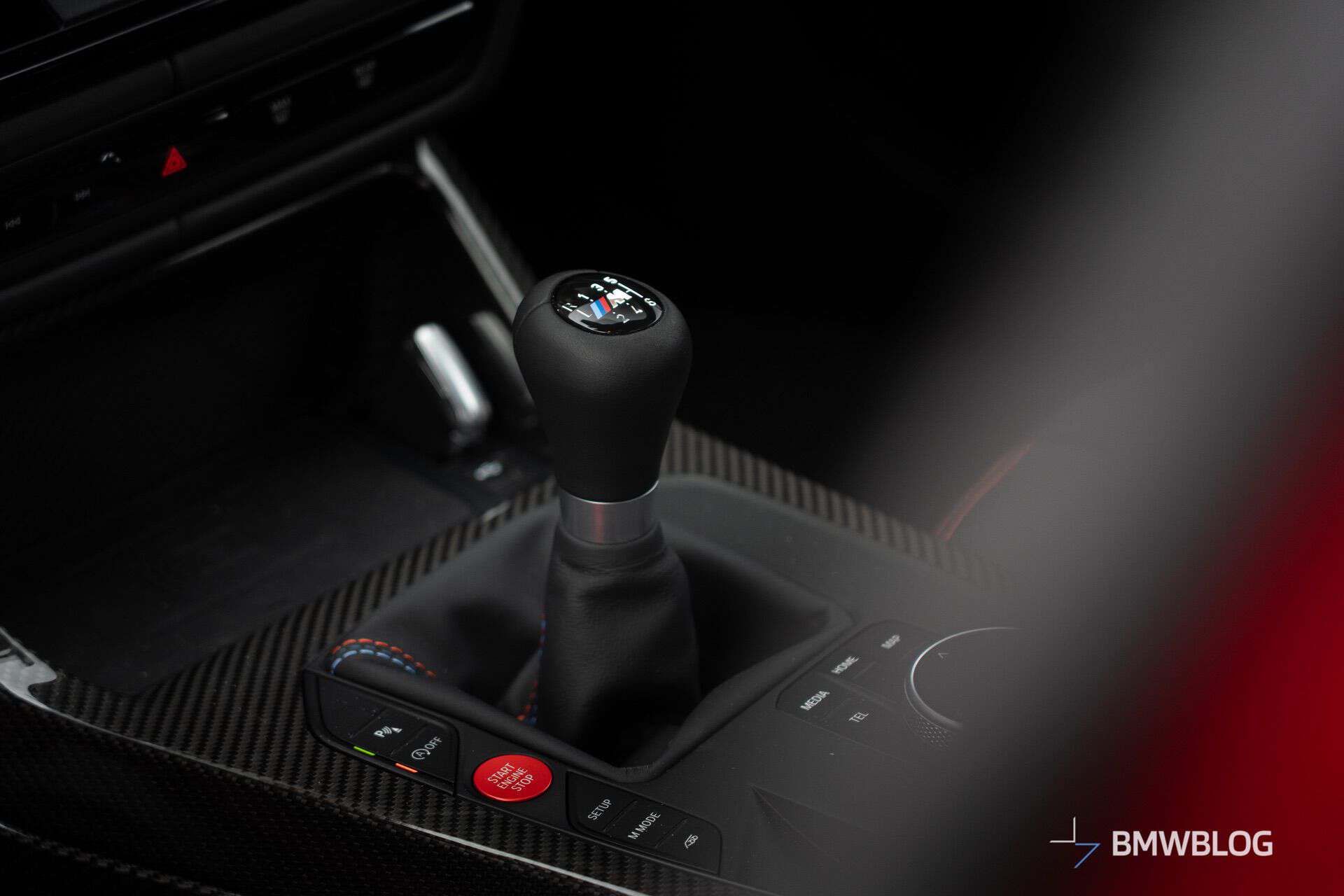


Half the G87 M2s sold in America leave the lot with a six-speed manual. The M3 CS Handschalter, a $108,450 rear-drive, stick-shift-only special, sold out in roughly a week. By any rational market measure, BMW M customers are voting with their wallets for three pedals.
BMW M CEO Frank van Meel knows this. He told BMWBLOG at the M Festival in Shanghai that demand is not the issue. The engineering is.
“It’s going to be really difficult,” van Meel said, stopping short of a promise but refusing to kill the idea outright. “No, it’s not off the table.”
The obstacle he keeps circling back to is 48-volt mild-hybrid architecture. BMW’s next-generation M cars, starting with the G84 M3 expected around 2028, will pair the S58 inline-six with a 48-volt system, xDrive all-wheel drive, and an automatic transmission. Van Meel said the 48-volt integration simply doesn’t work with a manual gearbox.
That single technical constraint threatens to do what decades of enthusiast hand-wringing never could. It’s not a market decision. It’s a packaging one.
The supplier base is thinning too. Fewer companies still manufacture manual transmissions at volumes that make business sense for a niche product line. The current six-speed already can’t handle the full torque of the S58, which is why the M3 and M4 Competition models have been automatic-only for years. Building a stronger manual box for even fewer cars is a hard pitch to make inside any boardroom.
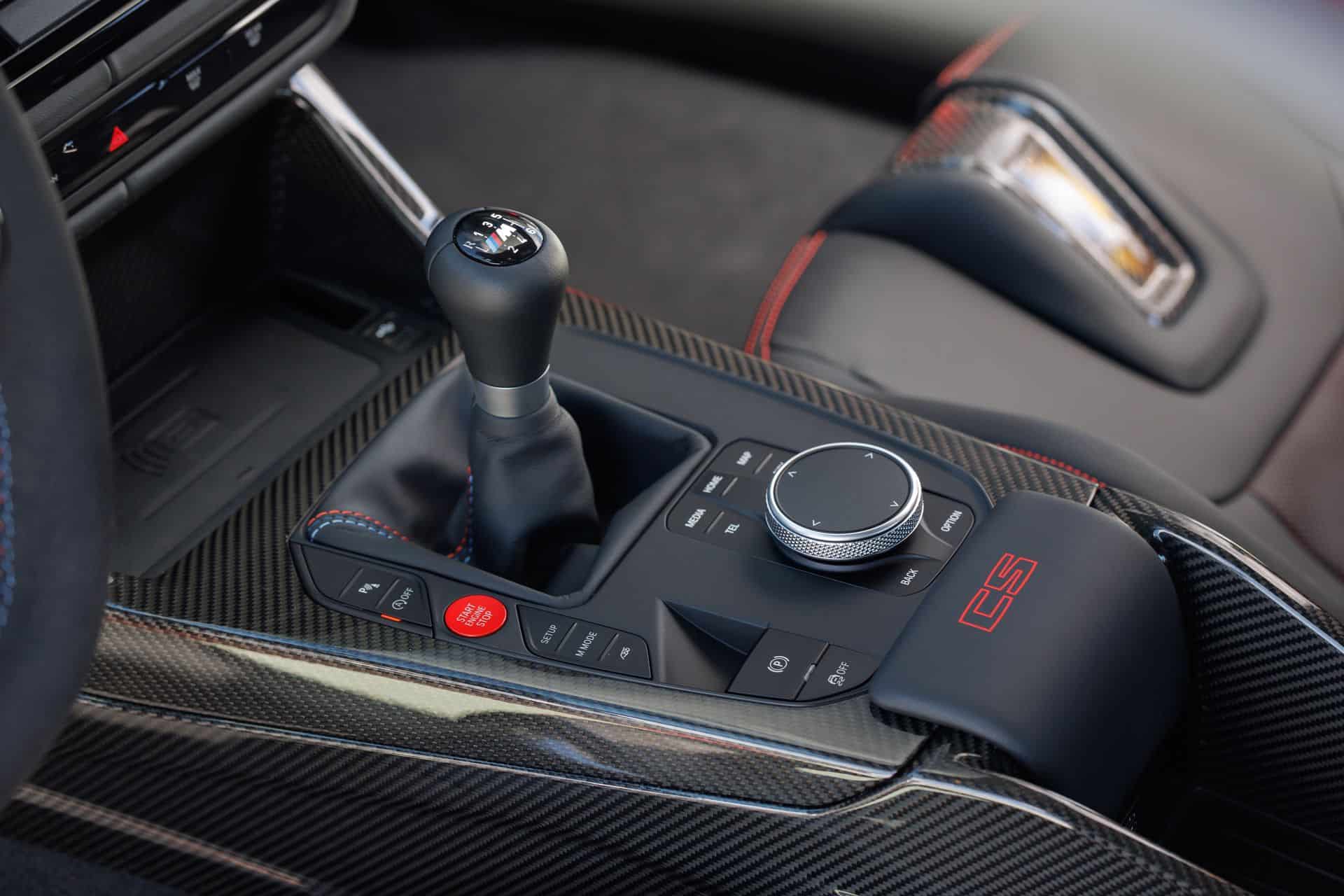
Van Meel acknowledged the emotional weight of the question without flinching from the technical reality. “We do acknowledge that there is a high demand, and it’s a very emotional issue,” he said. Then he added: “I can’t promise anything.”
The parallels with Porsche are obvious and uncomfortable. Stuttgart keeps selling manual 911s deep into six-figure territory without breaking a sweat. Every limited-run manual BMW M car seems to only intensify demand for the next one. Van Meel didn’t dispute the comparison. He just pointed to the physics.
Power is the other wall closing in. BMW made the M5 all-wheel-drive-only once output crossed 600 horsepower. The M4 CSL already hit 550. The 2027 M2 with M xDrive makes 473 hp and drops the manual entirely.
“Does it still make sense in a rear-wheel drive?” van Meel asked. “Because you’re just burning rubber.”
Manual and rear-drive have always traveled together in BMW M’s lineup. If one goes, the other likely follows, at least in the higher-output cars.
For now, the window is still open. The rear-drive M2, the base M4 Coupe, and whatever remaining base G80 M3 stock exists are the manual options. Production of the M2 and M4 could stretch to around 2029, though order books typically close well before the last car rolls off the line.
After that, any manual M car will probably look like the Handschalter: a small, expensive, region-specific run built to satisfy the loudest corner of the market. A consolation prize dressed up as a collector’s item.
Van Meel’s honesty is refreshing and a little brutal. He’s not pretending the manual will survive on sentiment. He’s saying the architecture BMW has chosen for its next generation of M cars was designed around systems that exclude a clutch pedal.
The customers showed up. The technology moved on.
Whether BMW M finds a workaround or simply prints another limited edition every few years to keep the faithful quiet remains an open question. Van Meel said his engineers are “always trying to find solutions.” The 48-volt system doesn’t seem interested in cooperating.

Share this Story