
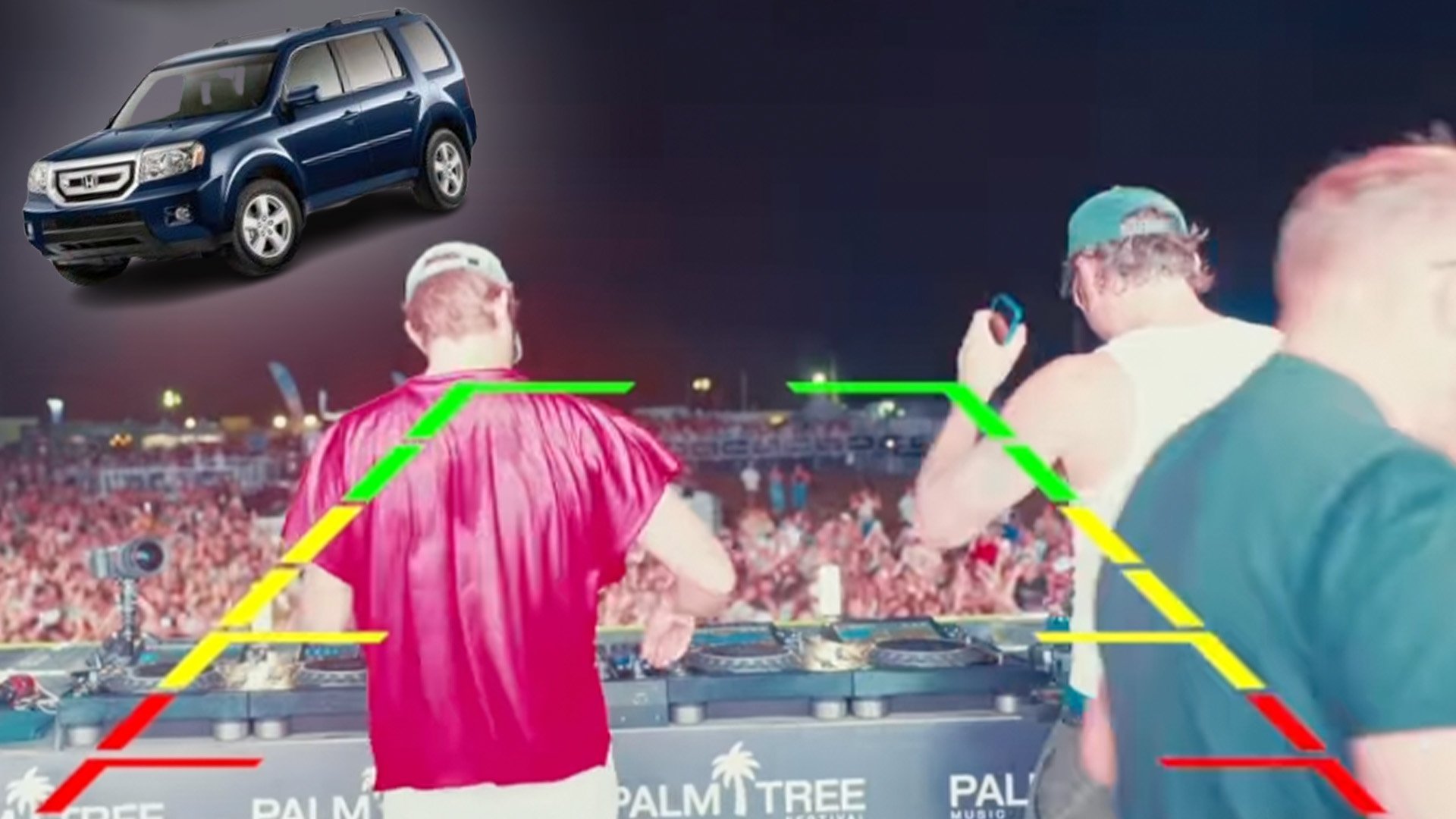


A videographer named Jack Skelley strapped a rearview mirror backup camera from a 2010 Honda Pilot onto a gimbal and used it to film The Chainsmokers live. The results look exactly like you’d expect from a 16-year-old parking sensor repurposed as a concert camera. Which is to say, they look fantastic in the way only terrible image quality can.
Skelley mounted the mirror-embedded unit to a Ronin RS4 gimbal and brought it into the crowd. His Instagram post leans hard into the joke, praising the camera’s “organic, raw pixel degradation” and its “aggressively wide focal length” that warps pyrotechnics into a distorted bubble. The permanent “Check Entire Surroundings” overlay stays on screen throughout the footage, acting as what Skelley calls “a brutalist, avant-garde framing device.”
He’s not wrong. The beat dropping while the performers cross into the red “Imminent Collision” zone is, in fact, a pretty good bit.
The specific unit matters here for hardware nerds. The in-mirror rearview display was exclusive to the 2010 Pilot EX-L trim. The Touring got a more conventional in-dash screen because it came with navigation.
Lower trims had no camera at all. This was eight years before rearview cameras became federally mandated, even though Congress passed the Cameron Gulbransen Kids Transportation Safety Act back in 2007 directing regulators to require them.
The lo-fi camera trend has been building for years in photography circles. Old point-and-shoots, disposable film cameras, and early digital compacts are all fetching premium prices because their flaws produce aesthetics that hyper-sharp modern sensors cannot replicate. Chromatic aberration, blown highlights, muddy color science — these are liabilities in a parking lot and assets on an Instagram feed.
Skelley’s stunt isn’t even the first time someone tried this. Back in 2016, a filmmaker shot an entire short using only a Toyota Prius backup camera while it was still installed in the car. That project was intended as a parody of auteur directors who insist on shooting with obscure formats.
It landed differently than Skelley’s concert footage, which plays more like a genuine creative experiment dressed in irony. The gap between those two projects tells you something about where camera culture has drifted. Nine years ago, using a backup cam was pure satire.
Now the line between the joke and the art is thin enough that people in the comments are genuinely asking how to replicate the look.
There is a practical ceiling to this, obviously. No one is editing a feature film from OEM parking sensor footage. The resolution is abysmal, the dynamic range is nonexistent, and the color rendition is whatever a 2010-era CMOS sensor and Honda’s budget image processing pipeline decided it should be.
But Skelley’s footage has a quality that no amount of LUT stacking or post-production grain overlays can fake. It looks like it was never supposed to exist. The camera was engineered to show you a bumper at three miles per hour, and instead it’s capturing fire and lasers and a few thousand people losing their minds.
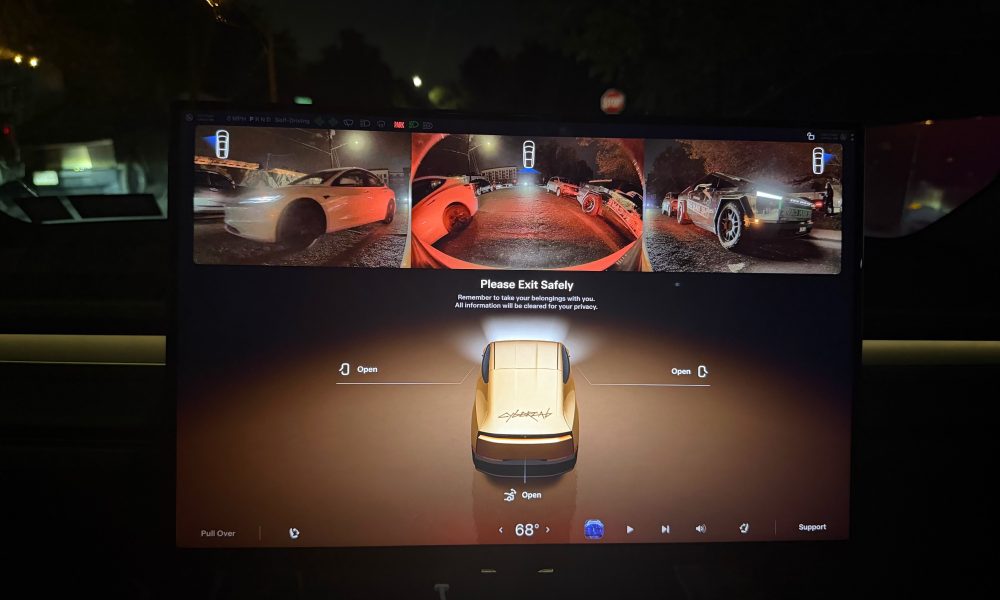
Someone is going to try this with a Tesla Cybertruck camera next, and it will be far less charming.

Share this Story