
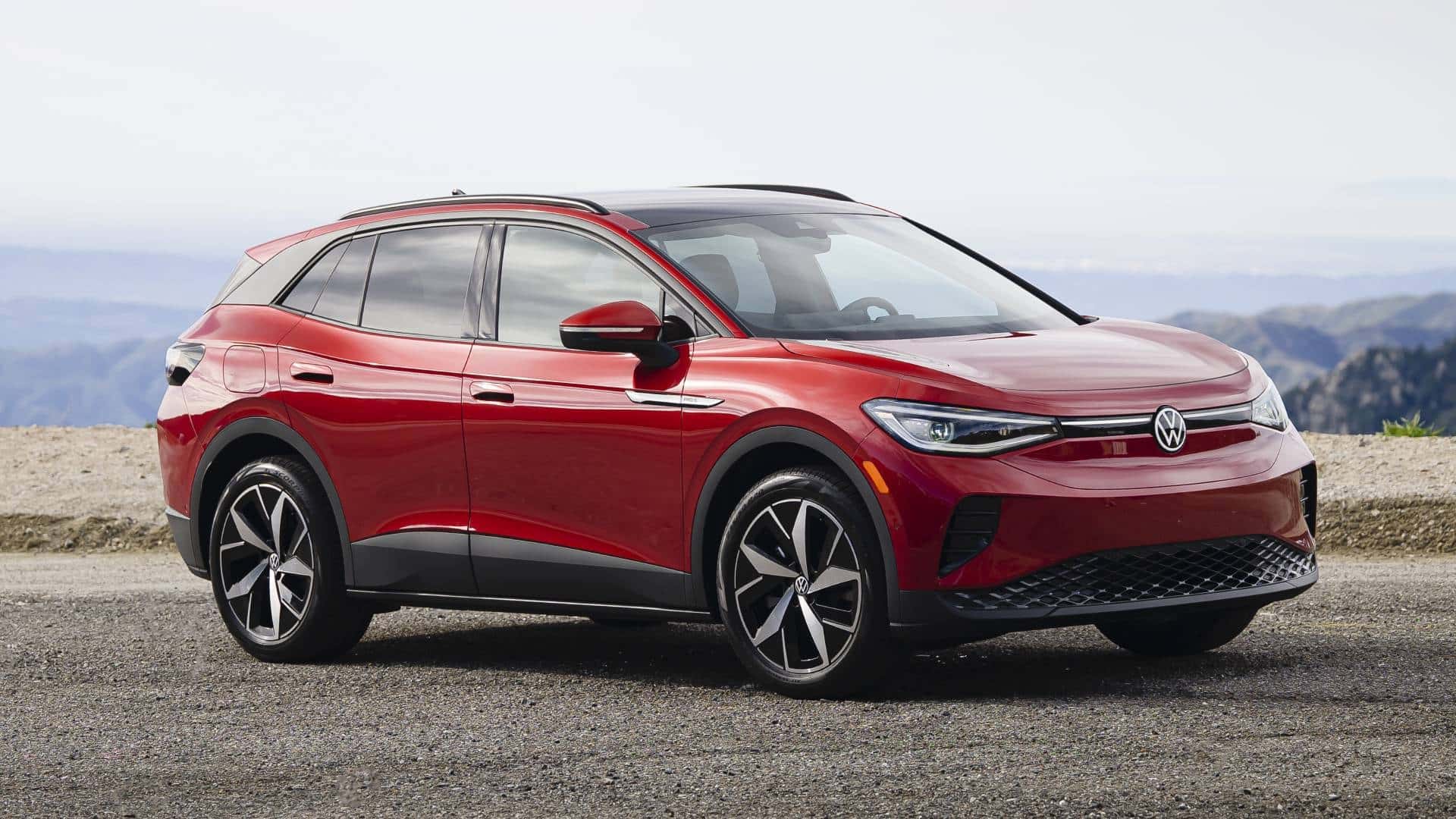


Volkswagen is telling 22,524 ID.4 owners not to charge past 80% after filing a recall with the National Highway Traffic Safety Administration over the risk of battery fires. The affected vehicles span the 2023 through 2026 model years, and VW’s interim fix is about as low-tech as it gets: warning stickers.
While engineers try to figure out the root cause of potential thermal propagation in the high-voltage battery pack, VW’s answer is adhesive reminders placed somewhere in the cabin and likely under the charge port flap. The automaker also hinted that some vehicles with online connectivity could receive an over-the-air update capping charge limits at 80%, but that language was hedged carefully. “Depending on the vehicle configuration and online connectivity, some vehicles may be configured to limit the maximum state of charge,” the filing reads.
VW traced the issue back to 22 incidents reported by U.S. customers between January 2024 and August 2026. It made the decision to issue the recall on September 23, 2026. The batteries are supplied by SK, and VW was blunt about how little it knows.
“The root cause is unknown,” the company stated, adding that certain charging profiles combined with a state of charge above 80% may trigger the thermal event.
The automaker estimates just 0.1% of the recalled vehicles are actually affected. That works out to roughly 22 or 23 cars, which tracks neatly with the 22 reported incidents. It is a small percentage, but telling owners they cannot use the top 20% of their battery capacity is not a small ask.
Range anxiety has always been the soft underbelly of EV adoption, and capping usable charge directly cuts into the ID.4’s already modest range proposition. Owners who bought the car expecting the full advertised EPA number are now being asked to voluntarily reduce it. There is no timeline for a permanent solution.
This is not the first time an EV battery recall has played out this way. GM went through a far more painful version with the Chevrolet Bolt, which also involved an 80% charge cap before a full battery replacement program was eventually rolled out. Hyundai dealt with similar issues in the Kona Electric. In both cases, the temporary software limits dragged on for months before hardware fixes materialized.
VW’s situation is different in at least one respect. The Bolt and Kona recalls involved batteries from LG, while the ID.4 packs come from SK. That broadens the list of suppliers who have faced thermal propagation concerns in production EVs, which is not the kind of trend the industry needs right now.
The ID.4 is already on borrowed time in VW’s lineup. The ID. Tiguan is slated to replace it, and recent price cuts of up to $12,500 on the ID.4 in the U.S. market suggest VW is clearing inventory. A fire-risk recall does not help move those remaining units off dealer lots.
For now, VW owners are left with stickers and a promise that a real fix is coming. No date has been given. No replacement battery program has been announced. The recall documents offer no indication of when VW expects to understand what is actually going wrong inside those SK-supplied packs.
Twenty-two incidents out of more than 22,000 cars is a low failure rate by any measure. But a battery fire is not a squeaky seat or a software glitch. It is the one failure mode that can turn a parked car into a structure fire. And VW, by its own admission, still does not know why it is happening.
Share this Story