
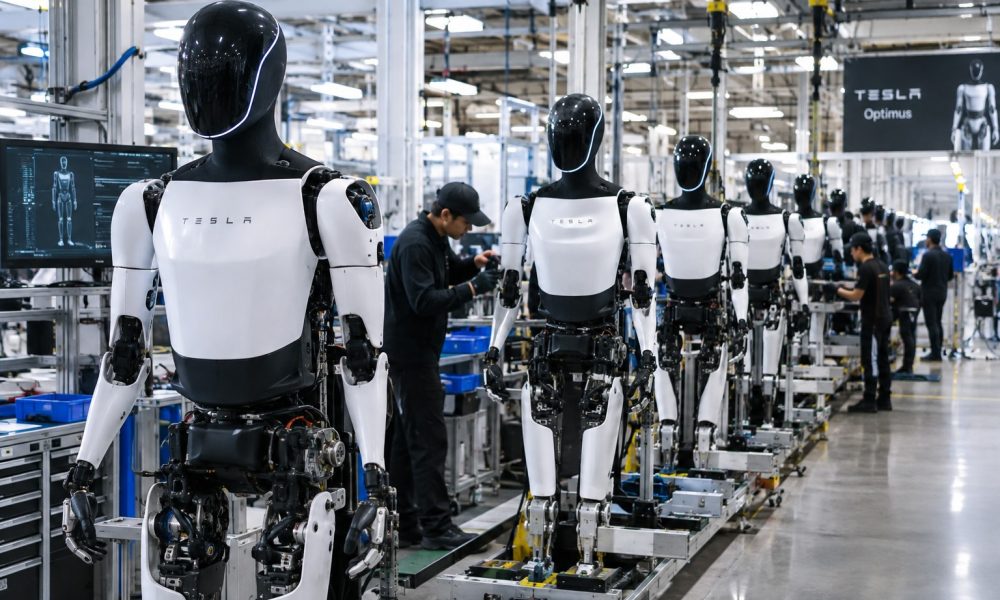


Tesla’s robotics team spent September 16 and 17 in Ningbo, China, auditing three component suppliers and upgrading all of them from provisional status to certified mass production partners for the Optimus humanoid robot. The visit carried fresh orders for an initial batch of roughly 5,000 units, according to supply chain reports cited by Bloomberg.
The three suppliers are Tuopu Group for actuators and chassis components, Ningbo Joyson Electronic for sensors, and Zhejiang Sanhua Intelligent Controls for thermal management systems. All three already feed Tesla’s EV production lines, which means their factories are tooled for automotive-grade tolerances and volume. That overlap is no accident.
Sanhua’s involvement runs deepest. Last October, the company landed a roughly $685 million order for linear actuators tied to Optimus, a volume industry watchers estimated could cover around 180,000 robots once production scaled up. This week’s audit suggests that order is now moving from paperwork into physical parts.
The production targets behind the audit are aggressive. Supply chain reports peg Tesla’s near-term goal at about 1,000 Optimus units per week by late September, scaling to 2,000 to 2,500 per week by year’s end.
That kind of ramp only makes sense if you know what happened at Fremont. Back in May, Tesla wound down Model S and Model X production there and began converting the floor space into a dedicated Optimus manufacturing line targeting one million units annually. JPMorgan analysts who toured the facility in August confirmed the conversion took roughly four months. Musk called it unprecedented for a factory that size, and for once the boast seems proportional to the effort.
Fremont is only phase one. At Gigafactory Texas, structural steel for a second, larger Optimus plant is nearing completion on the building’s north end, based on recent drone footage. Tesla has said that facility is designed to eventually support up to 10 million units a year, though volume output is not expected before 2027.
Commercial sales remain targeted for the second half of 2027. Before that, Tesla plans to run what it calls “Optimus Academy,” deploying early units inside its own factories to collect real-world training data. JPMorgan analyst Rajat Gupta expects the program to be operational later this year.
The Chinese supplier certification matters beyond Tesla’s own production schedule. Bloomberg Intelligence analyst Ian Ma called the Ningbo audits “a positive commercialization signal for China’s humanoid supply chain,” adding that sentiment could improve further if confirmed nominations and larger orders follow. The Solactive China Humanoid Robotics Index ticked up about 1.4 percent on the news, though it remains down roughly 30 percent for the year. A modest reaction for a market that has been burned by robotics hype before.
What separates this from the parade of concept videos and conference demos that have defined the humanoid robotics space for years is the supply chain infrastructure now being locked in. Certified suppliers, purchase orders, factory conversions, and construction timelines create a web of financial commitments that would be expensive and embarrassing to unwind.
Tesla is treating Optimus like a vehicle launch. The same playbook it used to drag Model 3 through production hell, qualifying suppliers, auditing lines, ramping in painful increments, is now being applied to a product category that has never seen anything close to automotive-scale manufacturing.
Whether demand materializes at the volumes these factories are being built to serve is a question nobody can answer yet. But the money is already being spent.
Share this Story