
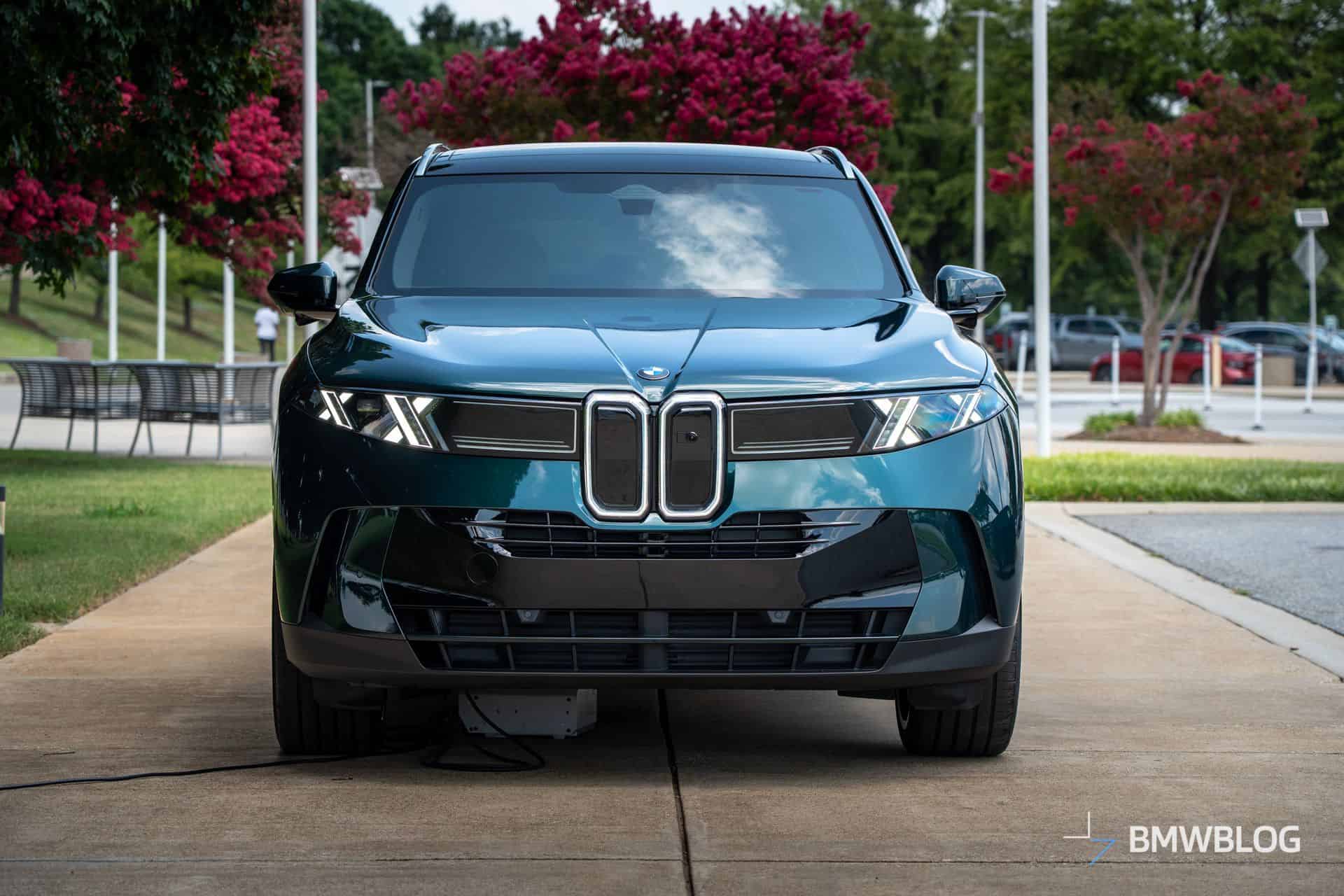


BMW builds every X5 in Spartanburg, South Carolina. Whether it ships to a dealer in Charlotte or gets loaded onto a boat bound for Melbourne, it rolls off the same line, with the same paint, the same inline-six, the same everything. Yet an Australian buyer paying AU$145,900 before on-road costs for the 2027 X5 40 xDrive is handing over roughly US$103,900.
The American sticker is $72,100 before destination. That is a 44 percent premium. The reasons behind it tell you more about government policy than about BMW’s pricing strategy.
Start with equipment. The Australian-spec X5 arrives loaded. M Sport package, adaptive M suspension, Bowers and Wilkins audio, ventilated and massaging seats, heated steering wheel, the passenger screen, Parking Assistant Professional — all standard.
In the U.S., you tick five separate option packages to get close to the same build, pushing the American car to $83,450 before destination. That trims the raw gap from AU$44,700 down to about AU$28,700.
Then Canberra takes its cut. Australia’s 10 percent GST applies first. After that comes the Luxury Car Tax, levied at 33 percent on every dollar above AU$80,809.
The X5’s fuel consumption, rated between 8.6 and 9.3 liters per 100 kilometers, lands nowhere near the 3.5 L/100km threshold required for the higher AU$91,661 cutoff. Work the math backwards from AU$145,900 and roughly AU$15,000 is Luxury Car Tax. Another AU$11,900 is GST.
Strip both away and the car sits at about AU$119,000, which converts to roughly US$84,700. The equivalently equipped American car is $83,450. The mysterious premium evaporates into about US$1,300, barely enough to cover shipping costs across the Pacific.
The Luxury Car Tax was introduced in 2000 to steer buyers toward locally assembled vehicles. Holden, Ford, and Toyota all had Australian plants then. The last one closed in October 2017.
Seven years later, the tax remains, collected faithfully on vehicles Australia has zero capacity to produce. The X5 it applies to is not even European. It is American-made, which means Australia’s new free-trade deal with the EU, signed in March, does nothing to reduce the 5 percent import tariff on this particular SUV.
That FTA did create one wrinkle worth watching. Zero-emission vehicles now get an AU$120,000 Luxury Car Tax threshold instead of the standard AU$80,809. When the electric iX5 arrives in early 2027, it will enjoy AU$39,000 more headroom before the tax kicks in.
If BMW prices it aggressively, an electric X5 could end up cheaper in Australia than a six-cylinder one. A tax written to protect Holden Commodore sales may end up doing more to push EV adoption than any climate policy Canberra has drafted.
State-level charges pile on from there. Stamp duty, registration, and compulsory third-party insurance vary by jurisdiction and push the real driveaway number well past AU$150,000 in most parts of the country. The Federal Chamber of Automotive Industries has called the entire framework outdated, arguing the Luxury Car Tax no longer reflects how the market works.
Americans who wince at a $73,550 X5 should consider this: their Australian counterpart sends roughly AU$15,000 to the federal government just for the privilege of buying the same engine from the same factory. The car gains nothing in transit. The price gains everything.
BMW Australia has not yet announced pricing for the plug-in hybrid X5 50e or the electric iX5. When those numbers land, the math will get interesting all over again.

Share this Story