
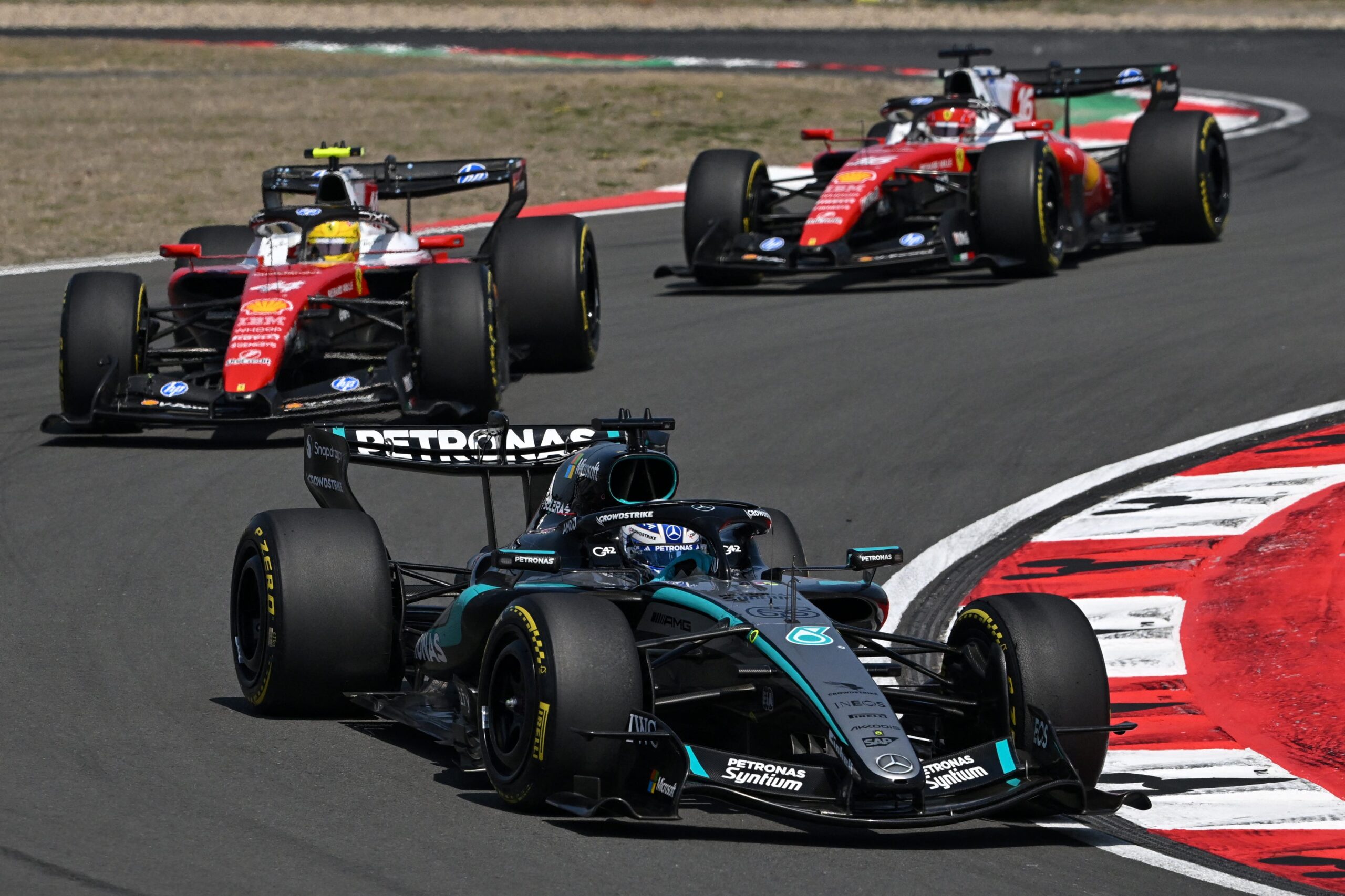


George Russell converted sprint pole to sprint victory in Shanghai Saturday, holding off both Ferraris to keep his 2026 season unblemished. Two races into Formula 1’s radical new regulatory era, the Mercedes driver has won everything put in front of him.
The Chinese Grand Prix Sprint was supposed to test whether Russell’s dominant Australian opener was a fluke or a trend. It wasn’t a fluke.
Russell himself called it “fun,” which is the kind of understatement a driver offers when he knows he had the fastest car and the composure to prove it. The real action unfolded behind him, where the chaos of F1’s reimagined aerodynamic rules turned every battle into a pinball exchange of saves and boosts.
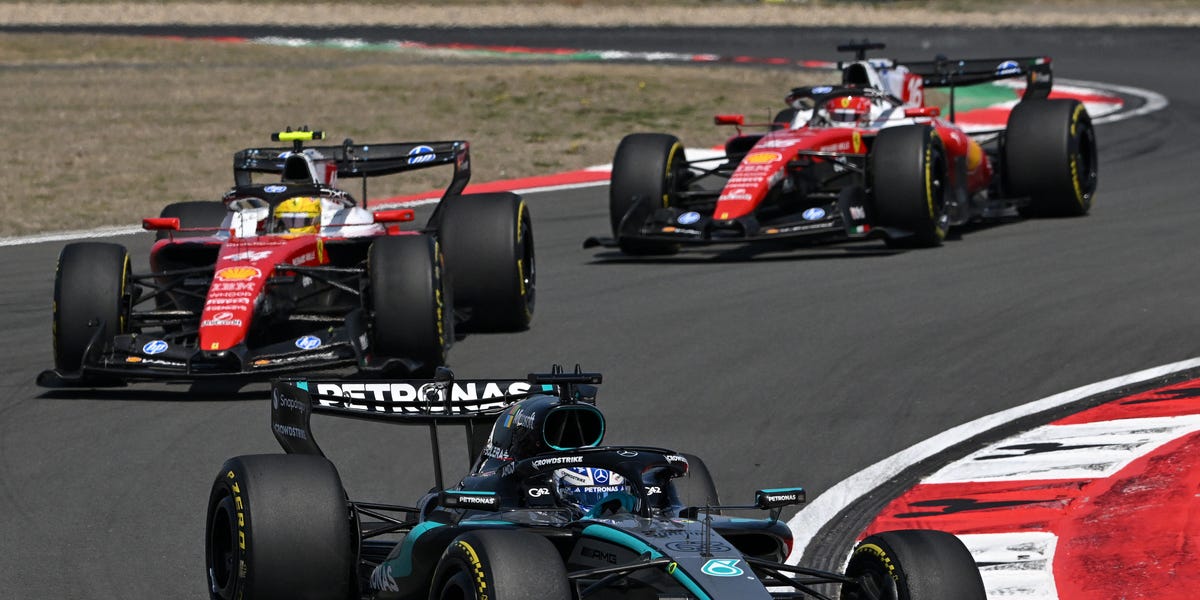
His former teammate Lewis Hamilton, now driving for Ferrari, briefly made it interesting. Hamilton dispatched defending champion Lando Norris in the opening corners and slotted into second after Russell’s current teammate Kimi Antonelli imploded on the first lap. The seven-time champion pressed Russell hard, and the two traded positions in a sequence that showcased exactly what the 2026 regulations were designed to produce — closer, more dynamic wheel-to-wheel racing.
But Hamilton couldn’t sustain the pressure. Charles Leclerc, smelling blood from his Ferrari teammate’s fading pace, moved in for second. Ferrari lets its drivers race, and Leclerc made the most of it, eventually claiming the runner-up spot. Hamilton hung on for third, giving Ferrari a double podium but no answer for the silver car ahead.
Antonelli’s afternoon was a mess. The sophomore Mercedes driver tangled with Red Bull rookie Isack Hadjar at turn six on the opening lap and earned a 10-second penalty from the stewards. He clawed his way back up the order impressively enough to threaten the podium positions before a safety car froze the field with five laps remaining.
Nico Hulkenberg’s Audi had stalled on track with an apparent electrical failure serious enough that marshals wouldn’t approach the car, keeping Hulkenberg strapped in until it was cleared. Cadillac simultaneously retired Valtteri Bottas. Three cars — Hulkenberg, Bottas, and Arvid Lindblad — failed to finish.
The restart with three laps to go handed Russell a clean break. Leclerc oversteered into the first corner and lost any shot at challenging. The order held: Russell, Leclerc, Hamilton.
Antonelli’s penalty dropped him to fifth, wedged between the two McLarens of Norris in fourth and Oscar Piastri in sixth. Liam Lawson grabbed the final sprint point for Racing Bulls in seventh. Ollie Bearman took eighth.
Max Verstappen finished ninth. No points. The reigning champion has looked ordinary through two rounds, a jarring sight for anyone who watched him dismantle the field across four consecutive titles. Red Bull’s new machinery under these regulations appears to have leveled a playing field the team once owned.
Mercedes, meanwhile, looks like the team that cracked the 2026 rulebook first. Russell’s consistency from qualifying to race finish has been clinical — pole to victory in Melbourne, sprint pole to sprint victory in Shanghai. No mistakes. No drama from his side of the garage, anyway.
The grand prix itself still looms Sunday, and Ferrari clearly has pace to challenge. But right now, Russell and Mercedes are setting the tempo for a season that was supposed to scramble the competitive order. It did scramble it — just not in the direction most predicted.
The team that struggled through the ground-effect years now appears to have the edge in the sport’s latest reinvention, and Russell is driving like a man who intends to keep it.
Share this Story