



Ten white R1S SUVs with pink tow hooks and blue racing stripes. That was Rivian’s Miami Edition last fall — a vehicle designed to polarize, priced to exclude, and produced in numbers so small they barely registered on a balance sheet. It was also, according to Rivian’s Chief Design Officer Jeff Hammoud, a test run for something bigger.
Rivian is borrowing the sneaker industry’s most potent sales tactic: the drop. Limited colors, limited windows, limited supply. Buy now or lose it forever.
Hammoud laid out the strategy in a recent sit-down with The Drive, framing niche color options not as permanent catalog entries but as rotating, scarcity-driven events designed to keep the product feeling fresh without burdening the factory with low-volume paint runs.
“We see them as like cool sneaker drops, where we could do these other editions that come out,” Hammoud said. “They’re for a low, little run.”
The playbook already has a few chapters written. Last December, Rivian offered Borealis Purple through its online configurator for just a few weeks before pulling it. And almost on cue, minutes after The Drive published its interview, Rivian announced a brief revival of the Forest Green interior for the Dual Motor Max battery R1S and R1T.
Coincidence or choreography, the timing underscored the point.
Hammoud is refreshingly candid about the math. Compass Yellow — the color most people picture when they think of Rivian — had one of the lowest take rates in the lineup before being discontinued. The people who chose it were fanatical about it. Everyone else scrolled past to Glacier White or El Cap Granite.
A company burning cash on its way toward profitability cannot afford to stock paint booths for passion projects that move in single-digit percentages.
When you design a car that has to meet the masses, you automatically have to go to a little bit more safer, more neutral,” Hammoud admitted. “But we also see that with our colors — the people who have it absolutely love it.”
So the solution is artificial scarcity. Rotate adventurous colors through a handful of configurator slots, generate urgency, let the diehards scramble, then swap in something new. Black, gray, white, and silver remain the permanent anchors. Everything else becomes a limited engagement.
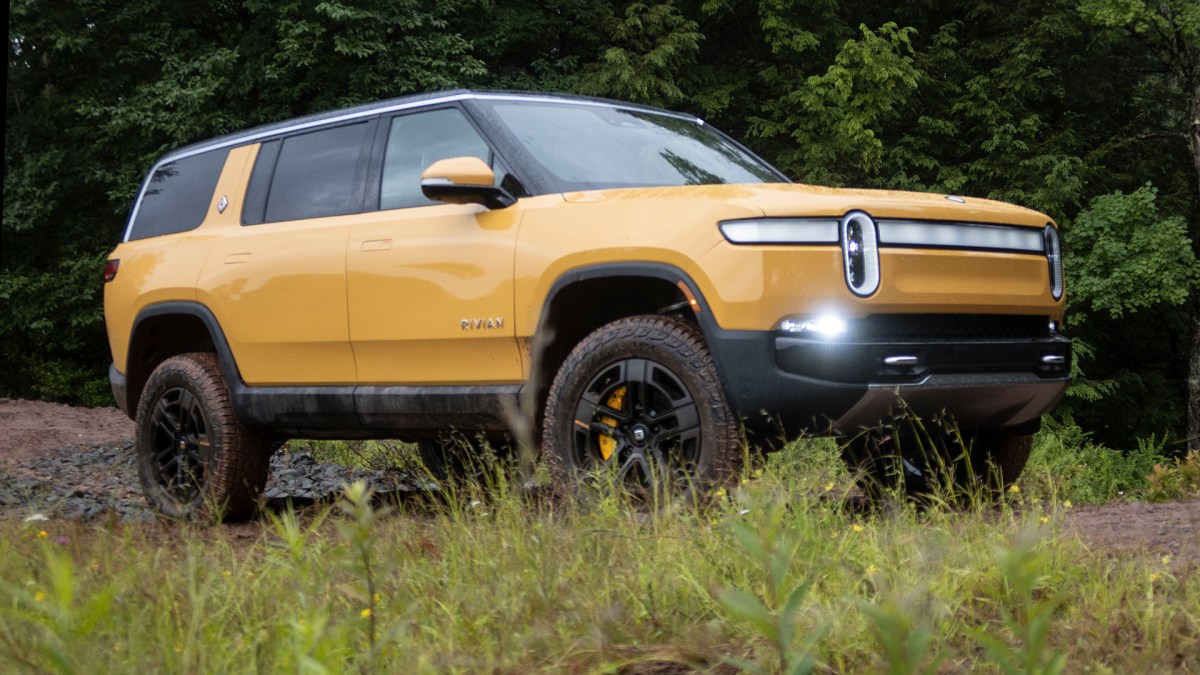
It is a clever strategy for a company building roughly 50,000 vehicles a year. It generates social media heat without requiring long-term production commitment. It flatters early adopters who feel they own something rare.
And it creates a secondary market conversation — will a Borealis Purple R1T hold value better than a black one? — that costs Rivian nothing to fuel.
The approach will carry over to the smaller, cheaper R2 when it arrives. Hammoud made clear that both platforms will get the rotating color treatment, suggesting this is now baked into Rivian’s product philosophy rather than treated as a one-off marketing stunt.
There is a tension here that Hammoud danced around but never quite named. FOMO-driven purchasing works brilliantly for $200 sneakers. Whether it translates cleanly to $70,000-plus trucks and SUVs — purchases that involve financing, insurance, and years of ownership — is a different question.
A buyer who panic-orders Compass Yellow in a 72-hour window and regrets it six months later has a much bigger problem than a closet full of unworn Jordans.
Still, for a startup that needs every possible edge in brand heat and customer engagement, manufacturing desire through scarcity is vastly cheaper than manufacturing demand through discounts. Rivian is betting that in a market drowning in silver crossovers, a purple truck that you can’t get anymore is worth more than one you can.

Share this Story