


A pair of FSO Polonez models — one a 1997 hatchback, the other a four-door crew cab pickup — have surfaced on Facebook Marketplace in Bartlett, Illinois, still wearing black-backed Polish license plates. The asking prices: $8,500 for the hatchback, $13,500 for the truck. Neither figure qualifies as pocket change for a car most Americans have never heard of, but then again, try finding another one on this continent.
The Polonez never had a U.S. importer. Unlike the Yugo, which at least had the decency to embarrass itself on American soil, FSO’s flagship stayed firmly in European and Eastern Bloc markets from its 1978 debut until production finally ended in the early 2000s. These Illinois cars appear to be private imports, likely targeting the large Polish diaspora in the Chicago suburbs. The seller has previously brought over Fiat Cinquecentos and Opel Calibras from Poland.
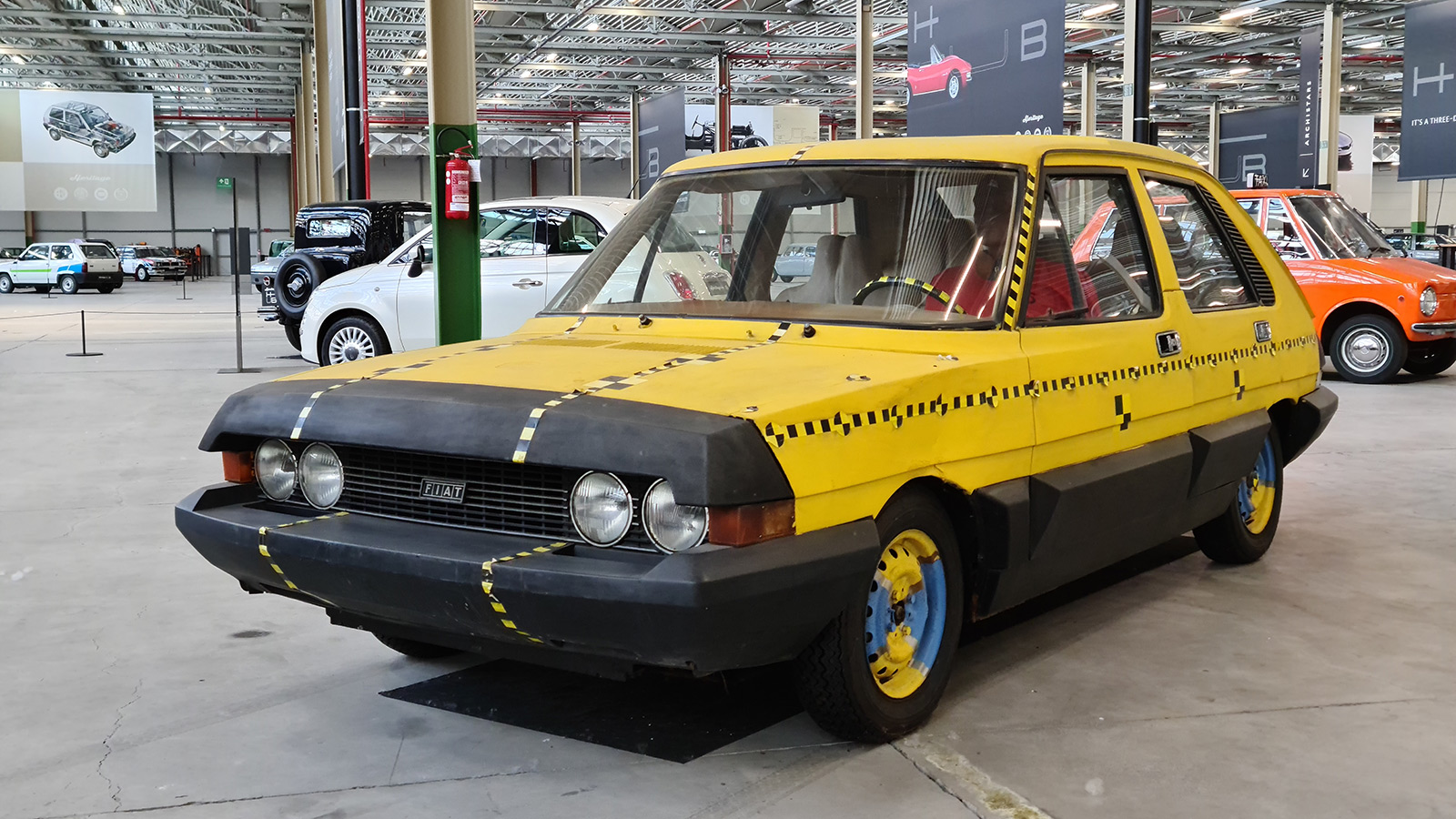
What makes the Polonez fascinating — and maddening — is its mongrel engineering. The car’s roots trace to a 1972 Fiat safety prototype, the ESV 2000, built on the same platform as the Fiat 128. Giorgetto Giugiaro refined the dumpy safety concept into a sleeker liftback shape, but underneath, the Polonez rode on the same mechanicals as the ancient Fiat 125p sedan FSO had been building since 1967.
Same rear-wheel-drive layout. Same solid rear axle with leaf springs. Same basic floorpan derived from the Fiat 1300/1500 of the early 1960s. You could buy a conservatively styled 1960s sedan or a modern-looking fastback, and either way you got the same drivetrain. That arrangement persisted until the 125p was finally killed off in 1991.
The engine bay tells an even stranger story. Over its long production life, the Polonez accepted powerplants from Fiat, Rover, Ford, and Peugeot. The Illinois hatchback runs Rover’s 1.4-liter K-Series 16-valve four — the same engine found in the MGF.
The crew cab truck likely uses either FSO’s own 1.6-liter OHV or Peugeot’s 1.9-liter XUD diesel, both offered in the Polonez Truck Roy. Ford’s Pinto-derived two-liter OHC was another option, and probably the smartest choice for anyone planning to actually drive one of these in the States.
That crew cab truck is the real curiosity. FSO stretched the standard Polonez body with filler panels, sliced it behind the rear doors, and grafted on a pickup bed nearly six feet long. The result measured 208 inches bumper to bumper, carried over 2,000 pounds, and featured fold-down bed sides. Think of it as Poland’s answer to the Jeep Comanche, except built on 1960s Italian bones with a Korean-era facelift.
Daewoo bought into FSO in the late 1990s, bringing production of the Nexia, Lanos, and tiny Tico to Warsaw. The partnership was brief. Daewoo went bankrupt in 2000, General Motors scooped up the remains in 2002, and FSO eventually pivoted to assembling Chevrolet Aveos until the factory’s automotive chapter closed in 2011.
Finnish road testers who lived with the Polonez in the 1980s found it roomy and cheap but loud, with vague steering and clumsy urban manners. The price told the real story: in Finland, a Polonez cost less than 40,000 Finnish marks when a comparable Volkswagen Passat ran double that. By 1987, inflation had pushed the Passat past 110,000 marks. The Polonez still sat under 40,000.
The Illinois hatchback looks complete and honest, a recent arrival still wearing its European plates. The truck, now reportedly sold, had been fully repainted in period-correct teal by a Polish enthusiast, with sealed underbody and leather seats. These are not collector cars in any traditional sense. They are artifacts — mechanical proof of what happens when Cold War economics, Italian engineering, and British valve trains collide on a Warsaw assembly line, then somehow wash up in suburban Chicago.


Share this Story