
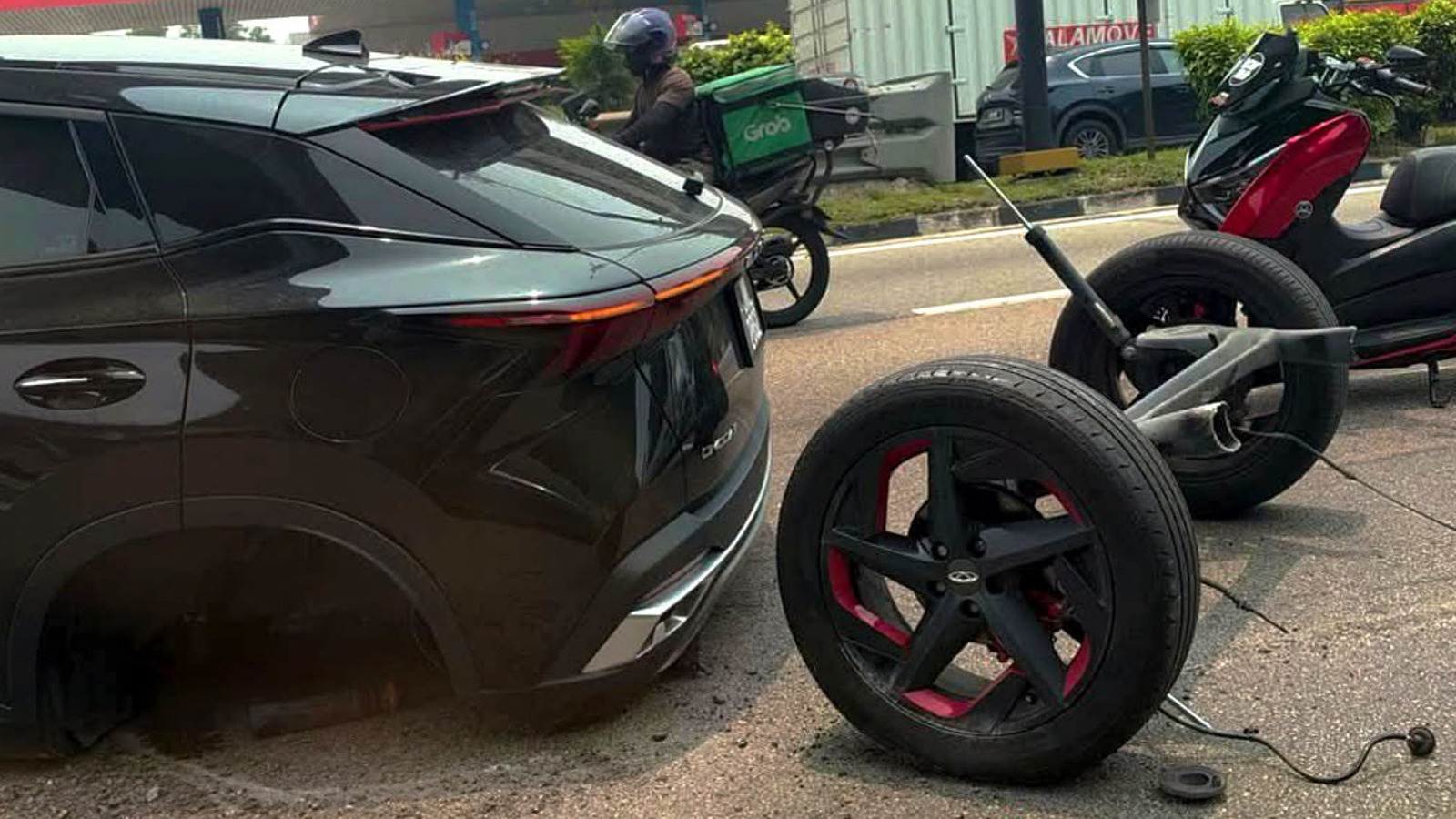


The rear suspension assembly of a Chery Omoda 5 detached from the car entirely. Not a bolt. Not a bushing. The whole rear axle, wheels included, separated from the vehicle. Photos flooded Malaysian social media starting October 6, and within days, the government yanked the car’s type approval.
Malaysia’s Road Transport Department, known as JPJ, announced on October 11 that it had suspended sales of the Omoda 5 and would launch a technical investigation. This is the agency that certifies every car sold to the Malaysian public. When it pulls a type approval, it is not a suggestion. It is a shutdown.
Chery took six days to respond publicly. The images were online for nearly a week before the company acknowledged the problem, and only after JPJ forced its hand. That timeline alone tells you something about the automaker’s crisis management instincts.
The company says the defect is limited to pre-facelift Omoda 5 variants C and H, which used a torsion-beam rear suspension. The current facelifted model runs multi-link rear suspension, a different design entirely. Chery has directed owners to check their VIN numbers on a dedicated website and invited anyone wanting “added peace of mind” to visit an authorized service center.
This is the second time the Omoda 5 has had rear axle trouble in Malaysia. In 2024, Chery voluntarily recalled 600 units over a faulty welding part discovered during assembly. Only 60 cars were actually affected. That recall happened before JPJ had to intervene. This time, Chery did not get ahead of it.
The Omoda 5 is a locally assembled compact crossover powered by a turbocharged 1.6-liter engine paired with a six-speed dual-clutch transmission. Before the stop sale, it was priced at roughly RM116,800, about $28,600. It was one of the brand’s volume sellers in a market Chery entered only in 2023.
By 2024, Chery had climbed to the fifth most popular automaker in Malaysia by new registrations, selling under the Omoda, Jaecoo, Jetour, and iCar nameplates. That growth rate makes this episode especially damaging.
A brand trying to establish trust in a new market cannot afford wheels-off failures. It cannot afford slow responses. And it cannot afford the appearance of trying to suppress media coverage.
Malaysian automotive commentator BoBo Borak Motosiput publicly accused Chery of attempting to silence his reporting. He claimed company representatives used “indirect” methods to pressure two separate media outlets into getting him to stop covering the axle failure. Chery has not publicly addressed those allegations.
JPJ’s decision to suspend type approval for the entire Omoda 5 lineup, not just the affected pre-facelift variants, sends an unmistakable message. The regulator is treating this as a systemic credibility problem, not a batch defect.
Chery has spent three years building momentum in Malaysia, riding the wave of affordable Chinese vehicles flooding Southeast Asian markets. That wave carries them fast in both directions. A recall you manage proactively, like the 2024 episode, is a speed bump. A government-ordered sales ban triggered by social media photos of a car missing its rear wheels is a different category of problem entirely.
The technical investigation is still underway. JPJ has not indicated when, or whether, it will reinstate the Omoda 5’s type approval.



Share this Story