
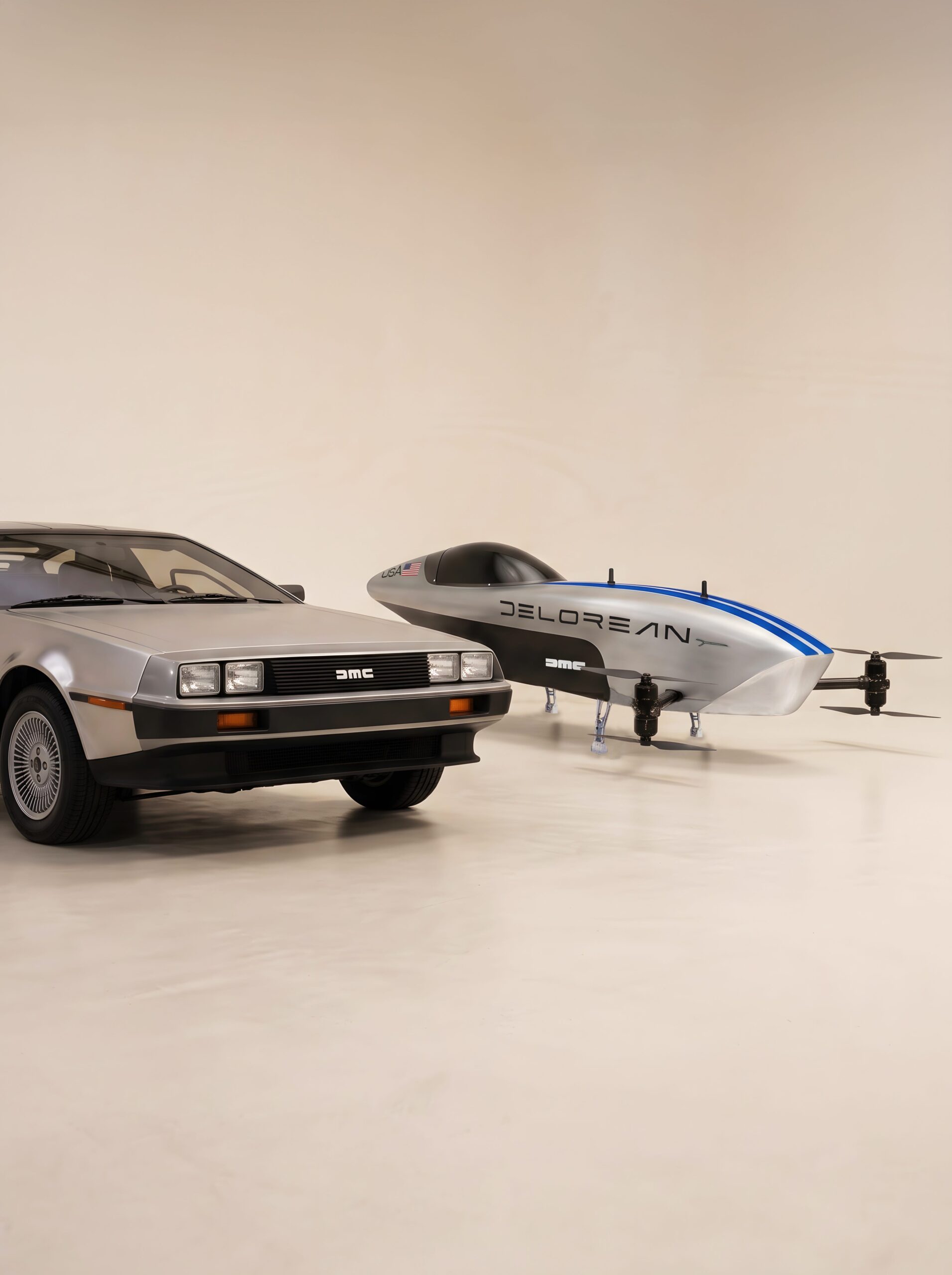


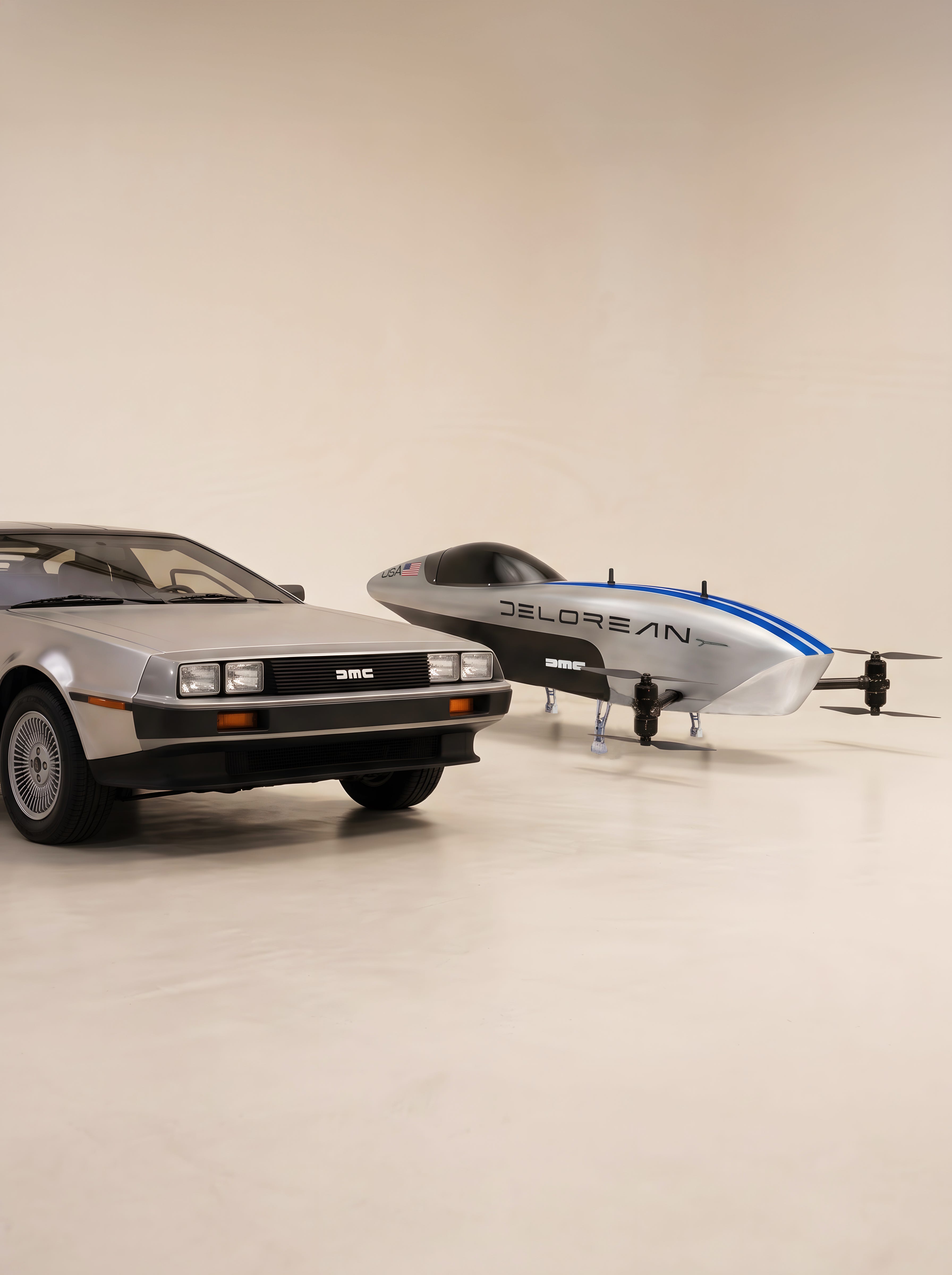
Forty years of jokes about flying DeLoreans are about to collide with reality. The revived brand announced at TechCrunch Disrupt in San Francisco that it will field a team in the Airspeeder International Series, an all-electric racing championship for vertical takeoff and landing aircraft. It becomes the first American constructor in the series.
“People have pictured a DeLorean in the sky for 40 years,” said Cameron Wynne, the company’s chief brand officer. “We decided it was time to stop picturing it.”
The DeLorean Airspeeder Team will debut when the 2026-27 season opens in November, competing in standardized Mk3C electric race aircraft fitted with DeLorean-designed styling and branding. Pilots fly through three-dimensional courses marked by virtual gates, relying on onboard sensors and collision-avoidance systems to compete at speed.
The first season is a branding exercise, plain and simple. DeLorean won’t touch the engineering of the aircraft until the 2027-28 campaign, when it plans to collaborate with students from UC Berkeley and Georgia Tech on developing future race machines.
That timeline matters. A company leaning on university engineering partnerships rather than its own R&D bench is telling you something about where it actually stands as a technology enterprise. Since its relaunch, DeLorean has talked a big game about electric mobility, unveiling the Alpha5 EV concept and positioning itself as forward-looking. Tangible products reaching customers have been harder to spot.
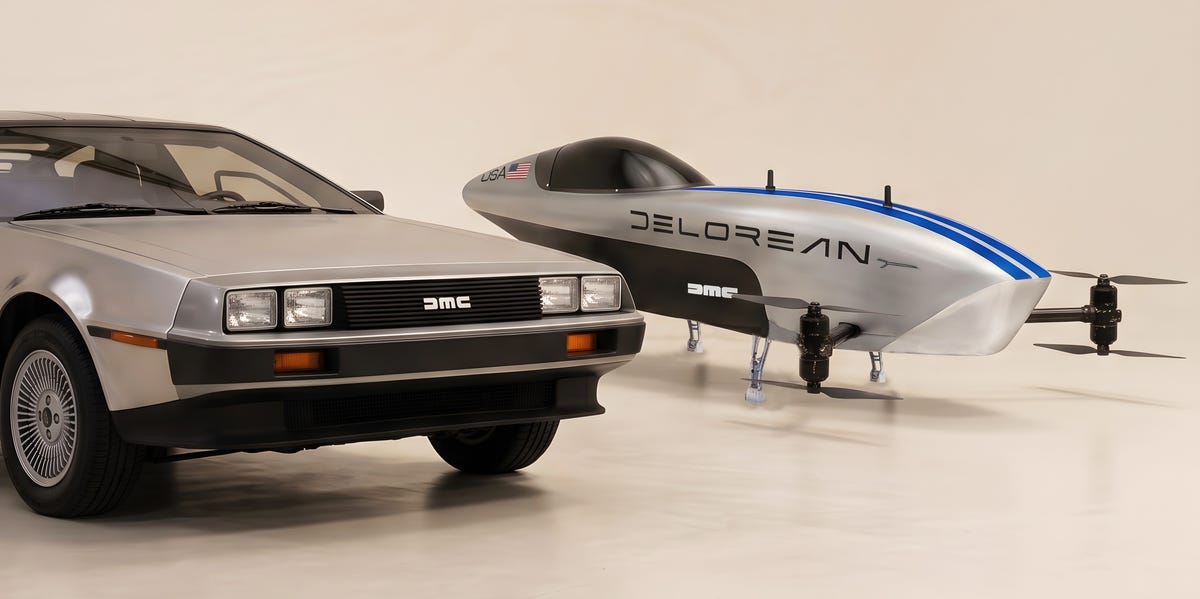
Airspeeder itself is still proving its concept. Founded in 2016 by Australian entrepreneur Matt Pearson, the series pitches itself as the Formula 1 of electric flight, a competition laboratory meant to accelerate eVTOL technology the way grand prix racing once pushed automotive engineering forward. The ambition is real. The scale is not yet comparable.
DeLorean is not the first car company drawn to this space. Hyundai spun off Supernal to build air taxis. Toyota poured hundreds of millions into Joby Aviation, Honda is developing its own eVTOL aircraft, and Stellantis invested in Archer Aviation.
But those efforts target commercial passenger transport and logistics, sectors with identifiable revenue streams and regulatory frameworks already taking shape. Racing is a different bet entirely. It trades near-term commercial viability for spectacle, brand heat, and the hope that competition will yield transferable technology.
For a brand like DeLorean, which has far more cultural cachet than manufacturing capacity, spectacle might be the smarter play. The original DeLorean Motor Company built roughly 9,000 cars before going bankrupt in 1982. The car became a cultural monument only because a movie strapped a flux capacitor to its back.
Every iteration of the brand since has tried to convert that nostalgia into a viable business, with mixed results at best. Now the company is banking on the idea that its name resonates in a completely different medium. Electric flying car racing sounds like science fiction, which is precisely the territory DeLorean has always occupied more comfortably than the showroom floor.
Whether Airspeeder can grow into something approaching mainstream relevance remains an open question. The series is young, the aircraft are still evolving, and the regulatory environment for eVTOL technology is being written in real time by agencies around the world.
DeLorean’s entry adds a recognizable name to a series that desperately needs them. What it adds to DeLorean is less certain. The brand has spent four decades trading on a single movie prop, and now it is asking people to picture that prop without wheels.
Share this Story