
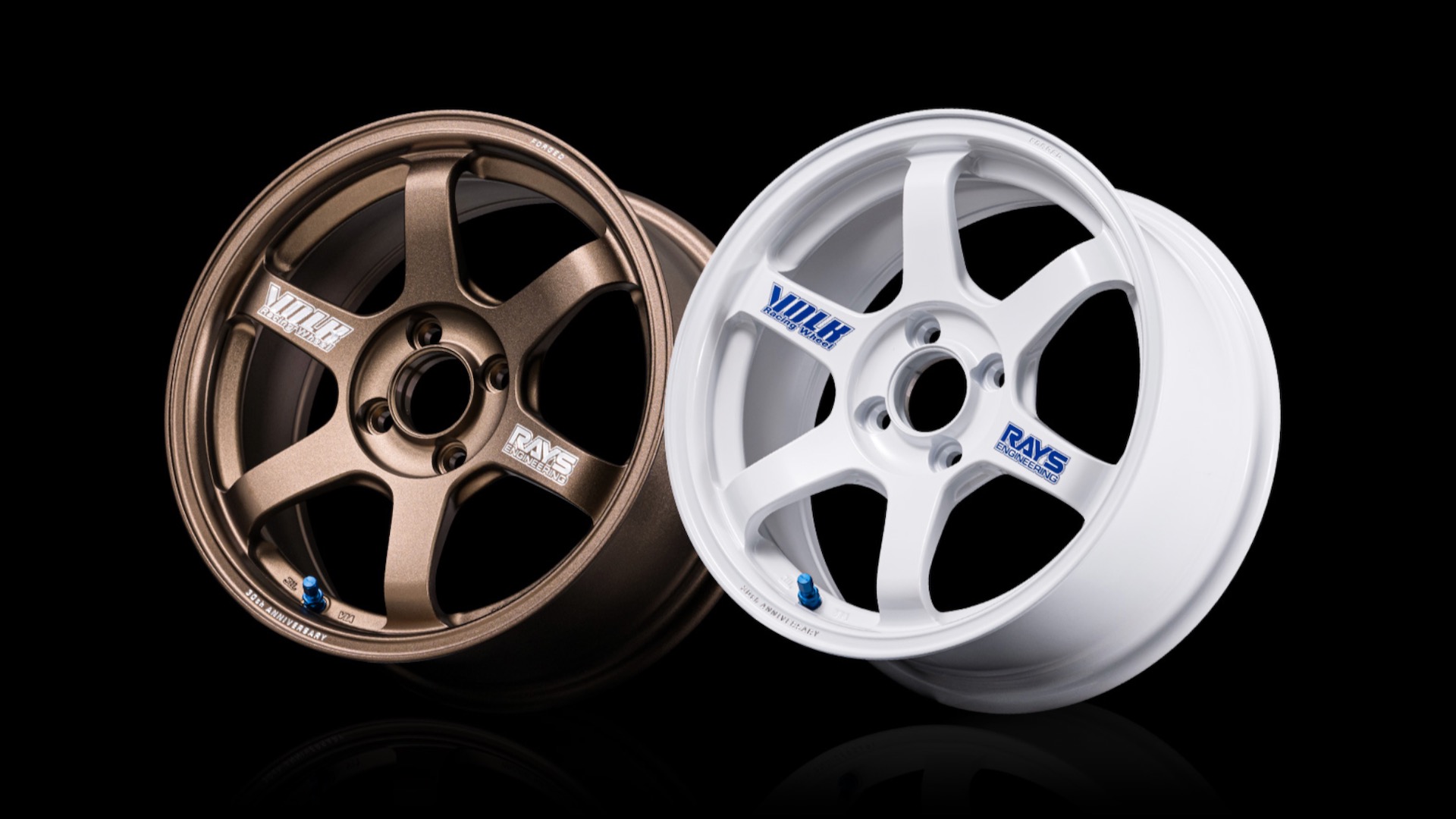


The Japan Anniversary Association has officially recognized March 7 as TE37 Day. Not a car. Not an engine. A wheel. And honestly, it’s hard to argue with the choice.
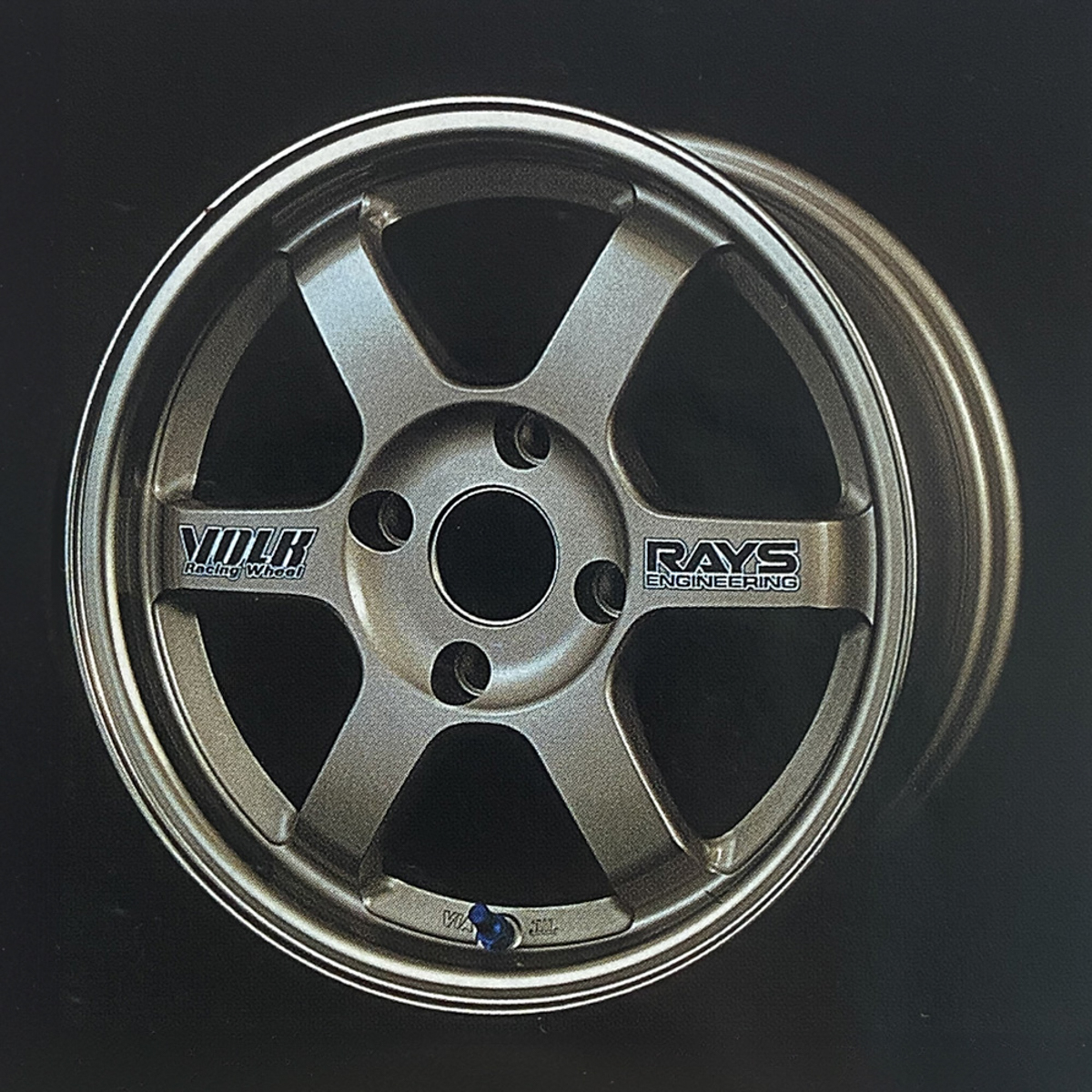
Rays Engineering’s Volk Racing TE37 turned 30 this year, and the country that gave the world the Skyline GT-R, the Supra, and the RX-7 decided that the six-spoke forged wheel bolted to most of them deserved its own calendar date. The “37” in March 7 — 3/7 — lines up perfectly, because the original 15-by-6-inch TE37 weighed just 3.7 kilograms. That’s 8.1 pounds for an entire wheel, and in 1996, that number was staggering.
Rays president Shotaro Shiba received the official certificate last month at the Osaka Auto Messe, making the designation formal.
The TE37’s backstory reads like a racing résumé that most manufacturers would kill for. Rays Engineering, founded in 1973, cut its teeth on three-piece wheels and pioneered forging technology for motorsports. The company supplied wheels to the Nissan Electramotive team during its IMSA dominance in the 1980s and was on the Mazda 787B when it won Le Mans in 1991 — still the only rotary-powered car to take that checkered flag.
From there, Rays moved into JTCC and BTCC competition, refining its six-spoke concept through endurance racing with Acura’s Spice Engineering team, which won three consecutive IMSA GTP-Lights championships. The forged monoblock GTP wheel hit the aftermarket in 1993. Two years later came the Touring Evolution, and then in 1996 the TE37 arrived at ¥37,000 — roughly $340 — and the game changed.
It landed right in the golden era of Japanese performance. FD RX-7s, R34 GT-Rs, Evos, STIs — the TE37 looked right on all of them. Three decades later, it still does. The design has never been fundamentally altered, which tells you everything about how right Rays got it the first time.
The variant list alone is absurd. Over 40 iterations now exist: the magnesium TE37 Mag from 1998, the off-road Gravel from 1999, the Super Lap SL with shaved spokes in 2010, a kei car-specific KCR in 2022, and last year’s GC — the first 23-inch model, aimed squarely at heavyweight EVs. From 13-inch kei wheels to 23-inch rollers for electric SUVs, every single one maintains one-piece forged construction. That’s not a brand stretching a nameplate thin. That’s engineering discipline.
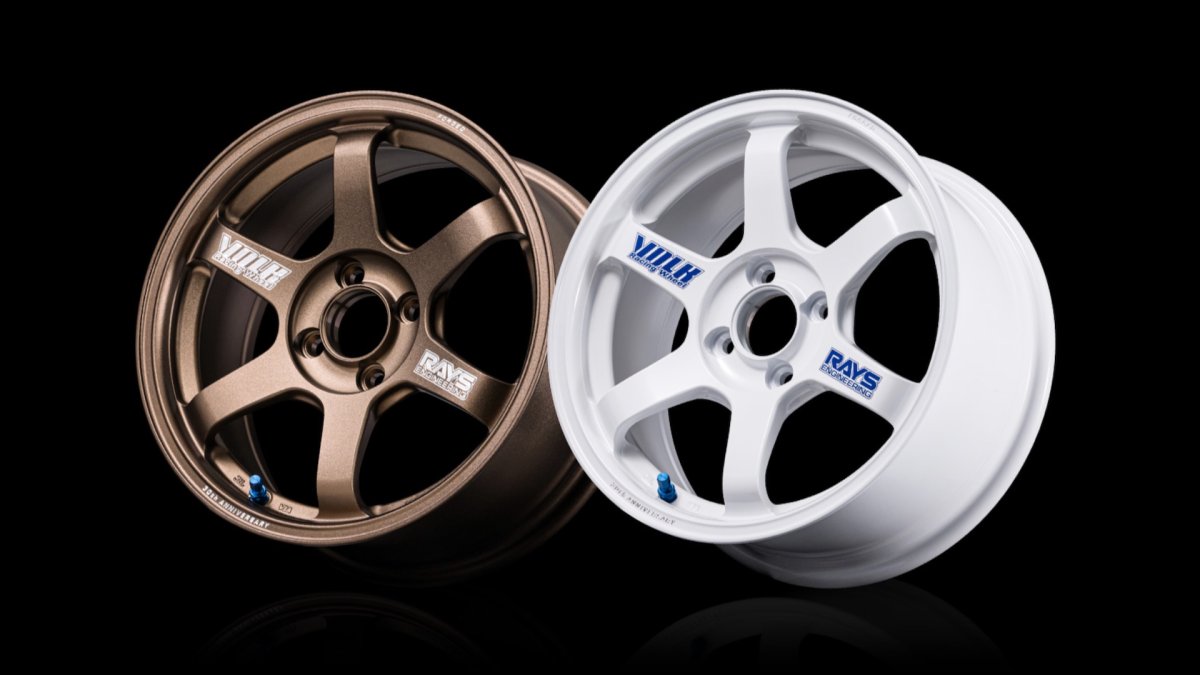
For the 30th anniversary, Rays is releasing commemorative editions of three models: the TE37 Sonic for 15- and 16-inch fitments, the TE37 Saga S-Plus for 17- and 18-inch, and the TE37 Ultra Large PCD. Both colorways — white with blue logos, bronze with black — are deliberate throwbacks to the two original 1996 options. Each wheel gets “30th Anniversary” machined into the lip near the valve stem.
There’s also merchandise, because of course there is. T-shirts, keyrings, lapel pins, and — for reasons that perhaps only Japan can fully explain — a rubber duck wearing a racing helmet.
The knockoffs over the years have been relentless, a backhanded compliment that speaks to the TE37’s cultural gravity. No other aftermarket wheel has been copied as often or as shamelessly. None of the copies have displaced it.
An American comparison might be the Torque Thrust, and it’s a fair one. But the Torque Thrust never got its own national holiday. Thirty years in production, over 40 variants, zero fundamental redesigns. Some things don’t need fixing. Japan apparently agrees.
Share this Story