About This Mazda Miata Base 2002 Build
We love featuring real builds from real owners. This Mazda Miata Base 2002 sits on a set of 16×8 / 16×8-inch Rota Grid wheels, and the result speaks for itself.
The owner chose Rota for a reason. This brand delivers serious quality and a design language that turns heads at every car meet. We see hundreds of Mazda Miata Base builds come through WheelFront every month, but this one stands out. The combination of the exterior with the Rota Grid creates a look that balances aggression with elegance.
Fitment Breakdown: Rota Grid on the Mazda Miata Base 2002
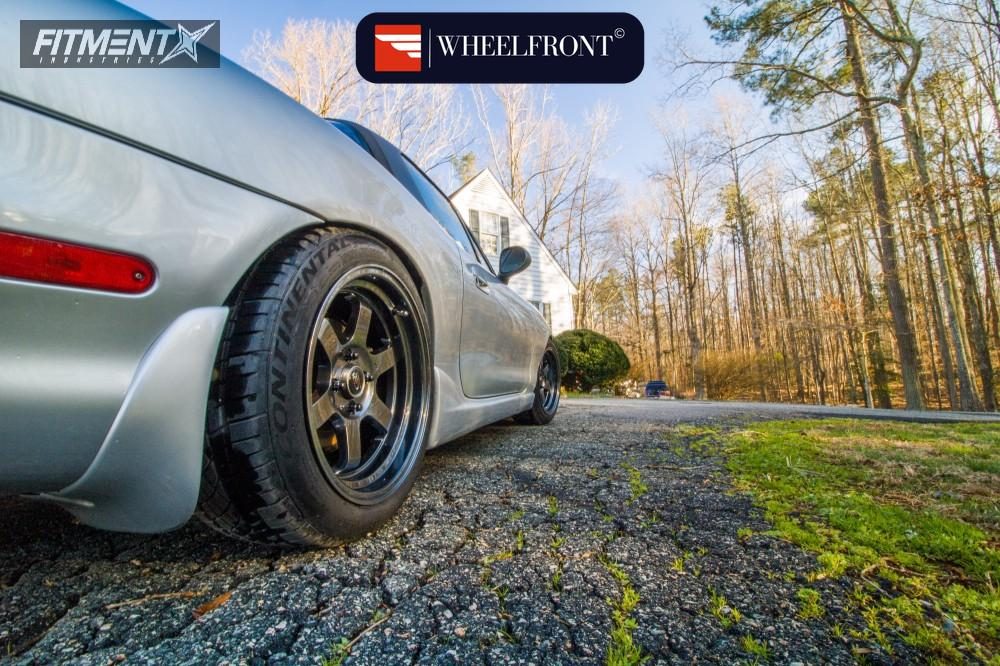
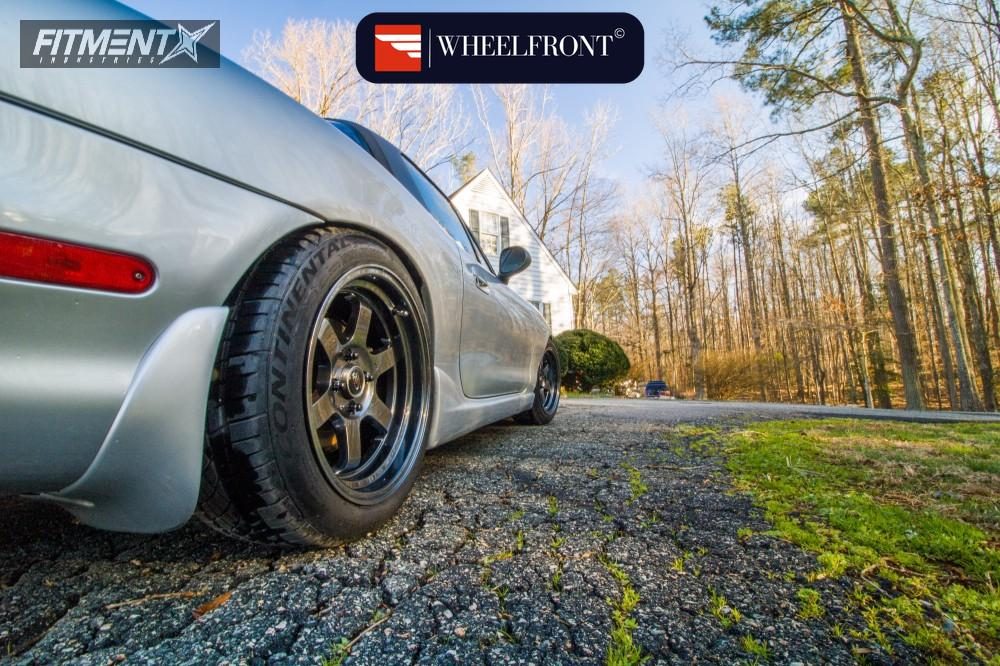
I walked around this 2002 Miata for twenty minutes at the last meet. The 16x8 Rota Grid setup is an aggressive choice for an NB chassis. That +20 offset pushes the wheels right to the edge of the fenders.
Most stock NBs shy away from 16-inch wheels, but these Grids fill the arches perfectly. You get a meaty look without looking like a monster truck. The +20 offset demands attention and creates a wide, planted stance.
Because these are 16x8s, you have to watch your front caliper clearance. Rota engineered the spokes to bow out enough to clear the stock brakes easily. You won't need spacers here, which keeps your scrub radius in check.
Since the owner threw this car on air suspension, the fitment changes whenever the car parks. At ride height, the tires tuck just enough to avoid the metal. When he airs out, the fenders sit right on the rubber.
The hub bore fits the Miata perfectly, so we avoid any annoying vibration issues. I noticed the barrel depth is just right for this wheel design. It adds enough visual weight to anchor the car to the pavement.
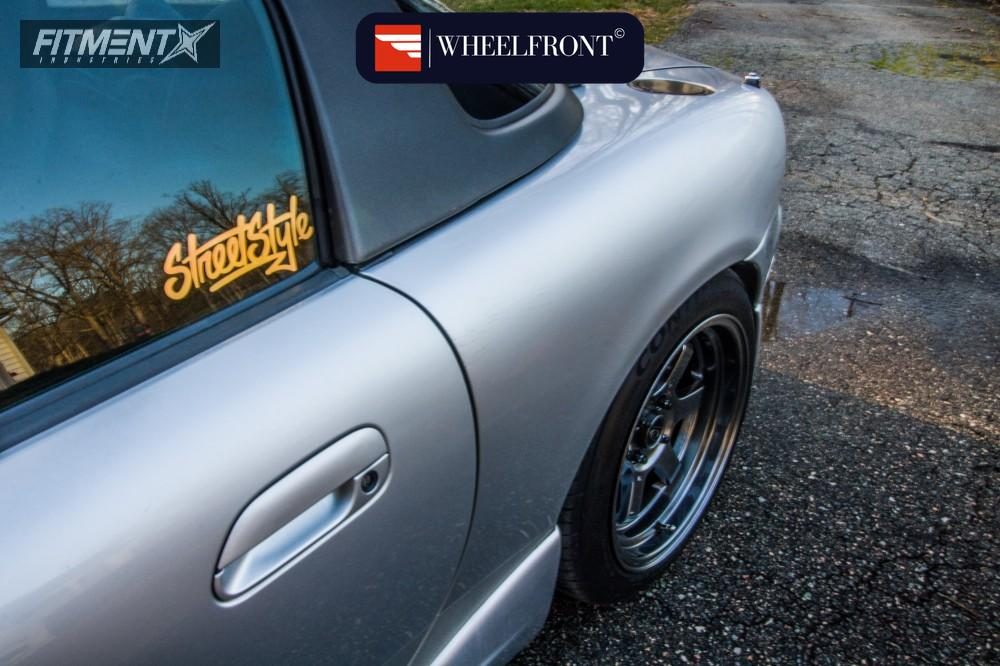
You need to roll those fenders flat if you want this to work. Without a proper roll, those 16x8s will chew up your tire sidewalls on every big bump. It is a small price to pay for this level of flushness.
The spoke design on the Grid is iconic for a reason. It draws the eye outward and makes the car feel wider than it actually is. It transforms the soft NB lines into something much more industrial and aggressive.
What We Recommend for Mazda Miata Base 2002 Owners
If you want this look, start with your fender rolling game. You cannot run an 8-inch wide wheel with a +20 offset without clearing that inner lip. Take your time with a heat gun to save your paint.
I always tell people to stick with a square setup on the Miata. Running 16x8s all around keeps your handling predictable and allows for easy tire rotations. Staggered setups on these cars usually just create unnecessary understeer.
Watch your tire choice carefully when running this width. A 205/45 or 215/40 tire gives you the perfect amount of stretch to clear the fenders. Too much meat and you are going to rub constantly.
Don't be afraid to pull the fenders a tiny bit if you want more room. A slight pull gives you a massive advantage when dialing in your final height. It is the difference between a functional build and one that just sits pretty.
Common mistakes usually involve buying the wrong offset. If you go for a +35 or higher, you will hit the shocks. Stick closer to that +20 sweet spot if you want that poke-and-flush aesthetic.
Style and Build Analysis
The Teflon finish on these Grids is honestly a stroke of genius. It has this flat, tactical look that makes the car feel like it means business. It provides a killer contrast against the glossy body paint.
Most wheels look too shiny or too basic, but this texture adds depth. It hides brake dust like a champ, too. I love how the dark finish grounds the entire visual profile of the car.
The six-spoke design of the Grid feels right at home on the NB platform. It echoes the simplicity of the car while adding a layer of track-ready toughness. It looks like it belongs on a drift course or a canyon road.

Proportions are everything when you modify a Miata. The 16-inch diameter fills the wheel wells without making the car look awkward. It strikes that rare balance between aggressive stance and functional driving height.
Seeing this car parked next to others really highlights the change in silhouette. It looks lower, wider, and more intentional than a stock Miata. It proves that you don't need a widebody kit to make an impact.
Why We Love This Build
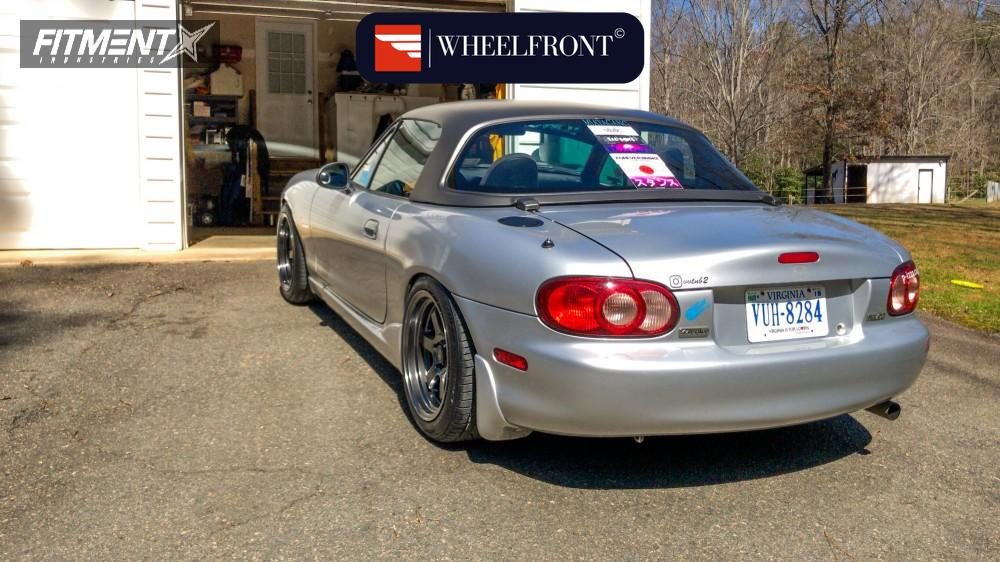
This Miata hits different because it feels cohesive. The Teflon finish catches the light in a way that highlights the spoke curves without being flashy. When the air suspension drops the frame, the whole car looks like a predator waiting to pounce. It is the kind of build that makes you stop walking just to stare.
We see a lot of Miatas, but this one gets the stance perfectly right. Every choice—from the offset to the suspension—serves the overall aesthetic. It is a masterclass in how to upgrade a classic chassis without ruining its soul. It is simply perfect.
This car is pure inspiration for anyone looking to wake up their daily driver. Stop overthinking your build and just get the fitment dialed in right. This is exactly how a Miata should look.
Full Specs Breakdown
Here is exactly what this owner is running. We break down every detail so you can replicate this build or use it as a starting point for your own setup.
- Car Make & Model: Mazda Miata Base 2002
- Vehicle Color:
- Wheel Brand & Model: Rota Grid
- Wheel Size: 16×8 / 16×8
- Offset: 20 / 20
- Wheel Finish: Teflon
- Tires: Continental ExtremeContact DW 195/50 23.7″x7.7″ / 195/50 23.7″x7.7″
- Suspension: Air Suspension
Before You Buy: Fitment Checklist
We talk to Mazda Miata Base owners every day. These are the questions we hear most before they pull the trigger on new wheels.
Will 16×8 / 16×8-inch wheels fit my Mazda Miata Base? Yes, but fitment depends on width, offset, and tire size working together. A wrong offset means rubbing. A wrong tire size means poor handling. Always verify all three.
Do I need to modify my fenders? That depends on your offset and suspension. A conservative offset with stock ride height usually fits without modification. Go aggressive and you may need to roll or pull your fenders.
Can I daily-drive this setup? Absolutely. Thousands of Mazda Miata Base owners run 16×8 / 16×8-inch wheels every day. The key is choosing the right tire with enough sidewall to absorb road imperfections.