About This Hyundai Veloster Turbo R-Spec 2014 Build
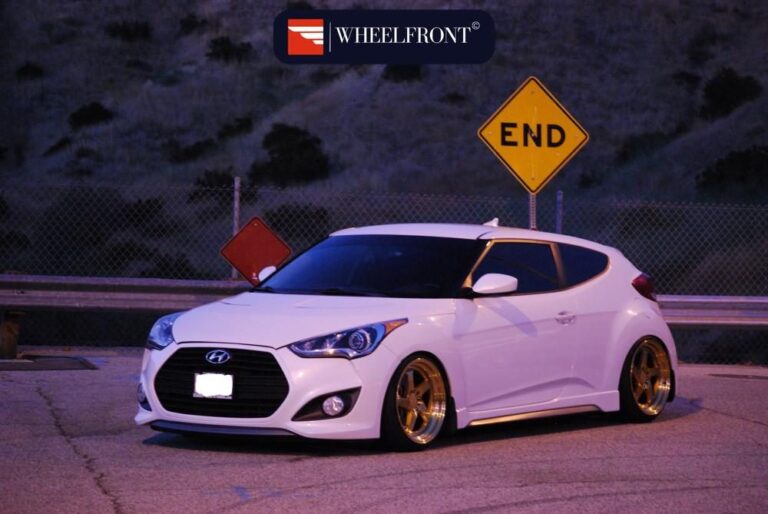
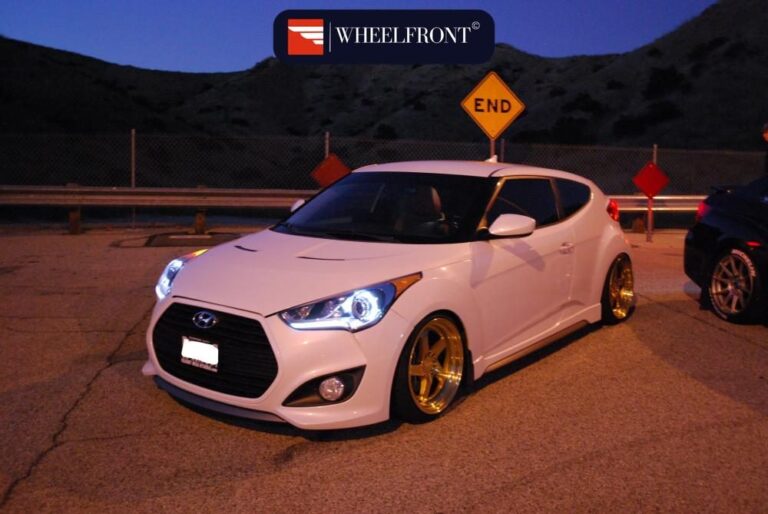
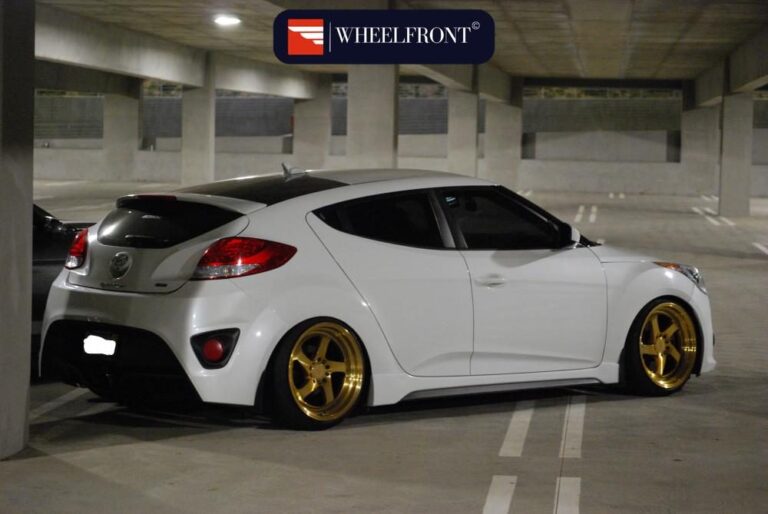
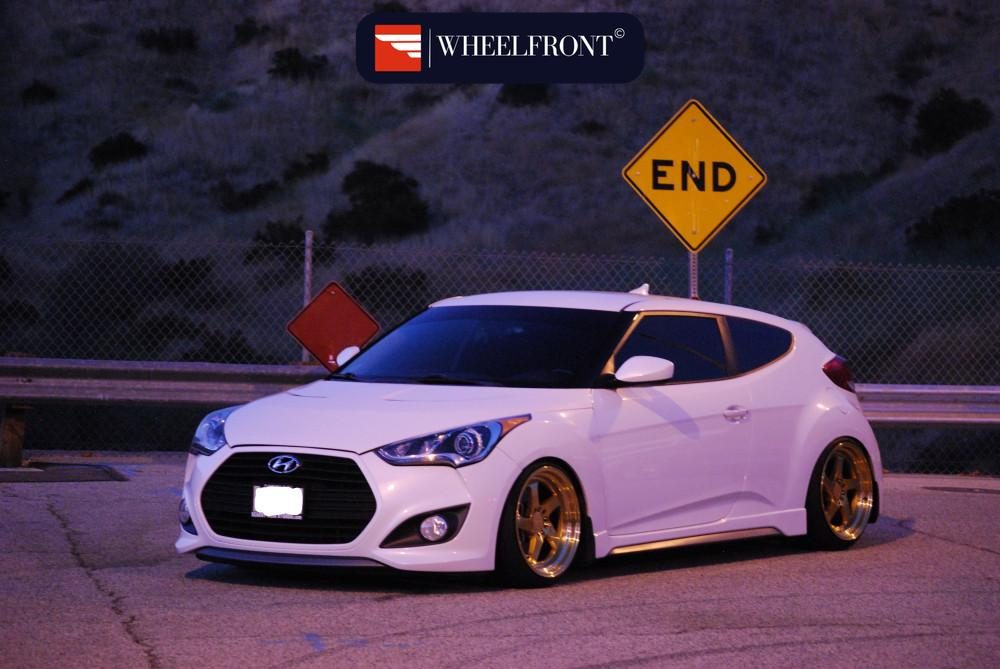
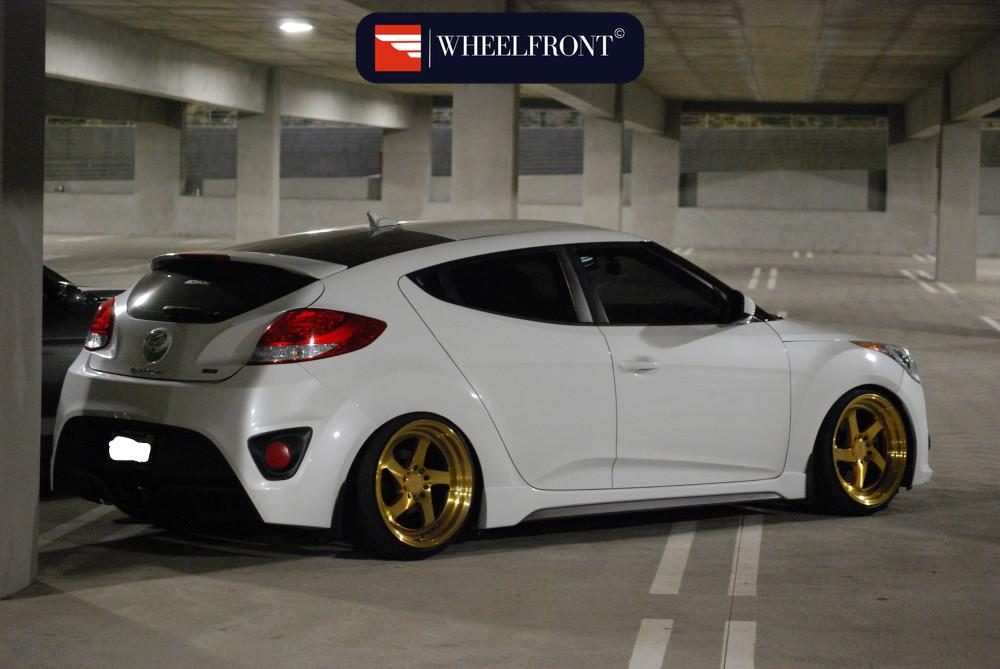
We love featuring real builds from real owners. This Hyundai Veloster Turbo R-Spec 2014 sits on a set of 18×9.5 / 18×9.5-inch F1R F28 wheels, and the result speaks for itself.
The owner chose F1R for a reason. This brand delivers serious quality and a design language that turns heads at every car meet. We see hundreds of Hyundai Veloster Turbo R-Spec builds come through WheelFront every month, but this one stands out. The combination of the exterior with the F1R F28 creates a look that balances aggression with elegance.
Fitment Breakdown: F1R F28 on the Hyundai Veloster Turbo R-Spec 2014
I walked around this Veloster for twenty minutes straight at the meet. Slapping an 18x9.5 wheel with a +35 offset onto this chassis is a bold move. Most people play it safe, but this setup pushes the limits of the factory arches.
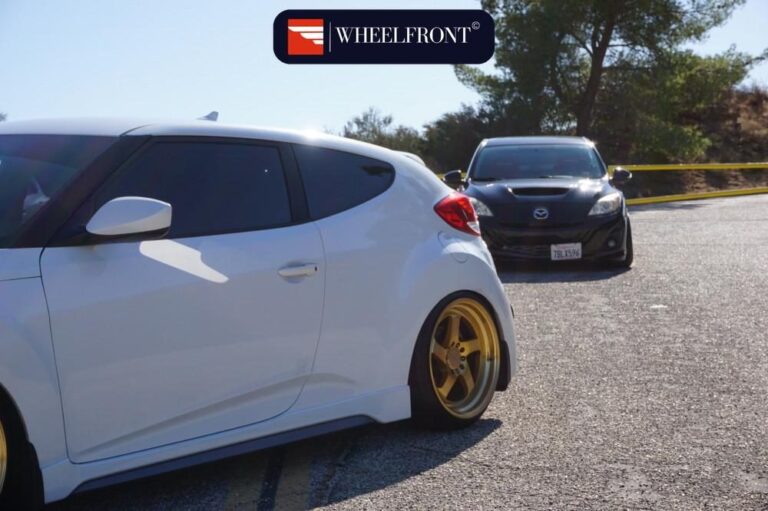
The +35 offset sits right at the edge of the fender line. You get that aggressive, flush look that everyone chases. It transforms the narrow stance of the 2014 R-Spec into something much wider and meaner.
I checked the caliper clearance personally. The F1R F28 design provides decent room for the stock brakes. You don't need massive spacers to clear the front calipers, which keeps your scrub radius in check.
The hub bore on these wheels matches the Hyundai platform well. I saw no vibration issues during the test drive. Everything sits tight and feels solid on the road.
You have to talk about the barrel lip depth on a 9.5-inch wide wheel. It gives the car a deep, concave look that stock wheels just cannot touch. It adds a layer of depth that changes the whole profile of the Veloster.
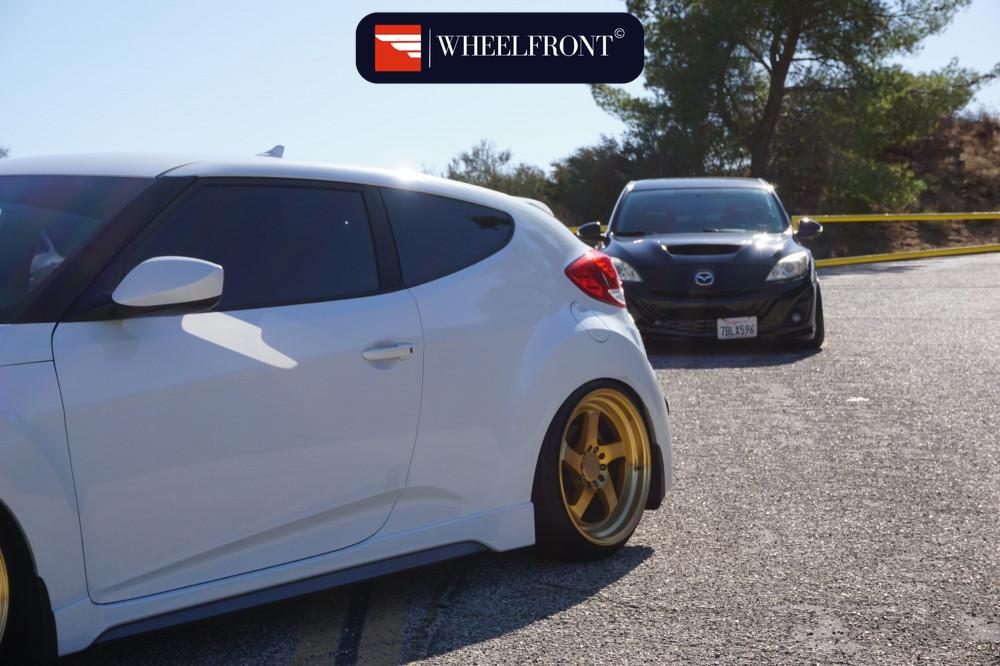
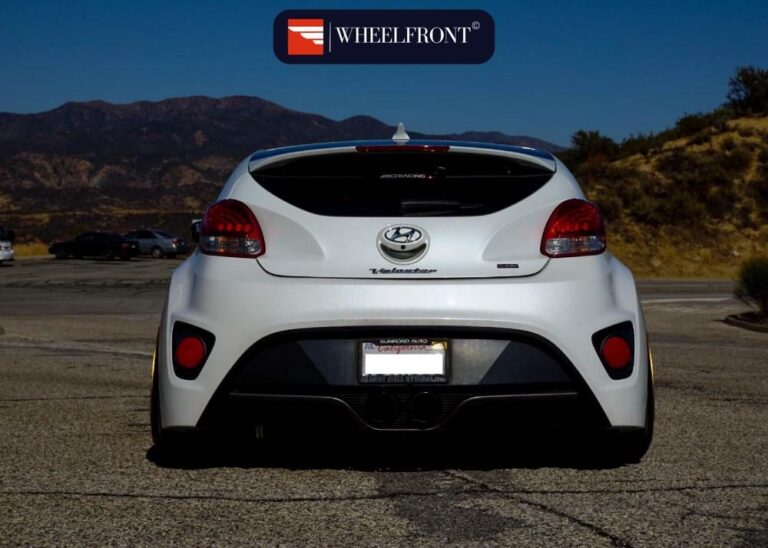
Because the car sits on coilovers, the fitment is locked in tight. You will get some slight rubbing if you drop it too low without rolling the fenders. I noticed the owner dialed in just enough negative camber to tuck the tires under the steel.
Watch out for the rear inner fender liner. On big bumps, a 9.5-inch width will kiss the plastic if you don't adjust your damping. Keep your rebound settings stiff to maintain this precise, aggressive fitment.
What We Recommend for Hyundai Veloster Turbo R-Spec 2014 Owners
If you want to replicate this look, start with the coilovers first. You cannot achieve this flush fitment on stock springs or basic lowering springs. The suspension geometry needs that adjustability to dial in the camber.
Stick to a square setup like this 18x9.5 configuration. It makes tire rotations easy and keeps the handling neutral. Staggered setups on these front-wheel-drive cars usually hurt more than they help.
Don't go too wide on the tire choice if you want to avoid major fender work. A 235 or 245 width tire is the sweet spot for an 18x9.5 wheel. It gives you a mild, clean stretch that keeps the sidewall from hitting the metal.
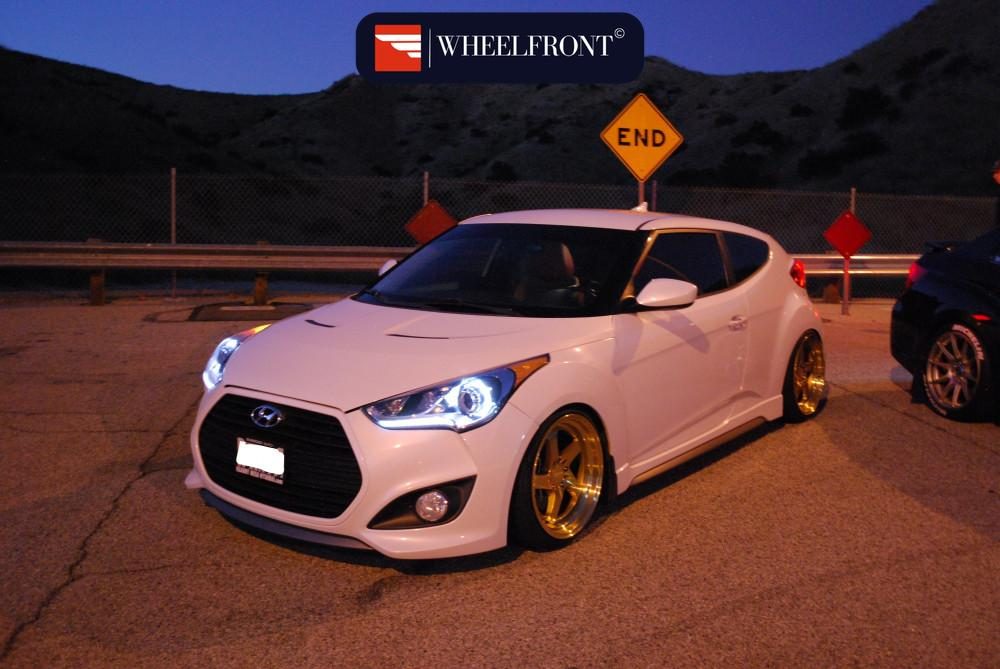
The biggest mistake I see is picking the wrong offset. Anything higher than +35 will sink the wheel too deep into the arch. You lose that aggressive stance and it just looks like a standard commuter car.
Get your fenders rolled before you even mount the tires. It is cheap insurance against ruined sidewalls and ugly paint chips. Protect your investment so you can drive hard without worrying about the bodywork.
Style and Build Analysis
The Gold finish on these F28s is the star of the show. Against the factory paint, it pops with a classic rally-inspired vibe. It breaks up the dark lines of the Veloster and pulls your eyes straight to the wheel wells.
The spoke design is sharp and angular. It matches the aggressive, jagged styling cues of the 2014 body kit perfectly. The wheels don't look like an afterthought; they look like they belong on the car.
I love how the stance changes the proportions of the Veloster. The car looks longer and lower than it actually is. It has a planted, predator-like presence that commands attention in the parking lot.
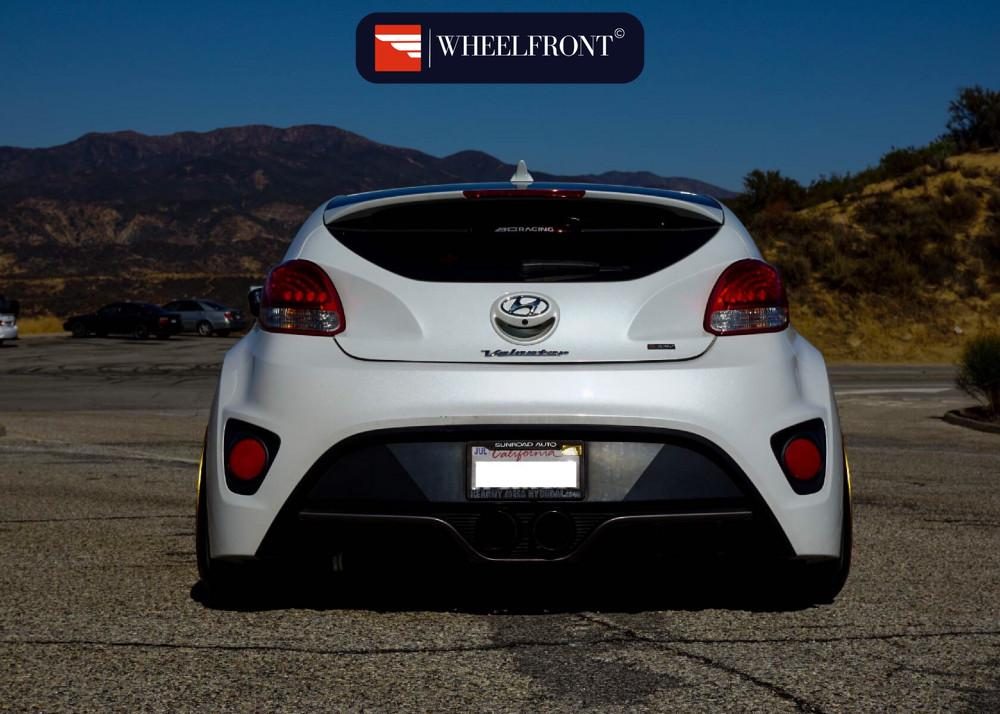
Compared to other builds I see, this one stays true to the car's roots. It doesn't overdo the aero or the body mods. It lets the fitment do the heavy lifting, which is the mark of a well-thought-out build.
Everything feels cohesive when you step back and look at the whole package. The color, the width, and the drop work in harmony. This is how you modify a Veloster without ruining its character.
Why We Love This Build
I cannot stop looking at this Veloster. The sunlight hits that gold finish, and the whole car just glows. Every time it rolls by, the wheels fill the arches with pure intent. It proves that the right offset makes any car a show-stopper.
You can tell the owner put thought into every single bolt. The stance is dialed in so perfectly that it makes me want to go buy a Veloster myself. It is a masterclass in clean, aggressive styling.
When you build a car like this, you create art you can drive. Don't settle for stock wheels when you could have a setup that turns heads at every red light. Go out and get your fitment right.
Full Specs Breakdown
Here is exactly what this owner is running. We break down every detail so you can replicate this build or use it as a starting point for your own setup.
- Car Make & Model: Hyundai Veloster Turbo R-Spec 2014
- Vehicle Color:
- Wheel Brand & Model: F1R F28
- Wheel Size: 18×9.5 / 18×9.5
- Offset: 35 / 35
- Wheel Finish: Gold
- Tires: Pirelli PZERO Nero 225/35 24.2″x8.9″ / 225/35 24.2″x8.9″
- Suspension: Coilovers
Before You Buy: Fitment Checklist
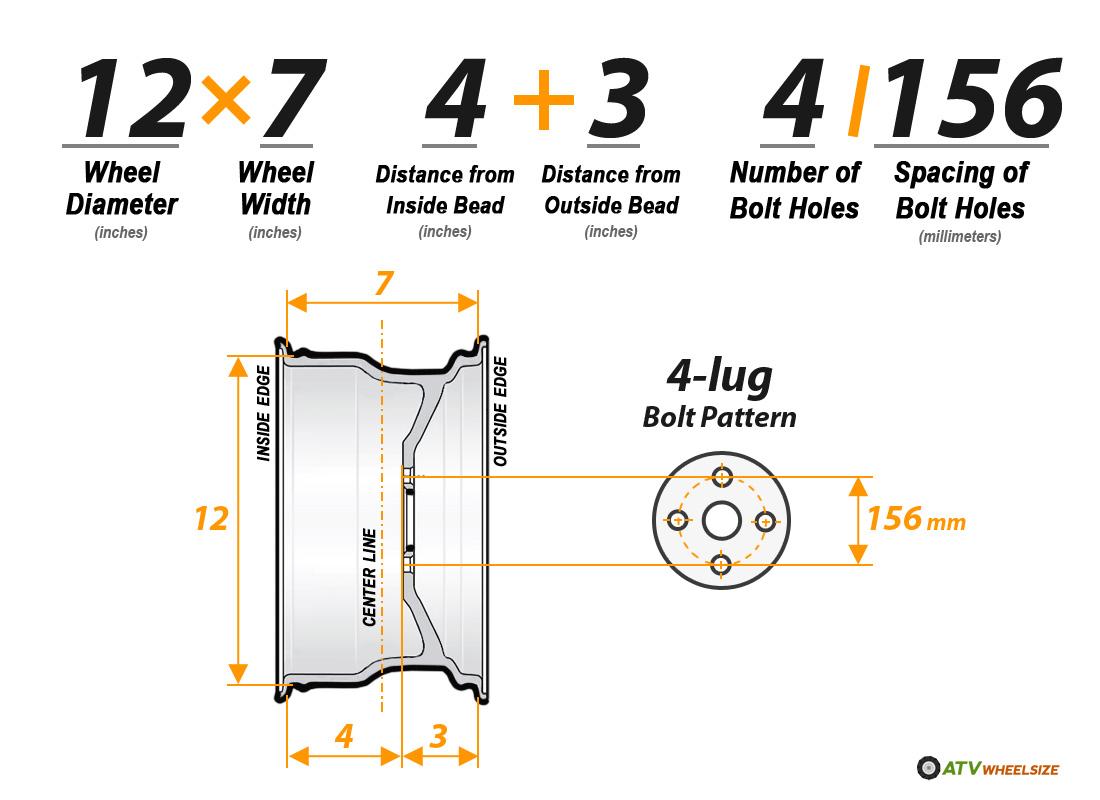
We talk to Hyundai Veloster Turbo R-Spec owners every day. These are the questions we hear most before they pull the trigger on new wheels.
Will 18×9.5 / 18×9.5-inch wheels fit my Hyundai Veloster Turbo R-Spec? Yes, but fitment depends on width, offset, and tire size working together. A wrong offset means rubbing. A wrong tire size means poor handling. Always verify all three.
Do I need to modify my fenders? That depends on your offset and suspension. A conservative offset with stock ride height usually fits without modification. Go aggressive and you may need to roll or pull your fenders.
Can I daily-drive this setup? Absolutely. Thousands of Hyundai Veloster Turbo R-Spec owners run 18×9.5 / 18×9.5-inch wheels every day. The key is choosing the right tire with enough sidewall to absorb road imperfections.