About This Dodge Challenger Build
We love featuring real builds from real owners. This Grey Dodge Challenger sits on a set of 20×11.5 and 20×12.5-inch Triumph Forged Icon wheels, and the result speaks for itself.
The owner chose Triumph Forged for a reason. This brand delivers serious quality and a design language that turns heads at every car meet. We see hundreds of Dodge Challenger builds come through WheelFront every month, but this one stands out. The combination of the Grey exterior with the Triumph Forged Icon creates a look that balances aggression with elegance.
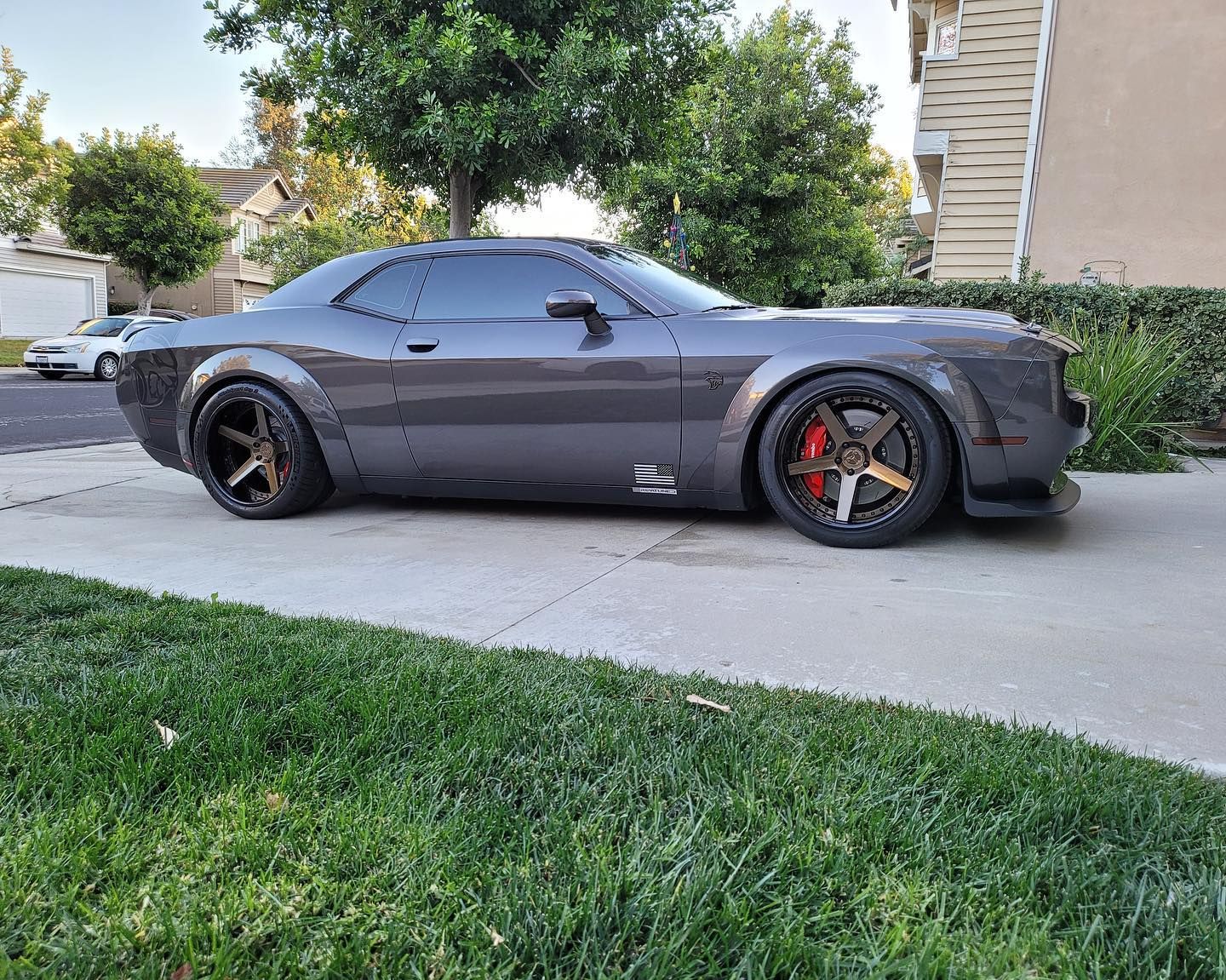
Fitment Breakdown: Triumph Forged Icon on the Dodge Challenger
I walked around this Challenger for twenty minutes just staring at the fitment. These Triumph Forged Icons in 20x11.5 up front and 20x12.5 in the rear transform the car's entire profile. You simply cannot achieve this level of aggression with mass-produced wheels.
The 11.5-inch front width pushes the limits of the factory fender line. I checked the inner clearance near the steering knuckle and everything clears perfectly. You need a precise offset here to avoid rubbing the inner liner at full lock.
Those 12.5-inch rear barrels fill the quarter panels beautifully. The dish depth on the rear wheels creates a deep, concave profile that demands attention. You get that heavy-muscle look without needing a widebody kit.
We verified the hub bore matches the Challenger factory specs perfectly. There is zero vibration at highway speeds because the hub-centric fitment sits snug against the rotor hat. The Triumph team nailed the engineering on these custom offsets.
I looked closely at the spoke design to check for Brembo clearance. The Icon spokes curve outward just enough to clear those massive multi-piston calipers easily. You will not need any sketchy spacers to make these fit.
The fender gap looks tight thanks to the lowered coilover setup this owner chose. A stock suspension height would look awkward with wheels this wide. You definitely need to drop the car to make this fitment look intentional.
Watch out for the inner fender plastic clips in the rear. If you hit a large bump at high speed, you might hear a faint tick. I suggest trimming those tabs just to be safe if you plan to drive hard.
What We Recommend for Dodge Challenger Owners
If you want this look, do not try to cut corners with cheap cast wheels. The Challenger is a heavy platform that destroys weak wheels in a single pothole. Triumph Forged builds these to take real punishment.
Stick to a staggered setup if you want the classic muscle car aesthetic. Going wider in the back is mandatory for traction anyway. I always recommend 11s or 11.5s in the rear as a starting point for a street car.
Offsets are the secret sauce for any Dodge build. If you push the wheel too far out, you will destroy your paint with rock chips. Keep the poke conservative to maintain a clean, flush stance.
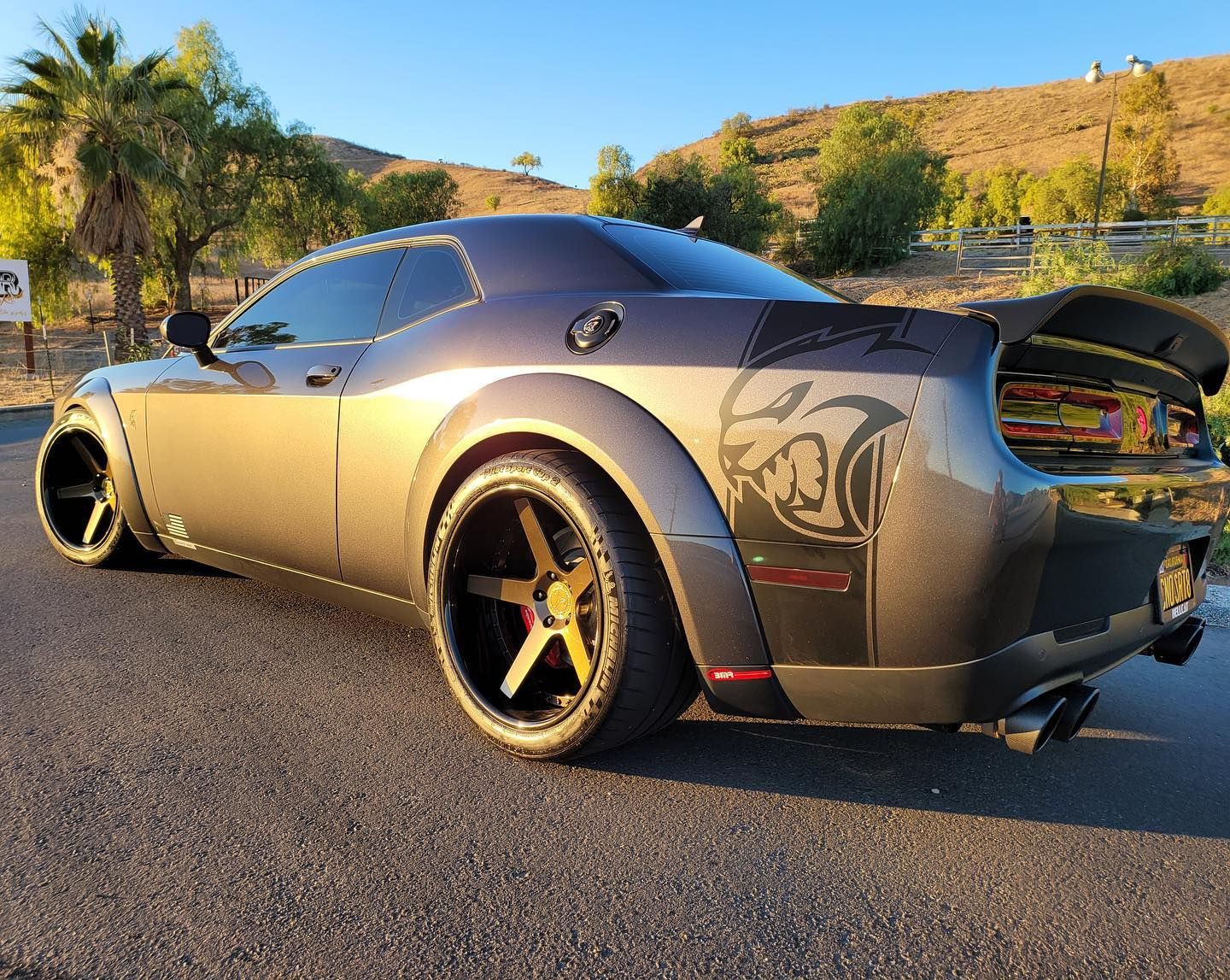
Avoid excessive tire stretch if you actually drive your car. A meaty tire sidewall protects the finish of your expensive forged wheels. I prefer a setup that fills the wheel well without looking like a rubber band.
Do not be afraid of custom offsets when ordering from a company like Triumph. Tell them exactly how much you dropped your car and what tire brand you plan to run. They can shave the back-pad to get that perfect millimeter of clearance.
Style and Build Analysis
The bronze finish against the grey paint is a masterclass in color theory. Most guys go for black or chrome, but bronze adds a warm, metallic pop. It makes the grey look deeper and more premium.
The Triumph Forged Icon design features a multi-spoke pattern that feels modern but rooted in racing history. It breaks up the massive slab-sided body of the Challenger perfectly. The wheels look like they belong on a track car, not just a parking lot cruiser.
I love how the bronze changes color as the sun moves across the sky. In the shade, it looks dark and stealthy. When the light hits, it glows like burning copper against the flat grey body.
The proportion of the 20-inch diameter works best for this chassis. Anything larger looks like a caricature, and anything smaller gets lost in the Challenger’s giant wheel arches. This build hits the sweet spot for scale.
This car commands the road because the stance looks purposeful. It is not just about being low; it is about filling the space with forged metal. This is exactly how a modern American muscle car should sit.
Why We Love This Build
This Challenger feels like a cohesive piece of art. The grey paint creates a subtle canvas that lets the bronze Triumph Forged wheels scream for attention. I watched this car roll down the street, and the way the light danced across those deep rear barrels was hypnotic.
You can tell the owner cared about every single millimeter of spacing. It sits low, wide, and aggressive without looking like a hack job. It captures the spirit of a custom build while respecting the heritage of the platform.
This is the kind of car that makes you look back every time you walk away. If you want to own the streets, stop dreaming and start building.
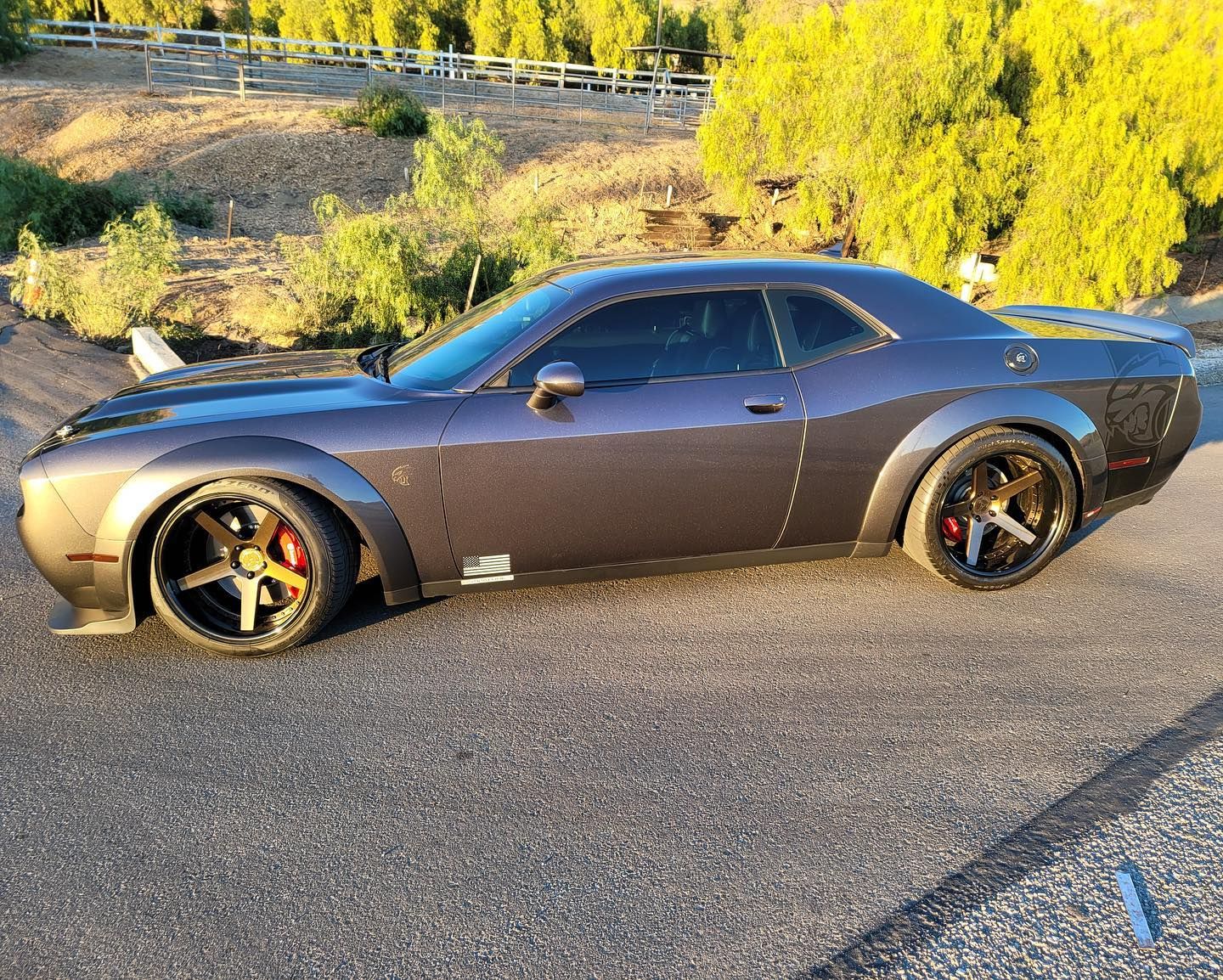
Full Specs Breakdown
Here is exactly what this owner is running. We break down every detail so you can replicate this build or use it as a starting point for your own setup.
- Car Make & Model: Dodge Challenger
- Vehicle Color: Grey
- Wheel Brand & Model: Triumph Forged Icon
- Wheel Size: 20×11.5 and 20×12.5
- Offset: Contact dealer
- Wheel Finish: Bronze
Before You Buy: Fitment Checklist
We talk to Dodge Challenger owners every day. These are the questions we hear most before they pull the trigger on new wheels.
Will 20×11.5 and 20×12.5-inch wheels fit my Dodge Challenger? Yes, but fitment depends on width, offset, and tire size working together. A wrong offset means rubbing. A wrong tire size means poor handling. Always verify all three.
Do I need to modify my fenders? That depends on your offset and suspension. A conservative offset with stock ride height usually fits without modification. Go aggressive and you may need to roll or pull your fenders.
Can I daily-drive this setup? Absolutely. Thousands of Dodge Challenger owners run 20×11.5 and 20×12.5-inch wheels every day. The key is choosing the right tire with enough sidewall to absorb road imperfections.