
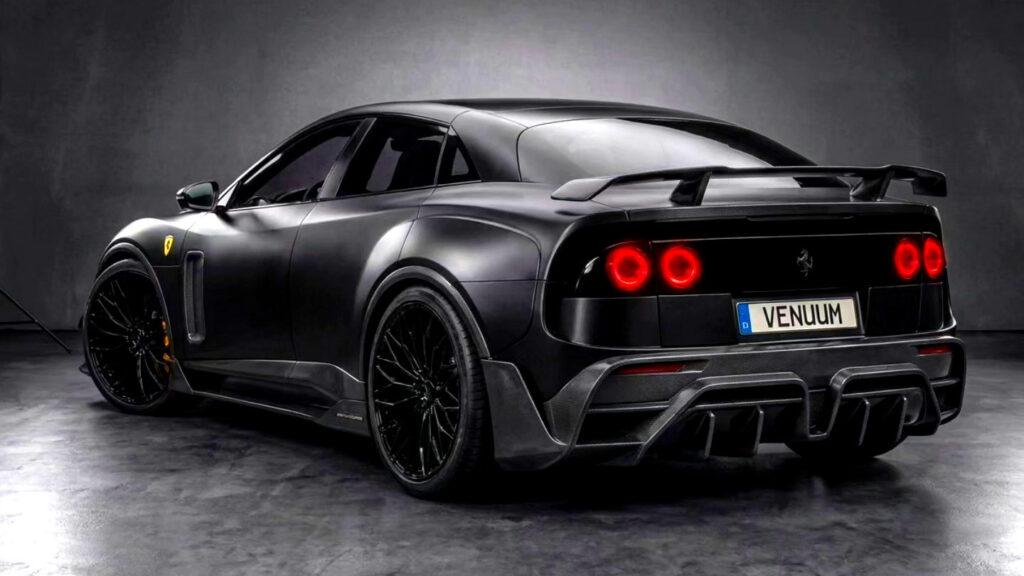


The body isn’t even cold and the aftermarket surgeons are already circling. UAE-based tuner Venuum has released renderings of a full carbon fiber body kit for the Ferrari Luce EV, and the result manages something genuinely impressive: it makes the most controversial Ferrari in living memory look worse.
Venuum’s vision includes the usual greatest hits — a carbon fiber front splitter, canards, flared wheel arches, side skirts, a fixed rear wing, and an aggressive rear diffuser. Every piece rendered in exposed carbon weave, every surface screaming for attention. The company, which already sells kits for the Purosangue and Rolls-Royce Wraith, clearly knows its clientele. Whether it knows what to do with the Luce is another question entirely.
The problem isn’t execution. Venuum builds real parts for real exotics. The problem is the canvas.
The Luce’s design has been savaged since its reveal, with critics struggling to reconcile its bloated five-seat proportions and anonymous surfacing with anything resembling the Prancing Horse’s DNA. Slapping carbon canards on those flanks doesn’t add aggression so much as it adds confusion. The rendered car looks less like a tuned Ferrari and more like a mid-tier sedan that wandered into a SEMA booth and got lost.
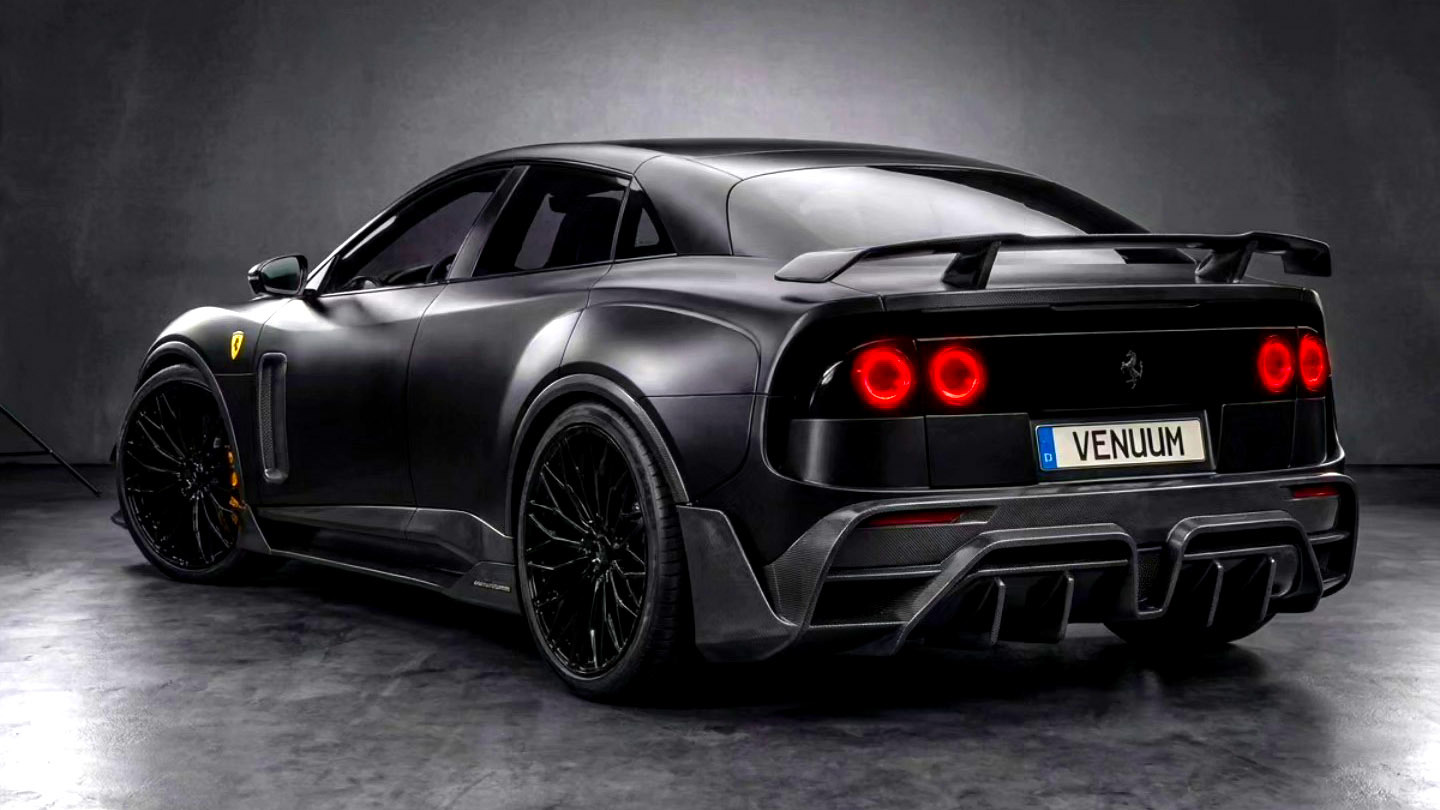
Those peculiar air outlets on the Luce’s front doors — one of the car’s more puzzling design choices — have been highlighted in carbon rather than hidden. It’s a strange move. When a design element already reads as awkward, framing it in contrasting material only draws the eye to what doesn’t work.
The rear wing is the most telling addition. Ferrari has historically reserved fixed wings for track-focused weapons like the 488 Pista and the SF90 XX. Bolting one onto a family-sized EV doesn’t evoke motorsport heritage. It evokes desperation.
Venuum hasn’t confirmed whether this kit will go into production, but the market dynamics are predictable. The Luce will attract aftermarket attention precisely because its design is polarizing. Tuners thrive on controversy, and owners of cars they feel conflicted about are the most eager buyers of transformation kits.
The deeper tension here has nothing to do with carbon fiber or canards. It’s about whether any amount of aftermarket work can graft an identity onto a car that arrived without one. The greatest Ferrari designs — the 250 GTO, the F40, the LaFerrari — were untouchable because their proportions and purpose were self-evident. Nobody looked at a Testarossa and thought it needed help.
The Luce needed help the moment the covers came off. Public reaction has been overwhelmingly negative, with comparisons ranging from Chinese EVs to generic crossovers. Ferrari is banking on interior quality and driving dynamics to overcome the visual deficit, but Maranello has never before asked customers to look past a car’s exterior to find the magic.
Venuum’s renderings are an early symptom of a larger reckoning. When the tuning world’s first instinct is to cover your car in carbon armor, the design didn’t just miss the mark. It missed the entire target range. Ferrari built its empire on cars that stopped traffic with nothing but sheet metal and paint. The Luce stops traffic for the wrong reasons, and no splitter on earth is going to fix that.


Share this Story