



Mercedes-AMG just told the electrification faithful to wait. The 2027 GLE 63 S and GLS 63, revealed out of Affalterbach and headed to U.S. dealers this fall, carry a reengineered 4.0-liter V8 biturbo that AMG has no intention of retiring. The M177 EVO is not a farewell tour. It is a foundation pour.
The headline number — 603 horsepower — is identical to the outgoing engine. That is the least interesting part of this story.
What matters is what AMG did underneath: a flat-plane crankshaft, redesigned intake and exhaust ports, a revised camshaft, reworked turbocharger internals, and a brand-new exhaust aftertreatment system with a standard particulate filter. This is not a facelift. This is an engine rebuilt from the rotating assembly outward to survive the next generation of global emissions regulations while still screaming past 6,000 rpm.
Michael Schiebe, who chairs AMG’s management board, said the quiet part out loud: they have “secured its presence in our portfolio for the long term.” In an industry where virtually every competitor is hedging V8 commitments or killing them outright, AMG is doubling down. The flat-plane crank — historically the province of exotic Ferraris and the Ford Mustang GT350 — reduces rotating mass and sharpens throttle response. It is an engineering choice that prioritizes driver sensation over everything else.
A second-generation 48-volt integrated starter generator adds 23 hp and 151 lb-ft of supplemental torque at low revs, smoothing out the gaps where turbochargers traditionally wheeze. The mild-hybrid system also handles recuperation and start-stop duties. Full electrification this is not, but it is just enough voltage to keep regulators at bay.
The GLE 63 S hits 60 mph in an estimated 3.6 seconds. The larger GLS 63 manages 3.9. Both are electronically limited to 174 mph.
Those numbers are unchanged from the predecessors, which tells you the engineering effort went into compliance and refinement, not bragging rights.
The chassis work is real. AMG ACTIVE RIDE CONTROL now uses electromechanical stabilizers on both axles, sampling road conditions 1,000 times per second. The air suspension adjusts ride height automatically, dropping 0.4 inches above 75 mph for aero or rising 2.2 inches in Trail mode. An electronically controlled locking rear differential replaces braking-based torque vectoring, meaning power stays in the driveline instead of being wasted as heat at the calipers.
The cosmetic changes are predictable AMG theater: new grille, exclusive light signature, twin tailpipes, up to 23-inch wheels on the GLS. Inside, the MB.OS infotainment system feeds AMG-specific telemetry — torque split, G-forces, engine parameters — through high-resolution screens. The MANUFAKTUR program expands with colors like Cirrus Silver Magno and Patagonia Red Metallic for buyers who need their six-figure SUV to be unrepeatable.
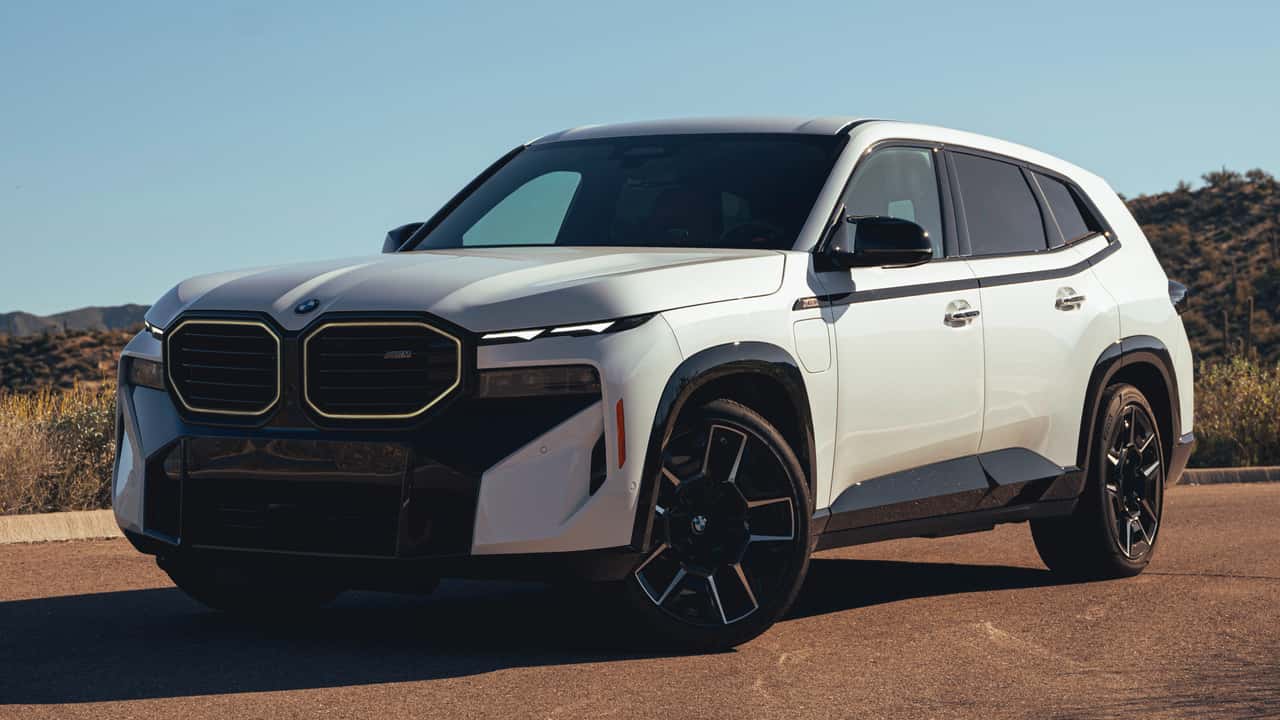
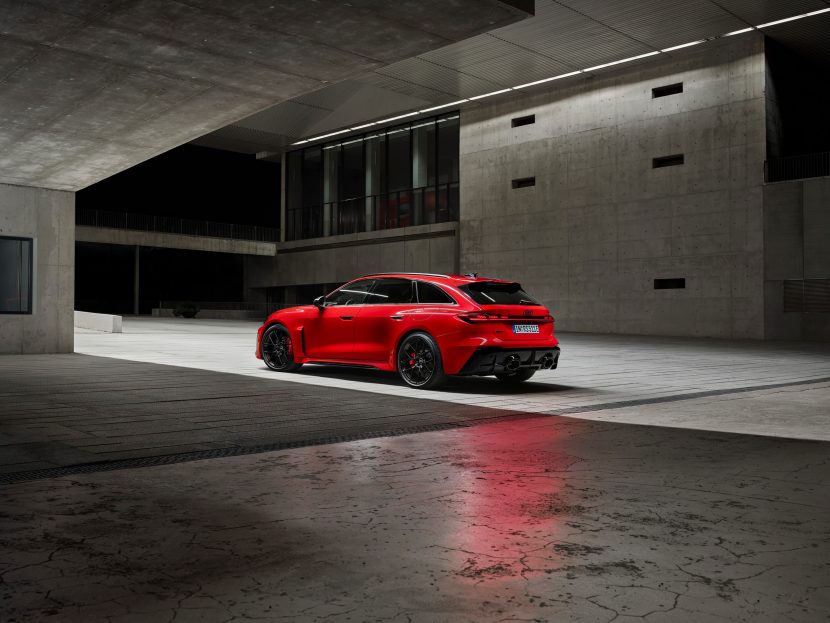
None of this happens in a vacuum. BMW’s Competition V8s are living on borrowed time. Audi’s RS models are migrating to electrified platforms.
Porsche just put a hybrid powertrain in the Cayenne Turbo. AMG looked at that landscape and chose a different path — not a plug-in hybrid, not a range extender, but a fundamentally re-engineered combustion engine backed by the thinnest possible layer of electrification.
The flat-plane crank is the tell. You do not make that change — with all its packaging complexity and NVH challenges in a luxury SUV — unless you plan to run this architecture for a decade. AMG is not preserving the V8 as a nostalgia act.
It is betting that the customers who write checks for $120,000-plus SUVs still want eight cylinders firing in a specific order, and that the regulatory environment can be navigated without abandoning the formula.
Whether that bet ages well depends on politics as much as engineering. But right now, in Affalterbach, they are still hand-building V8s one at a time. And they just made them harder to kill.

Share this Story