
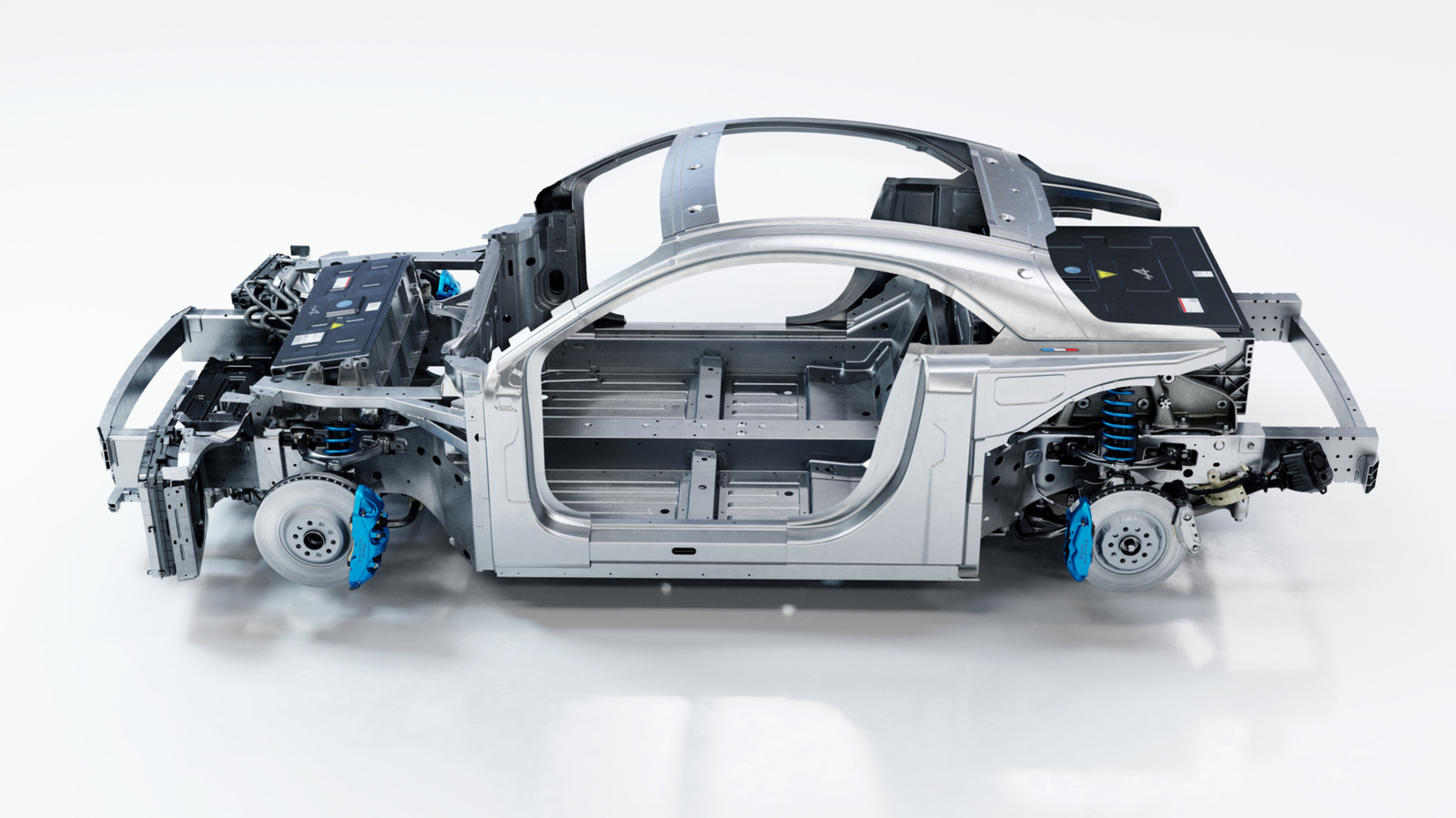


Alpine is smashing next-generation A110 prototypes into barriers to meet U.S. crash standards. That’s not something automakers do for fun. You don’t destroy perfectly good cars unless you’re serious about selling them on the other side of the Atlantic.
CEO Philippe Krief, a former Ferrari executive, confirmed the testing this week but refused to say whether the car headed stateside would be electric, combustion-powered, or both. He’s playing it coy, but the physics of his business case aren’t subtle at all.
The global market for sports cars like the A110 runs about 350,000 units annually. Half of those sales happen in the United States. Alpine has been willfully ignoring the single largest pool of buyers for the exact type of car it builds.
That’s not strategy. That’s self-harm.
The original plan for America looked nothing like this. Under former CEO Luca de Meo, Alpine was going to storm the U.S. around 2028 with two electric crossovers, one of them aimed squarely at the Porsche Cayenne EV. That plan died quietly last year, killed by cooling EV demand and the tariff chaos rolling out of Washington.
Krief replaced de Meo and apparently brought common sense with him. Instead of leading with crossovers nobody asked for, Alpine might enter with the car enthusiasts have been begging to buy for nearly a decade.
The next-generation A110 rides on Alpine’s new Performance Platform, called APP. It was initially designed as a pure EV architecture, but the company engineered combustion compatibility into it after watching the electric sports car market underwhelm. That flexibility is the quiet headline here.
Alpine built itself an escape hatch, and the fact that it exists tells you everything about where the wind is blowing.
APP won’t just underpin the coupe. Alpine has a convertible spider variant in the pipeline, plus a larger 2+2 sports car designed to go after the Porsche 911. That bigger car could matter even more for the U.S. than the A110 itself.
The 911 prints money in America, and a credible French challenger at the right price point would carry fatter margins than a lightweight mid-engine two-seater.
Distribution is already being discussed. Renault, Alpine’s parent company, has been in conversations with AutoNation, which operates more than 320 dealerships across the country. That’s an instant national footprint without the agony of building a dealer network from scratch.
The first-generation A110 never made it here, which remains one of the more baffling omissions in recent automotive history. Every journalist who drove it came back raving. It slots perfectly into a segment where the Porsche Cayman has operated with almost no real competition, save for the Lotus Emira.
American buyers who wanted one had to admire it from afar or pay grey-market premiums.
Krief told Automotive News that the U.S. represents an opportunity he doesn’t want to avoid. That’s diplomatic language for a man who clearly sees a gap in the market wide enough to drive a mid-engine French coupe through.
The new A110 is expected to arrive in 2027 in Europe. No U.S. timeline has been confirmed. Krief acknowledged that sales and distribution logistics still need sorting even if the crash tests go well.
Regulatory approval is one thing. Building a service network, parts pipeline, and brand presence from zero is another.
But the crash testing is real. The conversations with dealers are real. And the math — 175,000 sports cars sold annually in a single market that Alpine currently doesn’t touch — is impossible to argue with.
Alpine spent years telling Americans they couldn’t have the A110. Now it’s destroying them at speed to prove they can. That’s progress.
Share this Story