
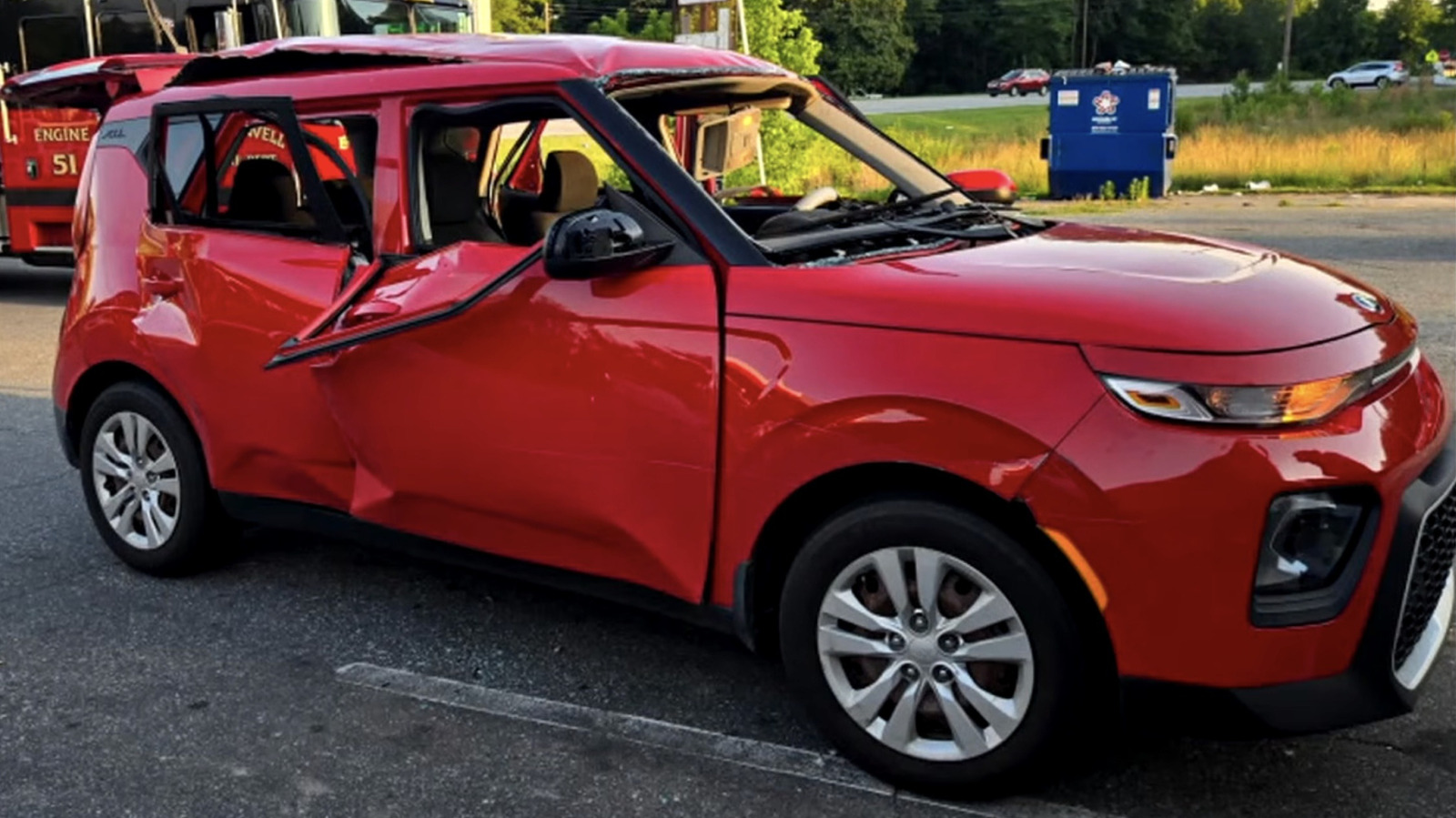


A red Kia Soul rolled past a gas station in Gamewell, North Carolina on the evening of June 12 and exploded. Not caught fire. Exploded. Both occupants survived, including a child, though one was hospitalized for burns, the Charlotte Observer reported.
Security camera footage from the Gamewell Superette tells the story better than words. The mangled Kia pulls into the lot, its body visibly warped, and a man climbs out the front passenger window because the door won’t open. The Gamewell Fire Department, conveniently located right next door, responded within moments alongside crews from neighboring Lenoir.
There was no fire. That’s the strange part. An explosion violent enough to deform sheet metal and blow out windows, and not a single flame afterward. The fuel source had already been consumed in an instant.
That fuel source was a can of compressed air, the kind you buy at any office supply store to blow crumbs out of a keyboard. The child in the back seat had been using it to clean the car’s interior. Windows were up. The cabin was sealed.
Here’s the thing most people don’t know: “canned air” contains no air. County officials told the Charlotte Observer the product contained propane, isobutane, n-butane, and hydrocarbon propellant. The most common active ingredient in consumer-grade dusters is HFC-152a, or 1,1-difluoroethane, which ignites easily and can flash back to its source.
So a child was filling a sealed passenger compartment with lighter fluid in gas form. When the driver struck a flame to light a cigarette, the cabin became a bomb.
The product is sold on open shelves without age restrictions, packaged in cheerful colors next to monitor wipes and USB cables. Its safety data sheet reads like a hazmat warning. It can cause frostbite on skin contact, suffocation if inhaled in concentration, and it will detonate if you give it a spark in a confined space.
An industrial-grade alternative exists. Products using HFC-134a, the same compound that circulates through your car’s air conditioning system, are non-flammable and safe around electrical sparks. The reason consumer cans use the cheaper, more dangerous HFC-152a is exactly what you’d guess: cost.
Nobody died in Gamewell. That’s remarkable given the force visible in the security footage. The Kia Soul’s cabin absorbed an overpressure event that buckled its doors and shattered its glass, and both occupants walked or were carried away alive.
Officials did not identify either person or specify which one required hospitalization. The fire department’s investigation concluded quickly because the cause was obvious. No arson, no mechanical failure, no defect. Just a consumer product doing exactly what its chemistry allows when you combine it with a closed space and an open flame.
Every car has a cigarette lighter or a phone that could spark. Every dollar store sells cans of “air.” Every parent has handed a child something to keep them busy in the back seat without reading the fine print. The Kia Soul that limped into the Superette parking lot on June 12 is a 3,000-pound reminder that the most dangerous things in a car aren’t always under the hood.

Share this Story