
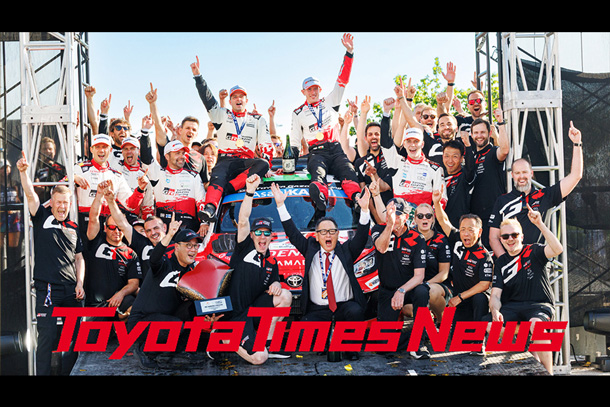


From May 28 to 31, Toyota locked out the top four positions at Rally Japan 2026 in Aichi and Gifu prefectures, turning a home event into a coronation. Elfyn Evans won for the third time in the country, Sébastien Ogier took second, Sami Pajari third, and Takamoto Katsuta fourth.
It was a dominant result on paper. But the real story was everything happening outside the timing sheets.
Rally Japan moved from its traditional November slot to late May this year, a shift that changed the character of the event entirely. The opening ceremony took place at Nagoya Castle, where Toyota chairman Akio Toyoda ran a demo lap with Nagoya Mayor Ichiro Hirosawa riding shotgun. That’s not a typical WRC curtain-raiser — that’s a statement about how deeply this rally has embedded itself into the civic fabric of central Japan.
Kojima Industries, a Toyota City supplier that previously weathered a crippling cyberattack, opened its employee recreation facility to the public for rally viewing. Workers and local schoolchildren waved handmade banners for the drivers. Near Koshoin Temple in Okazaki City, residents strung carp streamers across the route, the kind of seasonal decoration normally reserved for Children’s Day, repurposed into a backdrop for 380-horsepower rally machines tearing through narrow roads.
This wasn’t stage-managed corporate hospitality. It was organic. And it reflects something the WRC has struggled to manufacture in other markets: genuine community ownership of a round.
Katsuta arrived as the headline attraction after a breakout spring. He won Safari Rally Kenya in March and backed it up with a victory in Croatia in April, becoming the first Japanese driver to win consecutive WRC rounds. The expectations on home soil were enormous.
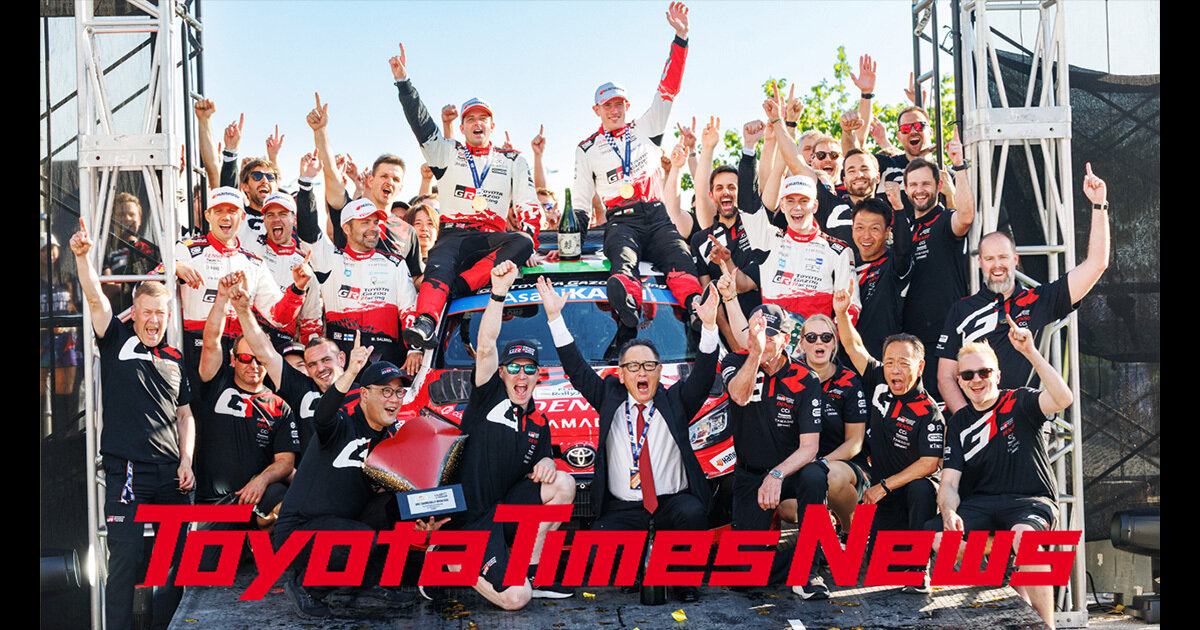
Day one punished him. A flat tire and a rain-slicked course dropped him to sixth. He clawed back to fourth by the finish but never reached the podium, though the roadside crowds never let up.
Evans, meanwhile, was clinical. His third Rally Japan victory in four years cements the event as his personal playground. Ogier, at 41, continues to extract podium results with a fraction of the full-season effort younger drivers invest. Pajari’s third place is quietly significant — the young Finn is building consistency in a factory seat that demands it.
In the WRC2 category, Yuki Yamamoto earned his first podium with a third-place finish, adding another Japanese name to the results sheet in front of a home crowd hungry for representation.
Toyota’s 1-2-3-4 lockout will grab the global headlines. It should. That kind of dominance is rare in modern rallying, where Hyundai has been competitive all season. But factory results come and go with regulation cycles and tire compounds.
What Rally Japan is building underneath — the temple route lined with carp streamers, the factory workers and their kids making banners, the mayor riding shotgun at Nagoya Castle — is harder to replicate. The WRC has 14 rounds spread across four continents, and most of them struggle to connect with anyone who isn’t already a motorsport devotee.
Central Japan appears to have figured out the formula. The rally isn’t just passing through these communities. It belongs to them.
Share this Story