
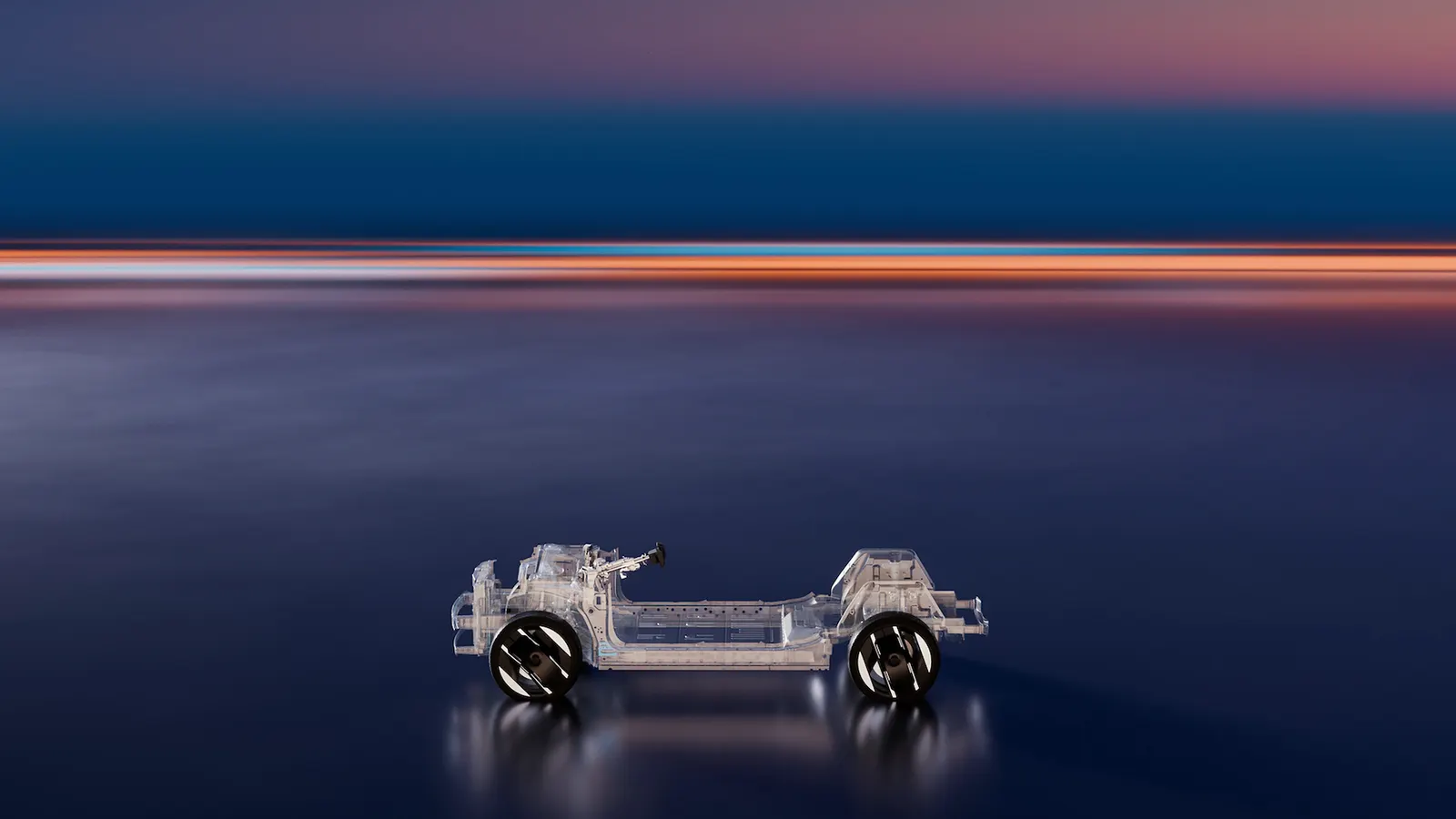


Stellantis just told investors it plans to collapse five vehicle platforms into one. The new architecture, called STLA One, was unveiled at the automaker’s Investor Day on May 21 at its North American headquarters in Michigan. If that sounds like a company trying to simplify its way out of a crisis, that’s because it is.
The math is ambitious. STLA One is supposed to underpin more than 30 models and account for 2 million units annually by 2035. It spans B, C, and D segments, covering everything from subcompacts to midsize sedans and crossovers.
Stellantis claims the consolidation will cut costs up to 20 percent and dramatically reduce manufacturing complexity. CEO Antonio Filosa framed it as the centerpiece of the company’s new “FaSTLAne 2030” strategy, which carries a €60 billion price tag — roughly $70 billion. Sixty percent goes toward brands and products, with the rest funding platforms, technology, and shared assets.
This isn’t the first time Stellantis has tried the platform consolidation play. Back in 2021, the company laid out plans for four STLA platforms covering everything from city cars to pickup trucks. STLA Medium arrived in mid-2023, and STLA Large followed in early 2024.
STLA One is meant to supersede and absorb much of what came before, which raises an uncomfortable question. If the original four-platform plan was the answer, why does it already need replacing?
The technical ambitions are real, at least on paper. STLA One is the first Stellantis platform designed to integrate three proprietary technology stacks from the start — STLA Brain for vehicle software and over-the-air updates, STLA SmartCockpit for AI-powered infotainment, and steer-by-wire for chassis control. Partners include Applied Intuition and Qualcomm, names that signal serious intent on the software side.
The battery strategy is equally aggressive. Stellantis plans to scale lithium iron phosphate chemistry to reduce dependence on critical raw materials. The platform uses cell-to-body integration, embedding battery cells directly into structural components.
An 800-volt architecture will support fast charging. These are the right technical bets, but they’re also table stakes in 2026.
By 2030, the target is 50 percent of Stellantis volume built on just three platforms, with 70 percent component reuse across models. Chief engineering officer Ned Curic called it “a truly modular strategy” that avoids carrying inefficiencies from one powertrain to another. The platform supports hybrid and full electric configurations, a hedge that acknowledges market uncertainty without saying so explicitly.
The first STLA One vehicles launch in 2027. That’s an aggressive timeline for a platform this sweeping, especially from an automaker that has struggled with execution under its current leadership structure. Stellantis has burned through goodwill with dealers, stumbled on inventory management, and watched its market share erode on multiple continents.
Platform consolidation is not a new idea in this industry. Volkswagen’s MQB toolkit transformed its cost structure a decade ago. Toyota and Hyundai have executed similar strategies with discipline. The difference is those companies did it from positions of relative strength.
Stellantis is doing it because it has to. Five platforms serving a sprawling 14-brand portfolio was never sustainable, and the company’s financials have made that painfully clear. STLA One is the engineering response to a business problem that is fundamentally about having too many brands chasing too few profitable segments.
The $70 billion commitment sounds enormous. Spread across five years and a global operation of this scale, it’s closer to the minimum viable investment. Whether Stellantis can execute with the speed and precision this plan demands — while simultaneously keeping 14 brands relevant and dealers solvent — is the real question nobody at Investor Day had to answer.

Share this Story