
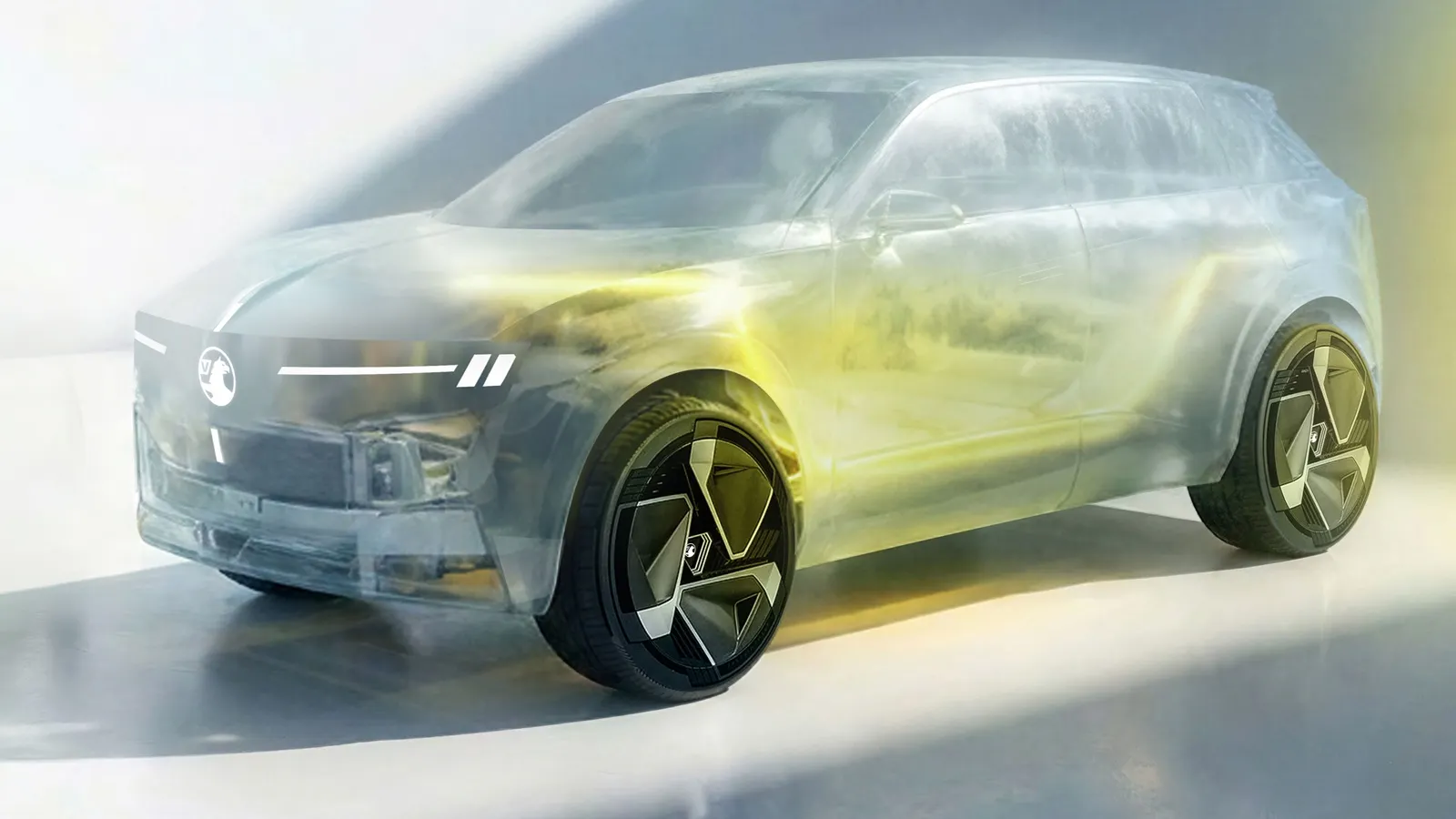


Stellantis is no longer just selling Leapmotor cars through its European dealerships. It’s handing over factory floor space, and potentially an entire plant, to the Chinese EV maker. This rewrites the rules of how legacy automakers and Chinese upstarts coexist.
The May 8 announcement details a sweeping expansion of the Stellantis-Leapmotor joint venture. The centerpiece is a new midsize electric SUV for Vauxhall and Opel, to be built at Stellantis’ Figueruelas plant in Zaragoza, Spain, with production potentially starting in 2028. Leapmotor’s compact B10 SUV could begin rolling off the same line as early as this year.
That’s two Chinese-engineered vehicles sharing a production facility with the Peugeot 208 and Lancia Ypsilon. Zaragoza is becoming a blended assembly operation where European nameplates and Chinese architecture sit side by side on the same shop floor.
It gets more interesting at Stellantis’ Villaverde plant in Madrid. Ownership of that facility is under discussion for potential transfer to Leapmotor International’s Spanish subsidiary. The goal is transparent: qualifying for the European Union’s forthcoming “Made-in-Europe” requirements, which are designed to shield the continent’s auto industry from Chinese imports.
Leapmotor is threading the needle. It’s building in Europe, with Chinese cost discipline, wearing a European badge of compliance.
The joint venture, Leapmotor International, was created in October 2023 with Stellantis holding a 51% stake. In just over two years, it has expanded to more than 850 points of sale across Europe, shipped over 40,000 units on the continent in 2025, and pushed into South America, Asia-Pacific, the Middle East, Africa, and Mexico. The T03 city car became a segment best-seller. That’s not a soft launch. That’s a land grab.
Now the two companies are cooperating on purchasing, combining their scale to squeeze costs out of the supply chain. Stellantis CEO Antonio Filosa spoke in careful corporate language about “localization” and “affordable prices to meet customers’ real-world needs.” Strip away the boilerplate and the math is stark: Stellantis cannot build affordable EVs on its own cost structure, and Leapmotor cannot sell into Europe without local production and a distribution network.
Each partner has exactly what the other lacks. That’s a powerful formula, and a dangerous one for everyone else.
The unnamed Opel C-SUV will slot alongside the Grandland, Frontera, and Mokka, giving the brand a four-deep SUV lineup. For a manufacturer that spent years contracting its range and nearly died under General Motors’ ownership, this represents a dramatic reversal fueled entirely by Chinese engineering leverage.
European rivals should study this arrangement carefully. Volkswagen is spending billions on its own EV platforms. Renault restructured its entire company around electrification. Stellantis has outsourced the problem, grafting Chinese cost efficiency onto European industrial capacity and distribution muscle.
The EU’s Made-in-Europe rules were supposed to create a moat. Stellantis and Leapmotor are showing how to build a bridge across it, with a Spanish address, a Chinese platform, and a European sales receipt.
Whether this model scales depends on execution, tariff politics, and consumer acceptance. But at 40,000 European shipments and climbing, the acceptance question is already being answered. The production question is what Zaragoza and Madrid are meant to solve.
Two years ago, Leapmotor was virtually unknown outside China. By 2028, it could be building vehicles in two Spanish factories under its own subsidiary’s name. Legacy automakers spent a decade talking about the Chinese EV threat. Stellantis decided to merge with it.


Share this Story