
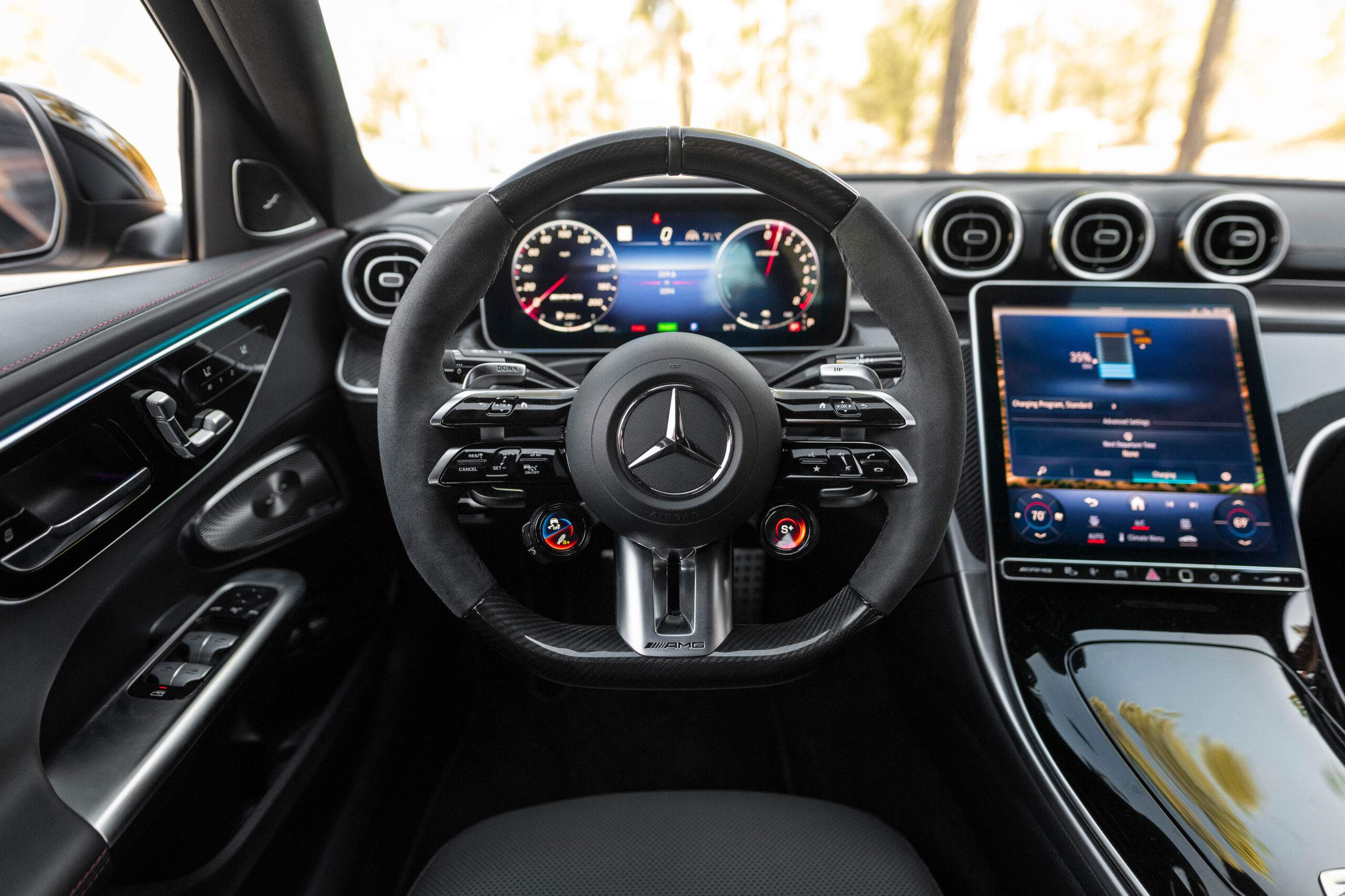


The instrument cluster in your Mercedes-Benz might go blank while you’re doing 75 on the highway. That’s the core of a recall covering 144,049 vehicles across six model lines, announced by NHTSA on May 1 and made public this week.
The affected cars span model years 2024 through 2026 and include some of Stuttgart’s crown jewels: the AMG GT, C-Class (including the ferocious C63 S E-Performance), E-Class, SL-Class (including the Maybach SL680), CLE-Class, and GLC-Class. NHTSA estimates that 100 percent of the recalled population is susceptible to the fault.
The problem lives in the infotainment control unit software. A reset cycle designed to improve system performance can trigger unexpectedly while the car is moving, killing the driver’s instrument display for a moment. Speed, navigation, warning lights — all of it vanishes for a beat.
No crashes or injuries have been reported. But a car without a functioning speedometer violates federal motor vehicle safety standards, full stop, even if the blackout lasts only seconds.
The timeline here tells its own story. Mercedes first identified the software glitch back in August 2025, when a new display software version rolled out to improve system robustness. By December 2025, the issue had forced a recall in South Korea. Yet it took until April 2026 — eight months after the problem surfaced — for Mercedes and U.S. regulators to begin formal discussions.
The automaker initially floated a quiet over-the-air update as the solution. On April 26, it upgraded that plan to a full safety recall.
Eight months is a long time to sit on a known defect that blinds the driver’s gauge cluster at speed. Mercedes did not report any foot-dragging, and technically the company initiated the recall voluntarily. But the gap between first discovery and U.S. action is hard to ignore when every car in the affected population carries the flaw.
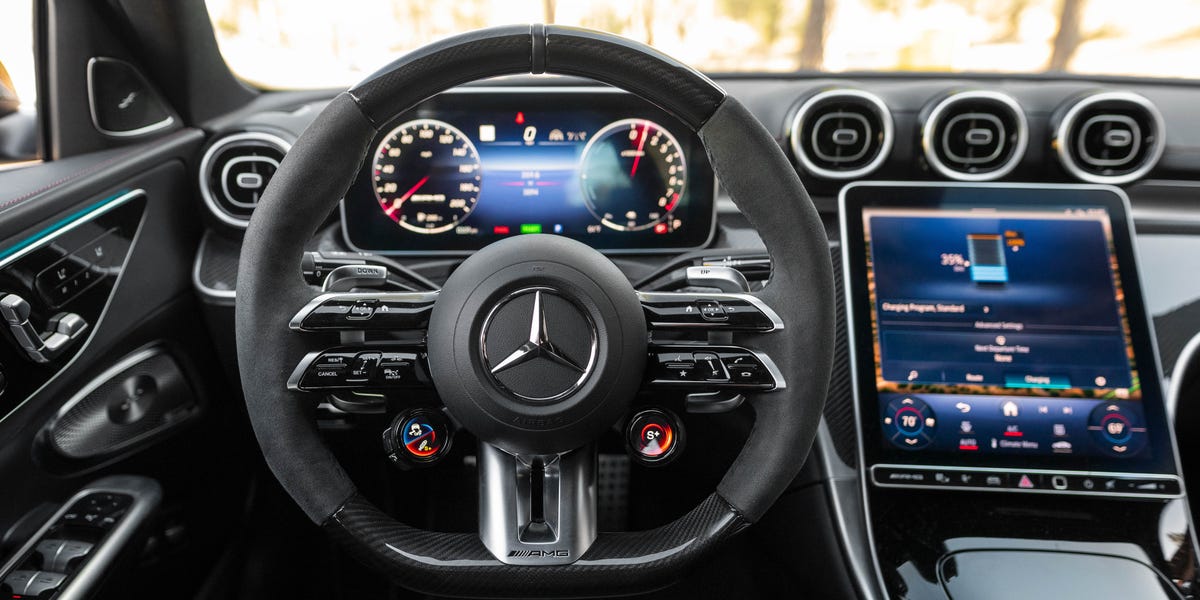
The fix is straightforward: a software update performed at an authorized Mercedes-Benz dealership, free of charge. Mercedes spent years and billions migrating from analog gauges to sweeping digital displays, selling the transition as a premium experience. Now that same architecture is the vulnerability. A traditional needle-and-dial speedometer doesn’t need a system reboot.
This is not an isolated stumble. Mercedes also recently recalled roughly 24,000 E-Class and S-Class 4MATIC models from 2018 through 2020 over a driveshaft defect that could cause total loss of propulsion without warning. Dealers in that case were told to swap the faulty shafts at no cost.
Two significant recalls in quick succession — one mechanical, one digital — paint a picture of a brand under pressure on multiple fronts. The driveshaft issue is old-school engineering failure. The instrument panel blackout is the new kind, the kind every automaker building screen-dependent cockpits will face eventually.
Mercedes owners affected by the display recall should expect dealer notifications in the coming weeks. In the meantime, if your gauges flicker and die for a moment at cruising speed, you’re not imagining things. Your car just told you it needs the update.

Share this Story