
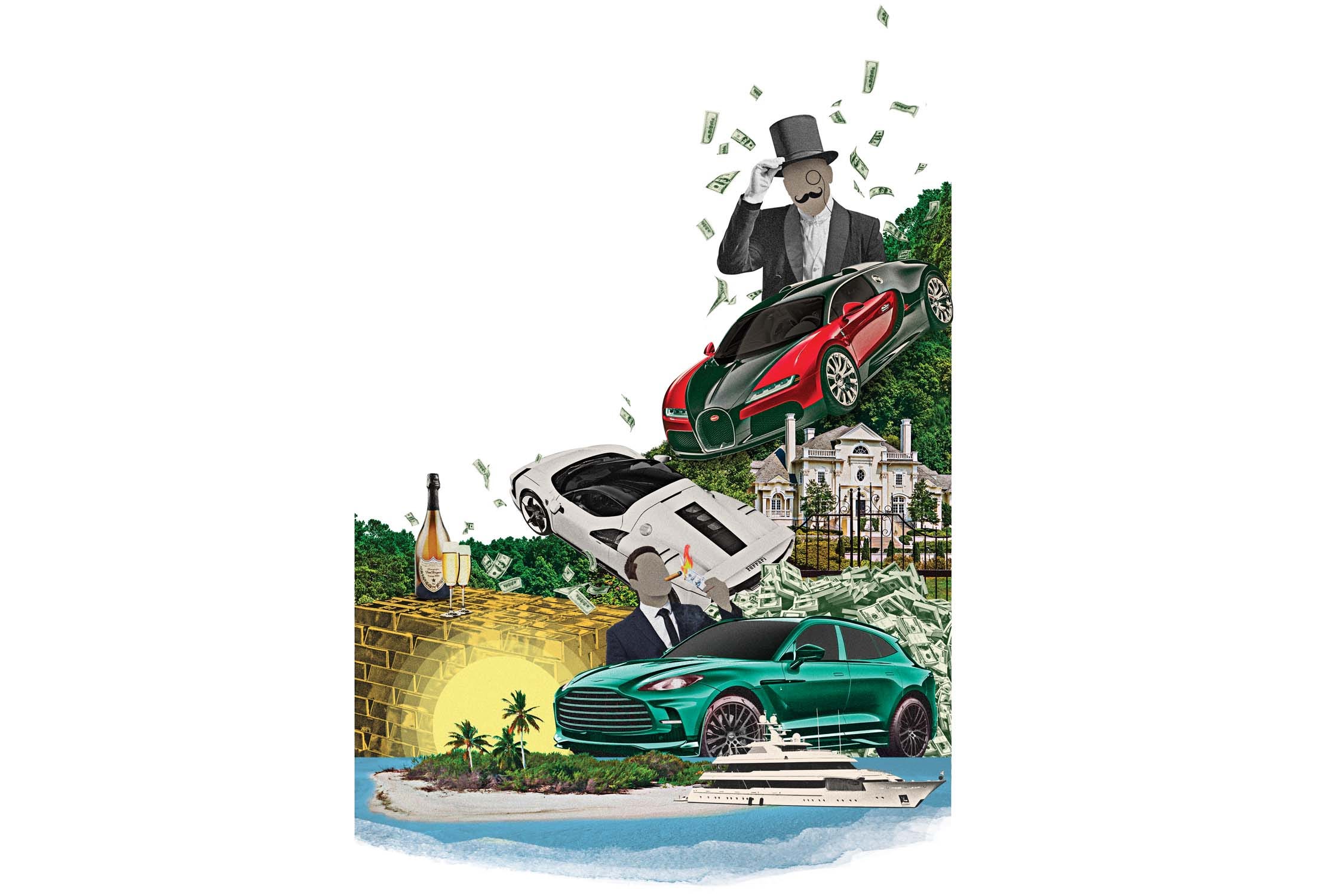


A Bugatti Chiron stickered for just under $3 million. The one-off F.K.P. Hommage built on its bones reportedly cost north of $20 million. Same W-16 engine layout, same basic architecture, roughly seven times the price. That gap tells you everything about where the ultra-luxury car business is headed.
Bugatti’s Programme Solitaire unveiled the F.K.P. Hommage in January — a 1578-hp quad-turbo reinterpretation of the Veyron honoring Ferdinand Karl Piëch, the VW Group chairman who resurrected the Bugatti name. Head of design Frank Heyl frames it as revisiting an icon with two decades of accumulated knowledge. But the real engineering feat here isn’t under the hood — it’s in the pricing model.
Bloomberg Intelligence’s Michael Dean, who leads global automotive research, pegs the profit margin on these singular creations at a minimum of 50 percent. “Otherwise it would not be worth them doing it,” he says flatly.
Bugatti isn’t alone in this gold rush. Ferrari has run its Special Projects program since 2008, recently producing the F40-inspired SC40. Rolls-Royce’s Coachbuild division churns out commissioned Droptails, the Boattail, and the Sweptail.
Aston Martin’s Special Vehicle Operations runs under the same philosophy. The playbook is identical across Molsheim, Maranello, Goodwood, and Gaydon: find the wealthiest collectors on Earth and build them something no one else will ever have.
“There’s been a huge increase in high-net-worth individuals,” Dean explains, “and they have a lot of spare cash.” Alex Long, managing director of Aston Martin’s SVO, puts it more directly: “They know exactly what they want, but they can’t buy it. So they want to create it.”
The one-offs also work as loss leaders in reverse — marketing tools that justify higher-margin personalization across the regular lineup. Long says the halo effect cascades downward. “What could you do on your DBX?” is the question the brand wants every Aston Martin buyer asking.
CEO Adrian Hallmark has made pushing bespoke content into the core range a strategic priority. Dean confirms the math works: “It adds quite a lot of margin to the vehicles.”
But building a car for a single customer is brutally resource-intensive. Heyl describes the process as identical to developing a full production model — tooling, vector analysis, thermodynamics, aerodynamics — except only one copy rolls off the line. Bugatti caps Programme Solitaire at two cars per year and turns away far more clients than it accepts.
That creates a peculiar dynamic. The people wealthy enough to commission a $20 million car are generally not accustomed to being told no. “You can imagine the hand-raiser list is very long,” Heyl says. Scarcity, of course, is the point.
Even the clients who make the cut face constraints they don’t expect. Long notes that structural pillars, crash-protection components, and ADAS sensor placements are untouchable. Change them and you trigger a full rehomologation — a process so expensive and time-consuming it would erase the business case entirely. So the customer gets to dream freely, right up until physics and regulation draw the line.
This is the auto industry’s most refined extraction mechanism. Take proven underpinnings, wrap them in bespoke bodywork and a compelling narrative, sell one copy at a staggering multiple, then let the mystique inflate margins on everything else in the showroom. It requires almost no volume. It generates enormous profit.
The billionaire class has never been larger. Bugatti, Ferrari, Rolls-Royce, and Aston Martin are simply meeting that market with the most expensive mirror ever built — one that reflects back the only thing an ultra-wealthy buyer truly craves: proof that nobody else has what they have.





Share this Story