


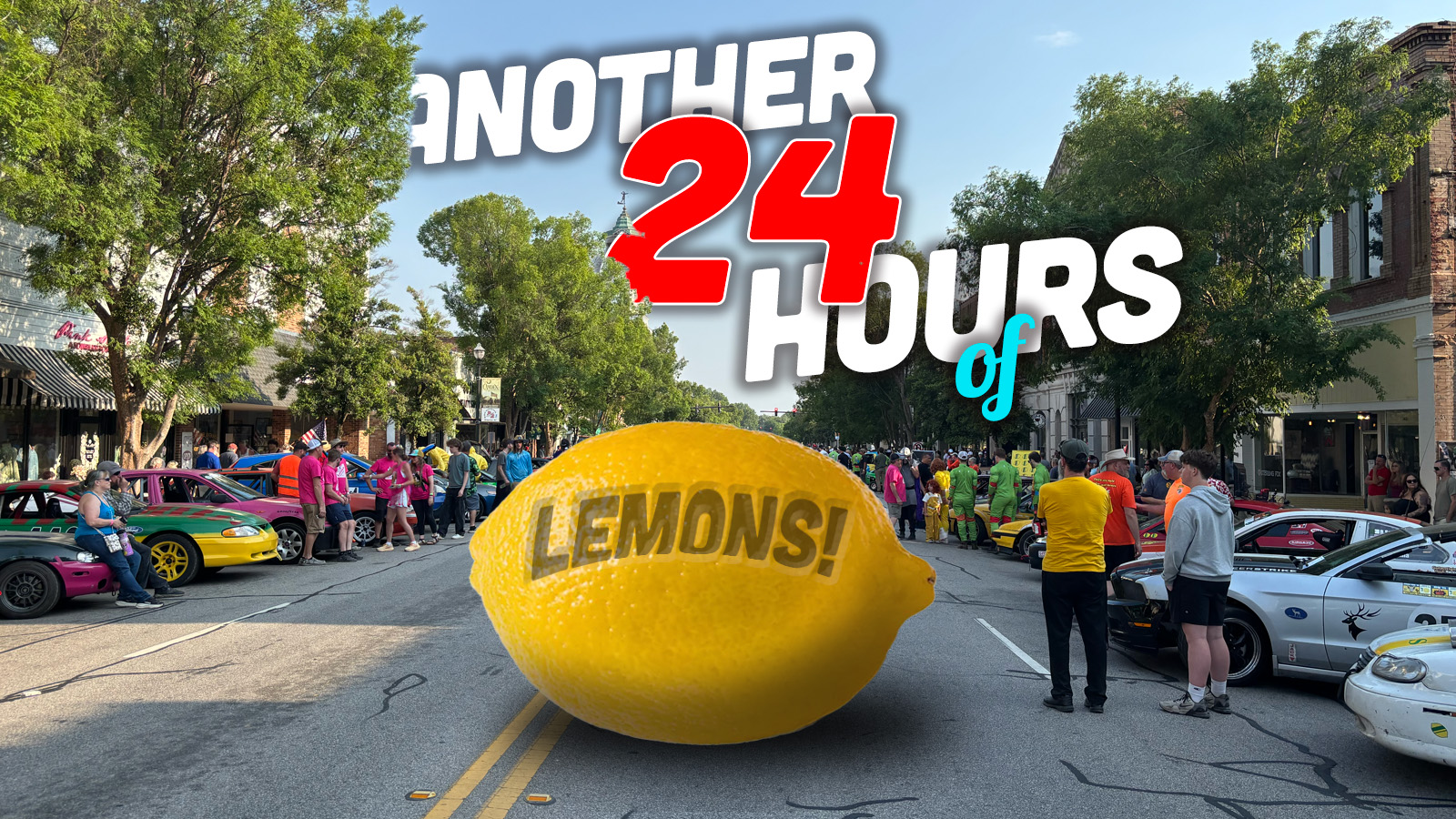
Ninety-six teams showed up at Carolina Motorsports Park last weekend to celebrate something no sane person predicted would last: the 24 Hours of Lemons just completed its 20th year of organized automotive stupidity.
The endurance racing series, built on the premise that anyone with a $500 car and questionable judgment deserves wheel-to-wheel competition, has become one of grassroots motorsport’s most durable institutions. Two decades in, the budget rule has become more aspirational than enforceable. Commenters who’ve attended recent events note that some builds clearly blow past the cap, but nobody seems to care.
What makes Lemons endure isn’t the racing itself, which ranges from competent to catastrophic. It’s the culture around it. Autopian co-founder Jason Torchinsky, serving as a judge at the Carolina event, deployed a manual typewriter as a penalty device, forcing black-flagged drivers to laboriously hunt-and-peck sincere letters of apology to race officials. One young driver had never touched a typewriter before. He figured it out fast.
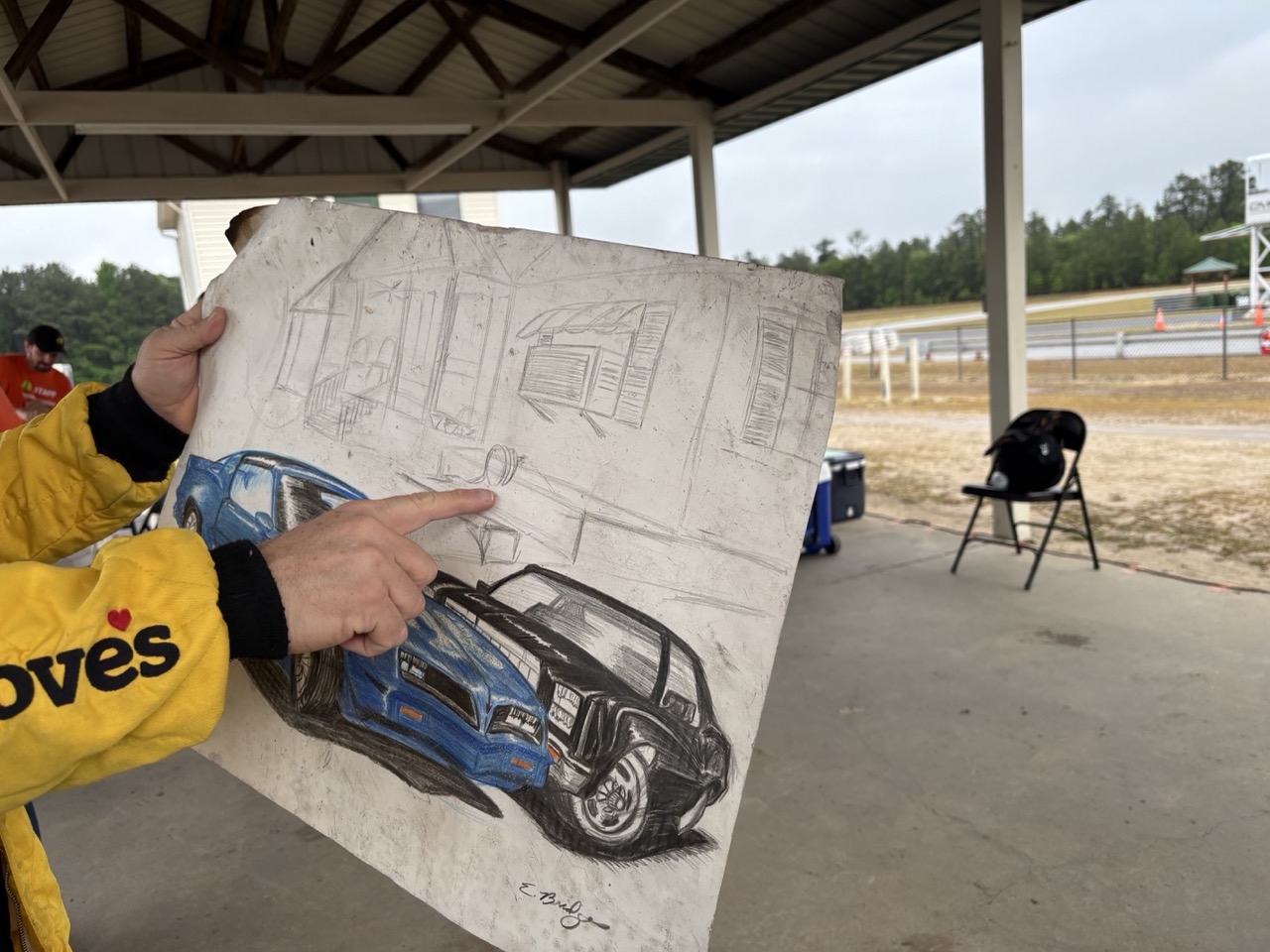
Other penalties included forcing drivers to paint Bob Ross-style landscapes on their cars and running 120 volts through a pickle to make it glow. These are the consequences for unsafe driving at Lemons, and they work precisely because they waste time without wasting dignity. Though that line gets thin when you’re copying junkyard art while your teammates watch the clock.
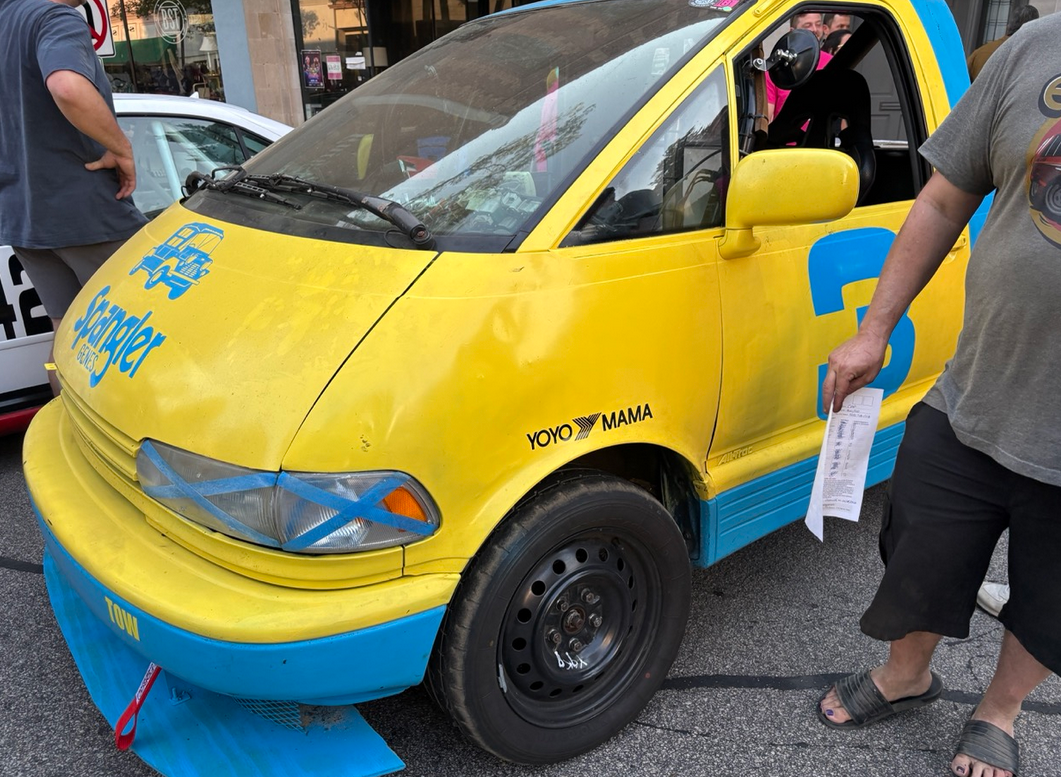
The car list read like a fever dream inventory of American driveways past. A Toyota Previa had its mid-mounted four-cylinder ripped out and replaced with a Chevy V8 of absurd proportions. An AMC Gremlin wore what appeared to be genuine Muppet fur, which turned revolting in the rain.
A Plymouth Horizon — a car most people haven’t seen running in decades — showed up clean and straight, sporting a rear wing fabricated from a dashboard top, defogger vents still visible. A Toyota Yaris dressed as Gary the Snail from SpongeBob nearly won its class, running clean laps all weekend. A rare two-door XJ Cherokee held its own until its power steering pump surrendered.
A Chrysler Crossfire team went full commitment, with silver-clad dancers performing to disco lyrics about bribing judges. That might be the only worthwhile use of that technology anyone has found so far.
The online reaction confirmed that Lemons still occupies a space nothing else fills. On the Oppositelock forum, the article sparked immediate nostalgia from former participants and scheming from would-be entrants. One commenter lamented having a free C4 Corvette and a plan to turn it into a giant New Balance shoe but no teammates willing to travel outside Reno. Another admitted he’d return to racing once his kids got their own licenses and freed up his weekends.
That’s the pipeline. Lemons doesn’t need a marketing department. It needs people with garages, free weekends, and an inability to say no to a terrible idea.
Twenty years ago, the concept sounded like a one-off joke — a parody of the 24 Hours of Le Mans for people who couldn’t afford a set of Hoosiers, let alone a prototype. The fact that it survived the recession, a pandemic, and the relentless inflation that’s turned $500 cars into a fantasy says something about demand for racing that doesn’t take itself seriously. Spec Miata this is not.
The $500 limit may be fiction now. The cars may be faster and more heavily modified than the founders ever intended. But when a 20-something kid is pecking out an apology on a typewriter he’s never seen before while his team burns laps without him, the original joke is still landing. That’s harder to sustain than any engine swap.




Share this Story