
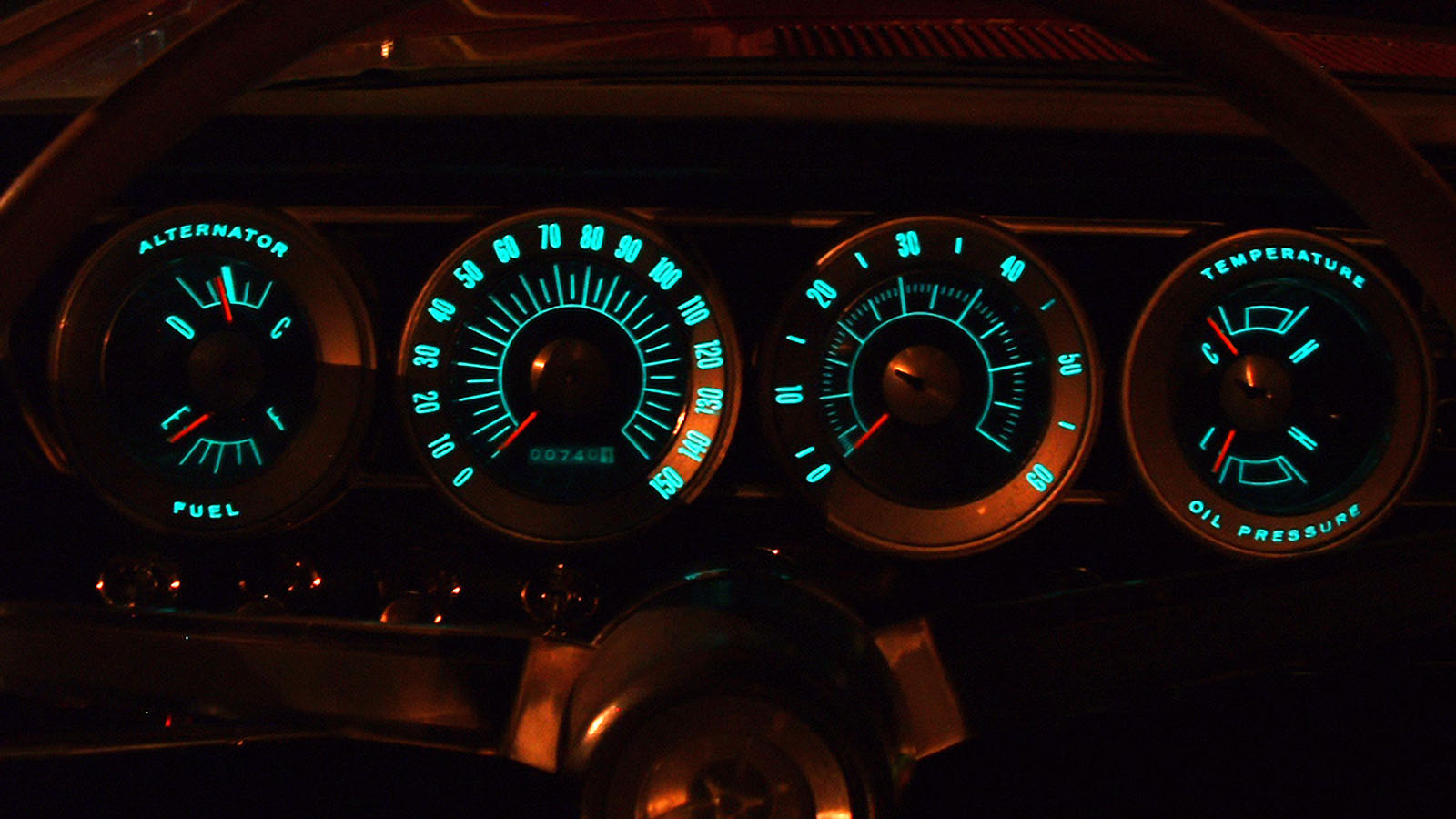


Chrysler was putting electroluminescent instrument panels in its cars by 1960, decades before Timex slapped “Indiglo” on a watch face and made the technology a pop-culture fixture. The Imperials, New Yorkers, and Dodge Chargers that rolled out of Detroit through the 1960s carried instrument clusters that glowed from within, powered by a phosphor layer excited by alternating current. No tiny bulbs, no shadows, no glare — just an even, ethereal wash of light behind chrome-trimmed bezels that looked like they belonged in a jeweler’s window.
The technology came from Sylvania, which branded it “Panelescent” and pitched it for everything from outdoor signs to clocks. The science is elegant: sandwich a phosphor between an opaque metallic electrode and a transparent conductive layer, run AC current through the stack, and the phosphor glows. It was energy-efficient, cool to the touch, and uniformly bright from any viewing angle — a characteristic that even some modern display panels still struggle to match.
In a car, the effect was mesmerizing. While most gauge faces relied on front-mounted bulbs that threw reflections and hard shadows across the glass, Chrysler’s clusters appeared to radiate from within. Photographs capture only a fraction of it.
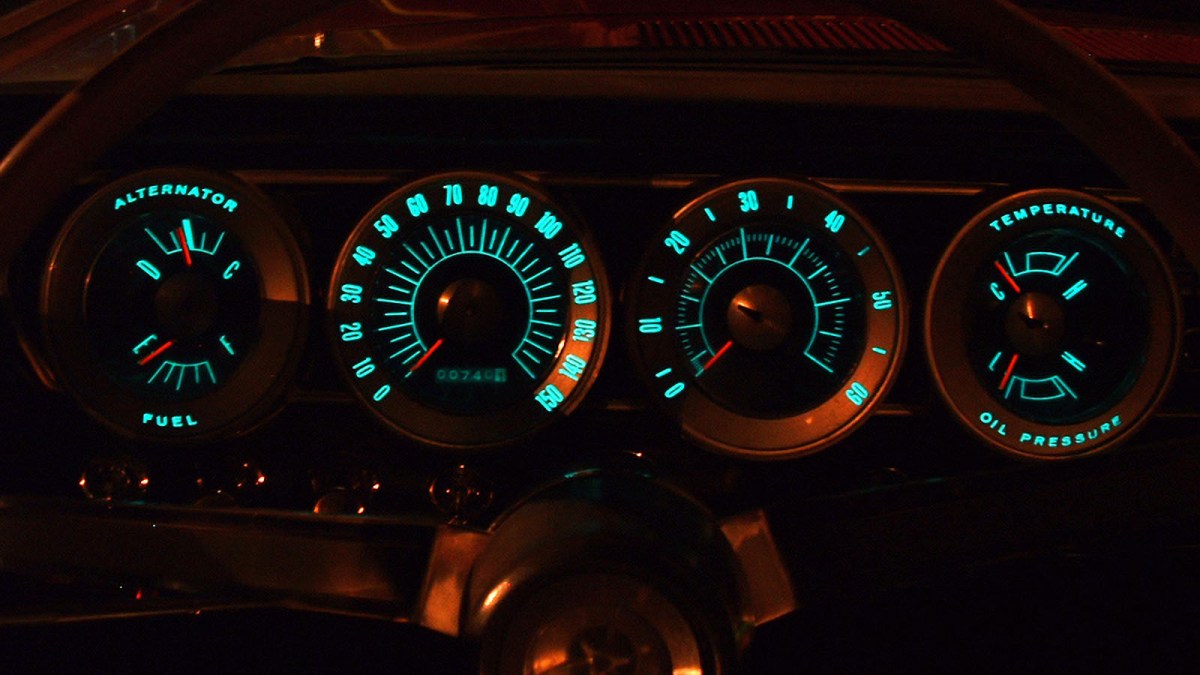
In person, surrounded by sculptural chrome binnacles and curved glass, those panels had a depth and warmth that no LCD or OLED can replicate. The magic wasn’t just in the light source. It was in the physical architecture around it.
But Chrysler was early. Too early. The inverters needed to convert a car’s 12-volt DC supply into high-voltage AC were fragile, and the phosphor itself degraded with use, dimming over time. These were real reliability problems in an era when customers expected a dashboard to outlast the drivetrain. The technology quietly faded from showrooms before it ever had a chance to mature.
By the 1980s, thin-film electroluminescent panels had replaced the original powder-phosphor construction, making the tech viable for mass-market consumer products. Sharp commercialized it. Timex popularized it. And yet, almost no automaker bothered to revisit the idea for instrument clusters.
Toyota was the notable exception, using electroluminescent backlighting in the original Lexus LS400. The execution was deliberately restrained — gauges floating in a void of black, warning lamps reflected by hidden mirrors to appear impossibly deep. It proved the technology could work in a modern car with modern reliability.
That was 1989. In the 35 years since, the industry has stampeded toward screens. Reconfigurable digital clusters can display anything: maps, media, animations, 3D renderings of the car itself. They are flexible, updatable, and cheap to produce at scale.
They are also flat, lifeless, and identical from one brand to the next. A Genesis screen looks like a BMW screen looks like a Hyundai screen.
The old Chrysler clusters worked because they were designed objects, not software interfaces. Light interacted with physical materials — glass, chrome, paint — in ways that changed depending on the angle and the ambient conditions. Every edge caught the glow differently. The phosphor wasn’t rendering a simulation of a gauge; it was illuminating an actual, physical one.
Bugatti seems to understand this. Its Tourbillon hypercar revives mechanical instrumentation with the kind of budget that allows Swiss watchmakers to get involved. But for the rest of the market, the arms race is about pixel count and refresh rates, not optical depth or material interplay.
Chrysler had something genuinely beautiful six decades ago. It wasn’t practical enough to survive, and by the time it was, nobody cared. The industry had already decided that the future of the instrument cluster was a rectangle that could show you anything — except something worth staring at.

Share this Story