


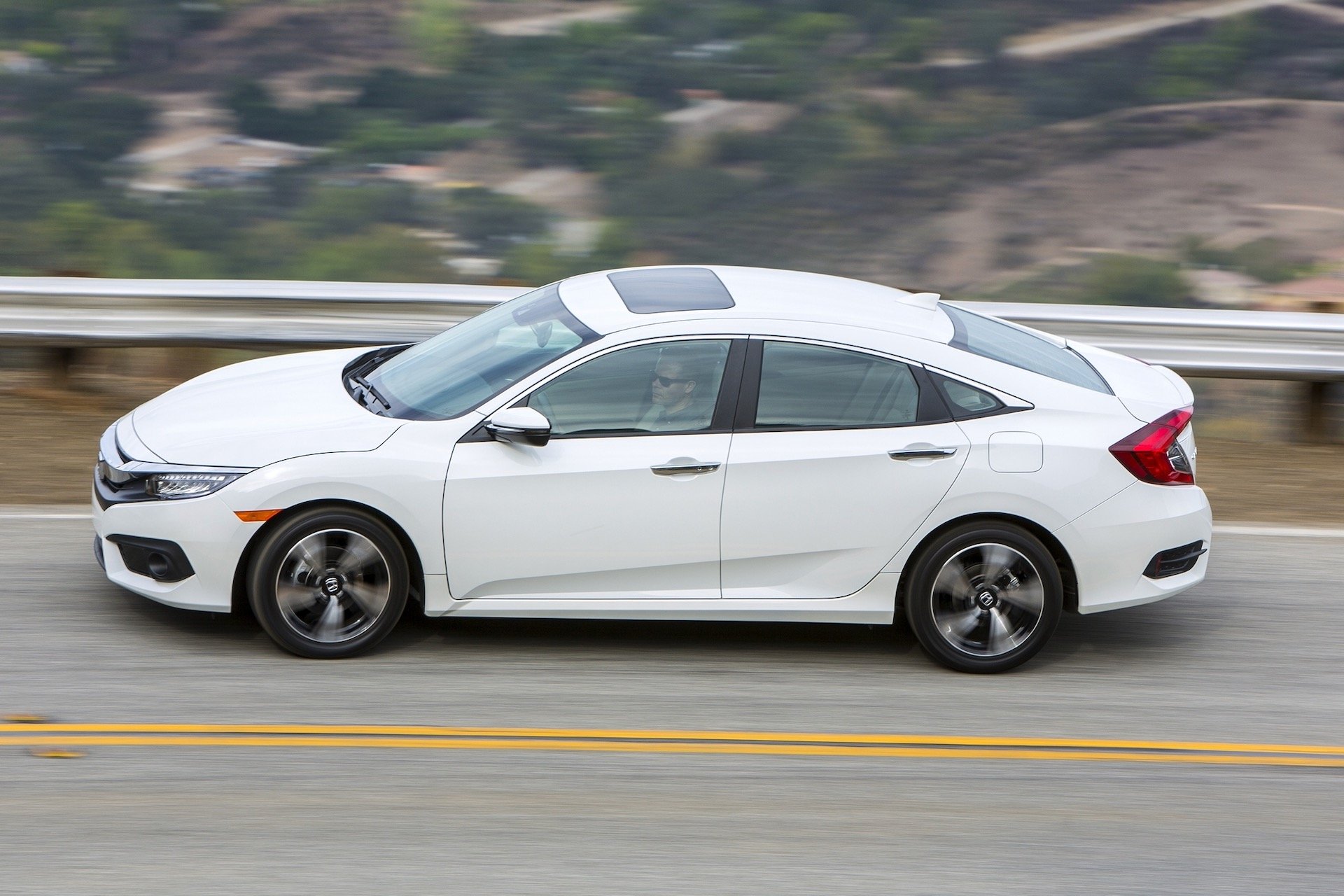
A pilot project in Ohio just proved that the sensors already riding shotgun in your Honda can spot potholes, missing signs, and busted guardrails with near-clinical precision. The system automatically generates repair orders before a single maintenance crew rolls out of the garage.
Honda and the Ohio Department of Transportation quietly ran a first-of-its-kind program covering roughly 3,000 miles of central and southeastern Ohio roads. Using ADAS hardware that already exists in production vehicles, forward-facing cameras and LiDAR, the system flagged road deficiencies in real time. It fed the data through AI processing and delivered prioritized work orders straight to ODOT dashboards. No windshield surveys. No clipboard inspections. No worker standing on a shoulderless two-lane road while semis blast past at 60 mph.
The numbers are hard to argue with. The system hit 93 percent accuracy identifying damaged guardrails and 89 percent on potholes. Honda estimates a full-scale rollout could save ODOT more than $4.5 million annually.
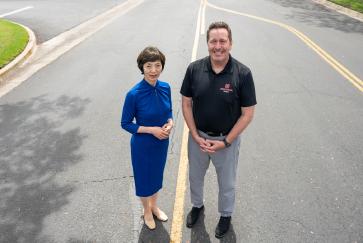
Brian Bautsch, Honda’s director of safety strategy, framed it as the next frontier: “We can’t achieve zero fatalities through technology alone.” Sue Bai, the chief engineer who conceived the project, pointed to a starker reality. More than 100 roadside maintenance workers die on the job every year in the United States. Automating inspections doesn’t just save money. It keeps people alive.
Honda is now in active talks with several other state transportation departments to expand the system beyond Ohio. The catch, and it’s a significant one, is that scaling depends entirely on Honda owners voluntarily sharing anonymized road-condition data from their vehicles. Bai stressed the system collects only location and deficiency detection, nothing more, and drivers will control whether they participate. She also floated the idea of other automakers with similar sensor suites eventually joining the effort.
It’s a tidy pitch: your commute becomes civic infrastructure. But the underlying tension is real. Automakers are sitting on oceans of sensor data generated every mile by every connected vehicle on the road. The question of who controls that data, who profits from it, and who decides when it gets shared with government agencies is only going to get louder. Honda is positioning this as altruism. It may well be. It’s also a proof of concept that vehicle-generated data has enormous commercial and political value.
Half a world away, the stakes look different but the core problem is identical. India lost 170,000 people on its roads in 2025, which works out to 465 lives a day. A citizen advocacy group in Tamil Nadu recently ran an ideathon challenging college students to design road-safety solutions.
The winning team from Government Law College in Dharmapuri proposed optical speed bars, rumble strips, and AI-powered speed enforcement tied to India’s e-challan ticketing system. No one suggested widening roads or building flyovers. The students, apparently, understand something their highway ministries haven’t absorbed: you can’t engineer your way out of a behavior problem by pouring more concrete.
That instinct connects directly to what Honda demonstrated in Ohio. The most promising safety advances aren’t moonshot autonomous vehicles or billion-dollar smart-highway corridors. They’re unglamorous systems that detect a guardrail hanging by a bolt and get someone out to fix it before a minivan finds out the hard way.
Honda’s pilot works because it repurposes existing hardware for a public good. India’s student engineers work because they start from the street, not the boardroom. Both reject the fantasy that technology alone saves lives.
The gap between a pothole on I-70 and a speeding lorry outside Coimbatore is vast. The lesson is not. Safer roads require someone to look, someone to act, and a system that connects the two before the body count climbs. Right now, that system is being built one sensor ping at a time, assuming drivers agree to share.


Share this Story