
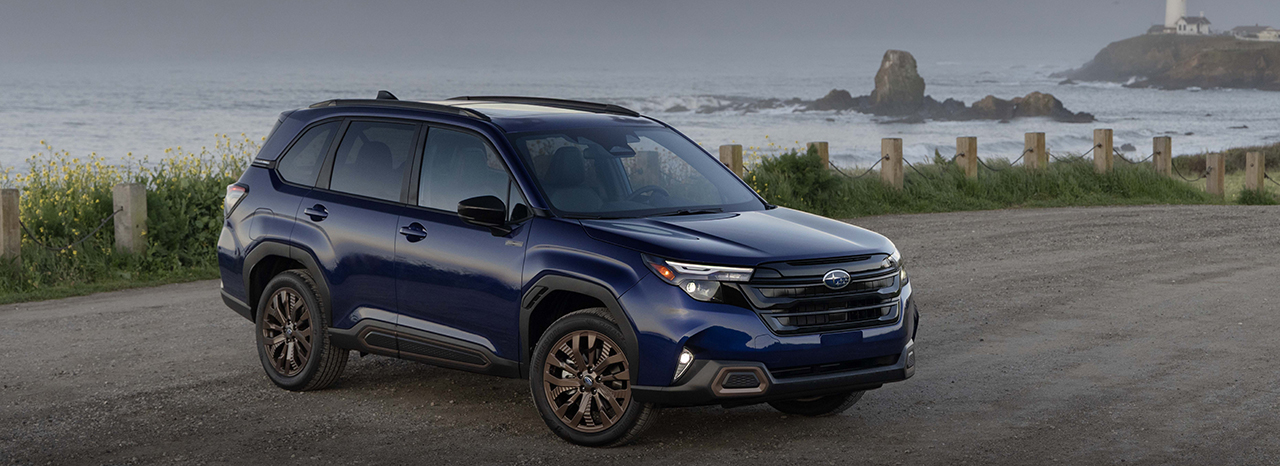


Subaru sold 54,674 vehicles in March 2026, a 23.5 percent decline from the same month a year ago. The company blamed the drop on “record-breaking pull-ahead sales” in March 2025, when buyers rushed into showrooms to beat tariff-driven price increases. Strip away that sugar rush, and the picture is more complicated than Subaru’s press release wants you to believe.
The Forester carried the brand again, moving 20,412 units to lead the lineup for the third consecutive month. That number was down 9.6 percent from last March but up nicely from February. Year-to-date Forester sales actually sit 8.6 percent ahead of 2025’s pace at 54,152 units, making it the one genuine bright spot in the portfolio.
Everything else bled red.
Outback sales cratered 42.9 percent to 10,004 units. The Legacy, now deep into its twilight, fell 83.5 percent to just 418 sales — a rounding error for a nameplate that once anchored the brand. Impreza got halved, dropping 50.9 percent to 1,498 units, while Crosstrek slid 13.5 percent to 15,721.
Year-to-date, Subaru has sold 141,944 vehicles, down 14.9 percent from the first quarter of 2025. That’s roughly 25,000 fewer sales through three months. Calling last year an anomaly only goes so far when the gap is that wide.
The Solterra posted its best month ever at 1,736 units, a 50.4 percent jump over last March. Subaru made sure to trumpet that number. But 1,736 EVs in a month where competitors like Tesla, Hyundai, and Ford are selling battery-electrics by the tens of thousands is not exactly a land grab.
Year-to-date, Solterra volume is actually down 2.9 percent. Best month ever still means marginal in the grand scheme.
Subaru is betting heavily on electrification anyway. Starting in April, the company will fold Trailseeker and Uncharted sales into its EV reporting as both new models reach dealer lots. The all-electric Getaway SUV and Forester Wilderness Hybrid are also headed to retailers soon.
It’s a product offensive that looks ambitious on paper for a brand that has historically thrived on a narrow, carefully curated lineup. The question is whether Subaru’s loyal buyer base — outdoor enthusiasts, safety-conscious families, the all-weather crowd — will follow the brand into electrification at scale. Subaru has never been a company that wins by breadth. It wins by focus.
Jeff Walters, Subaru’s president and COO, projected confidence, citing “steady demand” and “long-term momentum.” Sales chief Troy Poston talked up “lasting trust” and “consistency and care.” The language is deliberately calm, the corporate equivalent of deep breathing exercises.
But steady demand doesn’t square with a 23.5 percent monthly decline and a 14.9 percent year-to-date shortfall, regardless of what happened last March. Pull-ahead buying explains some of the gap. It doesn’t explain all of it.
The Outback losing nearly half its sales volume suggests something structural is shifting, not just cyclical timing. Subaru has built one of the industry’s most devoted owner bases by doing a few things exceptionally well. The Forester’s strength proves that formula still works.
The rest of the lineup’s softness suggests the brand is in transition — from a company that knew exactly what it was to one still figuring out what it wants to become. The next few months, as those new electric models start showing up in the sales columns, will tell us whether Subaru’s expansion is a smart evolution or a dilution of the focus that made it special in the first place.


Share this Story