
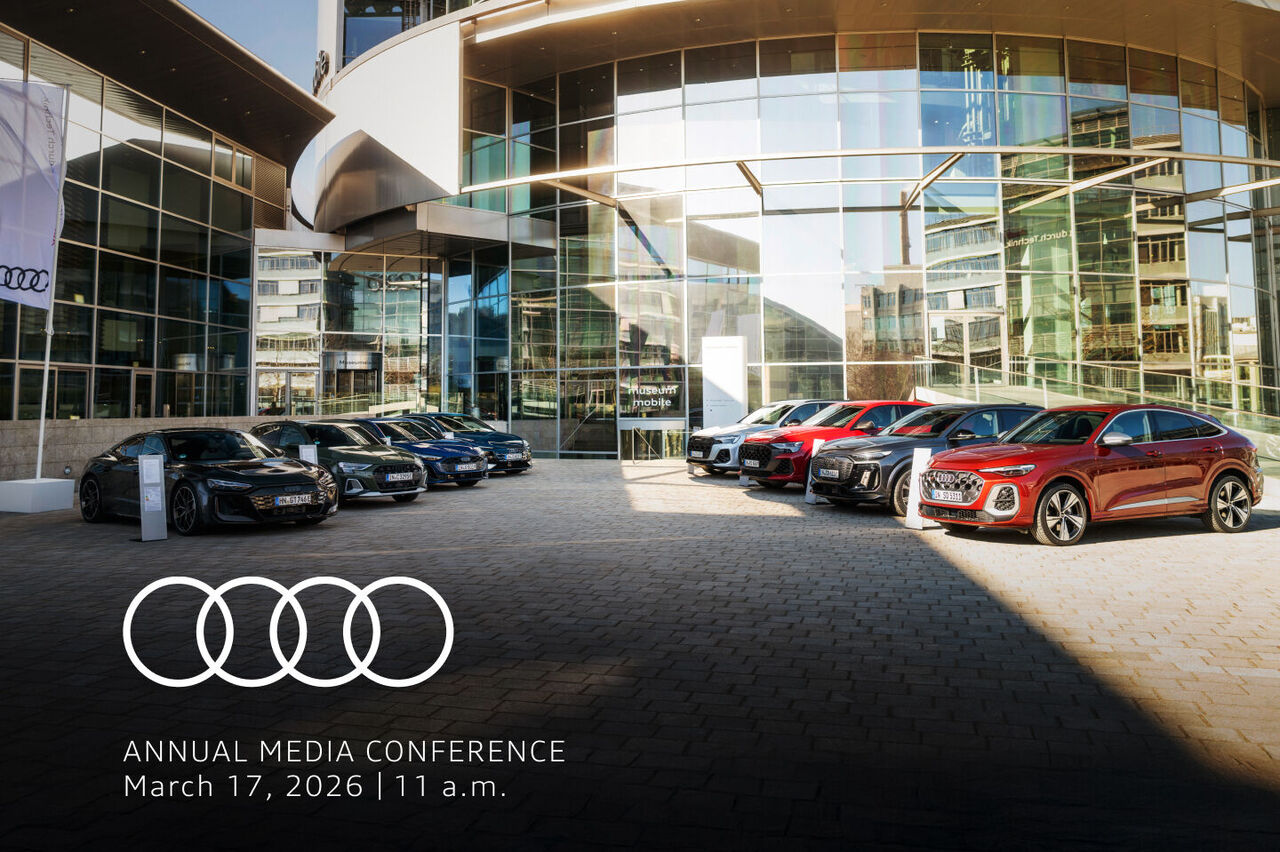


Audi has locked in March 17, 2026, for its Annual Media Conference, where CEO Gernot Döllner and CFO Jürgen Rittersberger will face the cameras from Ingolstadt and lay out the financial results for what was, by any measure, a bruising fiscal year.
The company’s own framing tells you plenty. Audi’s save-the-date notice doesn’t just promise numbers — it teases “answers to global uncertainties and increased competition.” That’s corporate-speak for a year spent getting punched from multiple directions.
And punched they were. Chinese rivals like BYD, Nio, and Xiaomi have been eating into the premium segment that Audi once owned without serious challenge. Europe’s EV adoption pace has been erratic. Tariff threats from the United States have clouded export forecasts.
Inside the Volkswagen Group, Audi has been navigating cost-cutting mandates and an identity recalibration around electrification that has, at times, felt more reactive than strategic.
Döllner took the top job in September 2023, inheriting a brand caught between its combustion heritage and an electric future that keeps shifting timelines. His early moves centered on streamlining the product portfolio and sharpening Audi’s tech narrative. Whether those moves have translated into margin protection during 2025 is exactly what the March 17 conference needs to answer.
The mention of “upcoming models” in the agenda hints that Audi plans to counter its competitive pressure with product. The brand has been telegraphing a denser launch cadence, including fresh entries in the electric SUV space and updates to core volume sellers like the A4 successor, now rebranded as the A5. Getting metal on dealer lots faster has become existential for premium European brands watching Chinese competitors refresh lineups at twice the speed.
Rittersberger’s role at the podium will be just as critical. Investors and analysts want to know whether Audi’s profitability held up against raw material costs, EV transition spending, and pricing pressure in China — the brand’s single largest market and one where discounting wars have become savage. Volkswagen Group’s broader financials have already signaled stress, and Audi’s individual performance will reveal how deep that runs in the premium tier.
The conference streams live at 11 a.m. Central European Time, available in both German and English through Audi’s media center. Press materials drop simultaneously. It’s a polished, controlled setting — exactly the kind of stage management you’d expect when the numbers might not shine on their own.
What Audi cannot control is the backdrop. By mid-March, the European auto landscape will be even more charged. EU emissions regulations for 2025 will be in full enforcement calculus, potential U.S. tariff escalations could be reshaping trade flows, and Chinese OEMs will likely have announced yet another wave of aggressively priced models aimed squarely at Audi’s customer base.
Döllner has repeatedly said Audi’s path forward depends on technology leadership, not volume chasing. March 17 is where that philosophy meets a balance sheet. The gap between vision and execution has swallowed more than a few automotive CEOs, and Döllner gets ninety minutes on a livestream to prove he’s not next.


Share this Story