
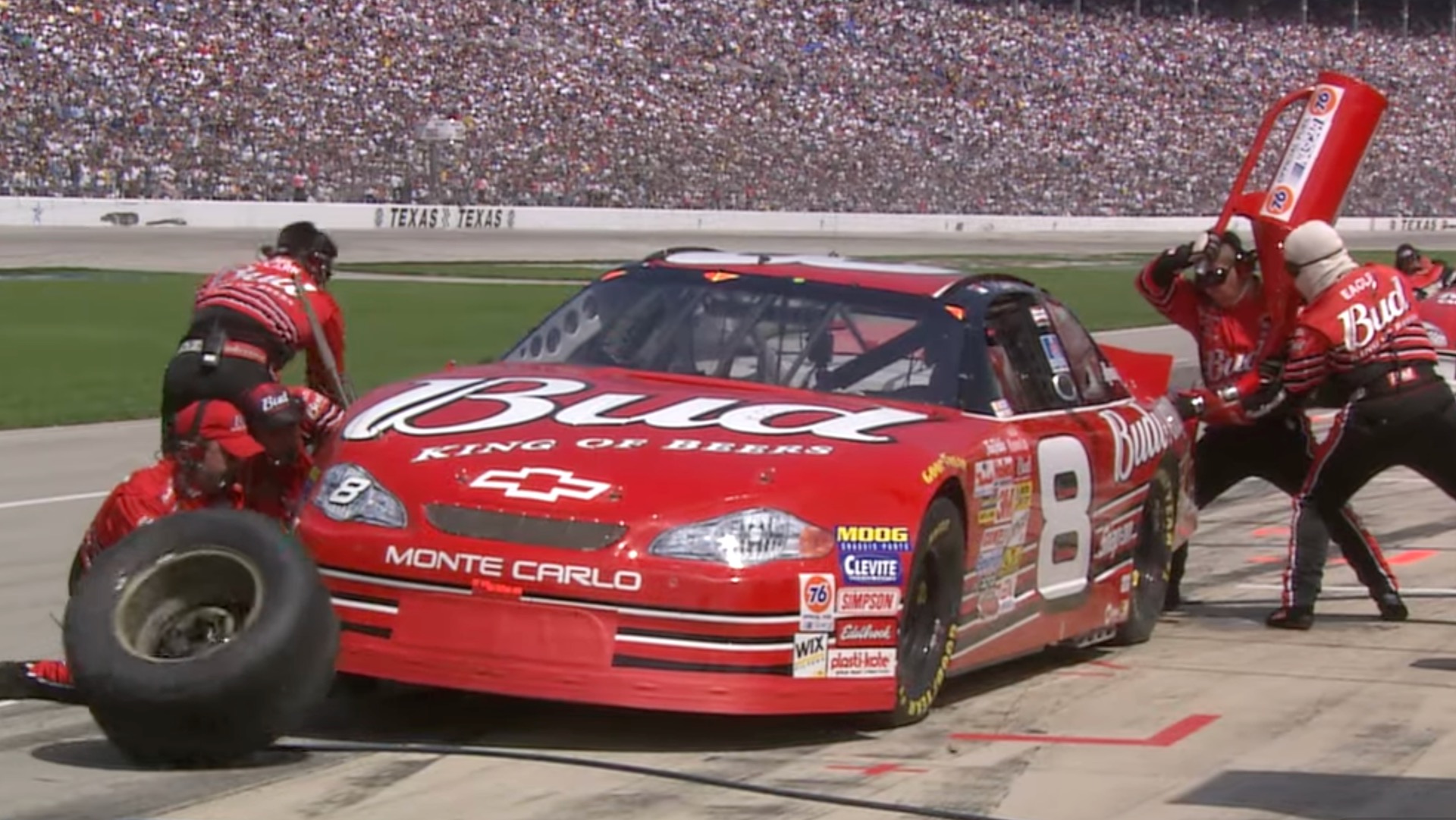


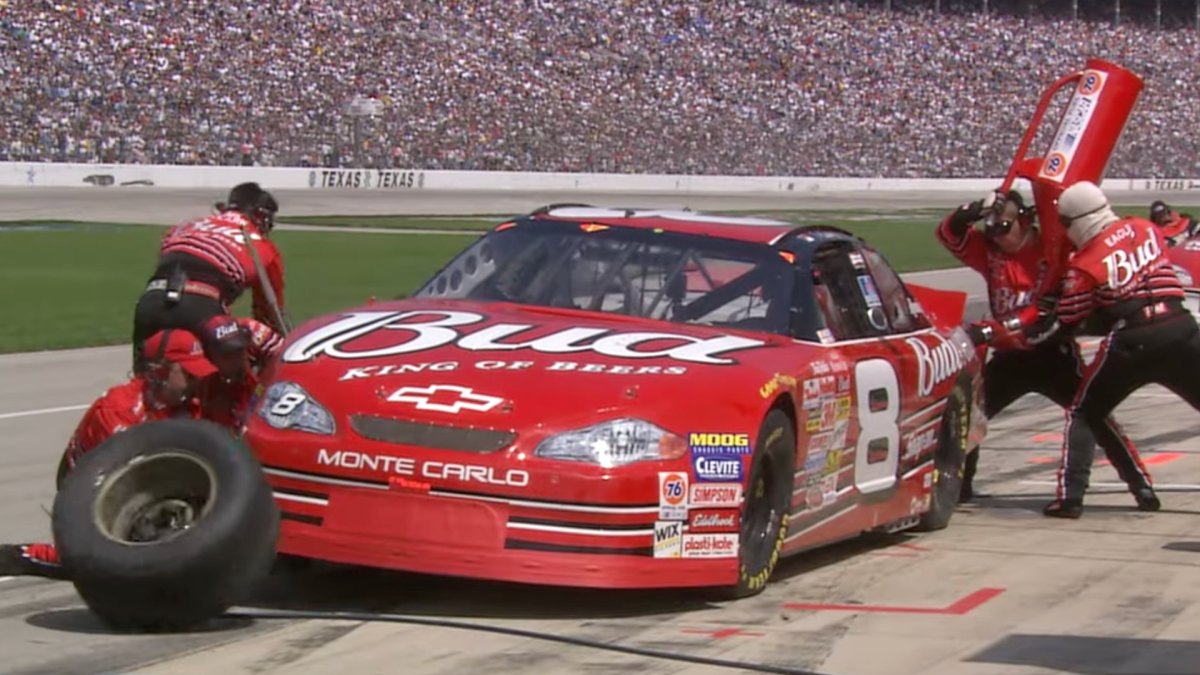
Fifteen minutes of raw, unnarrated trackside footage from the 2001 NASCAR season at Texas Motor Speedway has surfaced on YouTube, and it hits different than any highlight reel the sanctioning body has ever produced. No commentary. No graphics. Just widescreen HD cameras planted at track level, capturing thundering V8s and a sea of colorful stock cars rolling through pit lane while packed grandstands roar behind them.
NASCAR uploaded the footage to its NASCAR Classics channel, and it immediately struck a nerve with a fanbase that has spent two decades mourning what the sport used to be.
The 2001 season carries a weight no other year in stock car racing can match. It opened with Dale Earnhardt’s death on the last lap of the Daytona 500, a crash that happened in the same moment his drivers — Michael Waltrip and Dale Earnhardt Jr. — crossed the line 1-2 for Dale Earnhardt Inc. The sport’s biggest star was gone on its biggest stage, on the first race of a lucrative new television deal, in front of the largest audience NASCAR had ever assembled.
What followed was a season soaked in grief and defiance. Dale Jr. became the emotional center of the sport overnight, grabbing pole at that Texas race and later winning the Pepsi 400 when Cup cars returned to Daytona for the first time since his father’s death. Kevin Harvick, a relative unknown, was thrust into the black No. 3 car at Richard Childress Racing with impossible shoes to fill.
Jeff Gordon won the championship. Tony Stewart, Mark Martin, and Dale Jarrett — who took the checkered flag in the Texas race shown in this footage — were all running at their peaks. Then September 11th happened, and Dale Jr. won the first race back from that, too.
The footage captures all of it without trying to explain any of it. That’s what makes it work. You see the DuPont rainbow on Gordon’s Chevy, the bright yellows and reds of sponsors who actually sold products instead of gambling apps.
You see cars that still vaguely resembled the Monte Carlos and Tauruses sitting in dealership lots. The sound is enormous and unfiltered, the kind of sensory wallop that no modern broadcast mix can replicate.
Fan reaction has been immediate and telling. Online forums lit up within hours of the upload, with longtime attendees swapping stories about that exact race — pit passes, meeting Jeff Burton, the legendary parking lot exodus that seemed to last longer than the event itself. But threaded through the nostalgia is something sharper: a widespread conviction that what NASCAR has become bears little resemblance to what it was.
The complaints are familiar. Restrictor plates. Stages. Identical Next Gen chassis that look like stock cars the way a Halloween mask looks like a face.
One commenter traced the decline to 1981, when silhouette bodies replaced actual production sheetmetal. Another pinpointed 2007. A third said the sport was never great — there was just nothing else on television. Everyone has a different autopsy date, but the patient they’re examining is the same.
Dale Jarrett won that 2001 Texas race. He drove a brown-and-white UPS Ford for Robert Yates Racing, a team that no longer exists, carrying a sponsor that actually delivered packages to your door. The field behind him was stacked 43 cars deep with independents and underfunded teams mixed in among the powerhouses, every one of them distinct in color and shape and sound.
NASCAR knows exactly what it’s doing releasing this footage. The sport’s current television ratings are a fraction of what they were in 2001, and its audience skews older every year. Serving up raw, beautiful, high-definition proof of what the grandstands used to look like is either an act of pride or a cry for help.
Maybe both. The footage doesn’t need a narrator because the gap between then and now speaks for itself.
Share this Story