


The tariff hammer is about to fall, and electric vehicles are directly in the crosshairs.
President Donald Trump confirmed this week that auto-industry tariffs targeting vehicles and parts from Mexico and Canada are imminent, with announcements expected within days and broader reciprocal tariffs set for April 2. The implications for EV buyers and the broader car market could be severe.
The United States imported $471 billion worth of automotive products in 2024, including $214 billion in passenger cars alone. A huge chunk of that flows north from Mexico, which builds hundreds of thousands of U.S.-bound vehicles every year. General Motors alone assembled more than 889,000 vehicles in Mexico last year, shipping roughly 653,000 of them to American dealers.
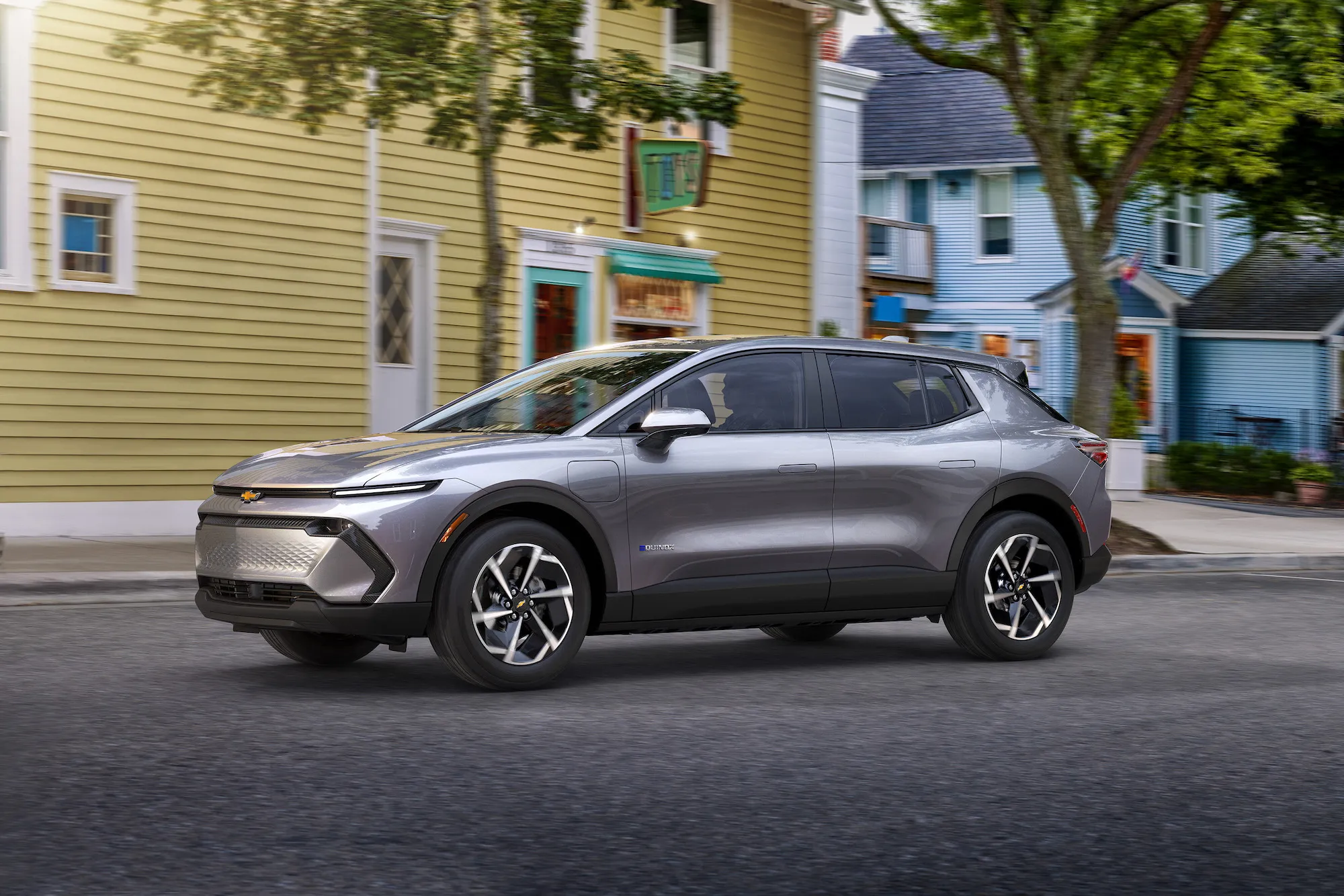
Here’s the uncomfortable truth: some of the most important EVs on sale right now are built south of the border. The Ford Mustang Mach-E, Chevrolet Blazer EV, Chevrolet Equinox EV, Honda Prologue, Cadillac Optiq, and Jeep Wagoneer S are all manufactured in Mexico. Canada, meanwhile, produces the Dodge Charger Daytona EV.
Hybrid and plug-in hybrid models are equally exposed. The Ford Maverick hybrid and Toyota Tacoma hybrid come from Mexican plants. Canada supplies the Chrysler Pacifica Hybrid, Honda Civic Hybrid, Lexus RX350h, Lexus RX500h, and Toyota RAV4 Prime.
The financial hit could be staggering. According to Wells Fargo estimates cited by Reuters, a 25% tariff on parts from Canada and Mexico would add roughly $2,100 in cost to consumers even for vehicles assembled in the United States, since so many components cross borders during production. For vehicles fully built in Canada or Mexico, the price increase could reach $8,000 to $10,000.
That’s not a rounding error. That’s the difference between an affordable EV and one that gets crossed off shopping lists entirely.
Automakers have already warned that some models could simply be pulled from the market if the math doesn’t work. The Chevy Equinox EV, which was supposed to be GM’s affordable electric volume play starting around $33,000, suddenly looks vulnerable. Same goes for the Honda Prologue, which has been a surprise sales success in its first year.
Making matters worse, Trump has separately signaled his desire to eliminate the $7,500 EV tax credit established under the Biden-era Inflation Reduction Act. That credit currently applies to vehicles assembled in North America with qualifying battery and mineral sourcing, a framework that was explicitly designed to align with the USMCA trade agreement negotiated during Trump’s first term. A recent study warned that killing the credit would have a devastating effect on U.S. manufacturing jobs, not just EV sales.
The irony is thick. Mexico builds EVs for American buyers but barely buys any itself, with electric vehicles representing a tiny fraction of the country’s 1.1 million annual new-car sales. Weak charging infrastructure and affordability remain barriers there, though Mexico has announced plans to develop its own EV supply chain and is even pursuing a federally subsidized electric car that could cost as little as $4,400.
GM is particularly exposed, relying on Mexican and Canadian imports for both its profitable full-size trucks and its growing EV lineup. Ford faces similar pressure with the Mach-E and Maverick hybrid.
The clock is ticking. April 2 is circled on every automaker’s calendar, and the scramble to figure out pricing, production shifts, and potential model cancellations is already underway. For consumers eyeing an electric vehicle purchase, the message is clear: the sticker price you see today may not be the sticker price you see next month.



Share this Story