About This Mitsubishi Eclipse GS 1998 Build
We love featuring real builds from real owners. This Mitsubishi Eclipse GS 1998 sits on a set of 17×9.5 / 17×9.5-inch Rays-Engineering wheels, and the result speaks for itself.
The owner chose Rays-Engineering for a reason. This brand delivers serious quality and a design language that turns heads at every car meet. We see hundreds of Mitsubishi Eclipse GS builds come through WheelFront every month, but this one stands out. The combination of the exterior with the Rays-Engineering creates a look that balances aggression with elegance.

Fitment Breakdown: Rays-Engineering on the Mitsubishi Eclipse GS 1998
I walked around this '98 Eclipse for ten minutes straight at the meet. These 17x9.5 Rays-Engineering wheels completely change the aggressive profile of the DSM platform. That massive width fills the wheel wells like the car was born for it.
We see a +38 offset front and back on this setup. This offset keeps the wheels tucked safely under the fenders while pushing them right to the edge. It gives the Eclipse a wide, planted look without wrecking the factory geometry.
The hub bore sits perfectly, so we don't have to worry about annoying vibrations at highway speeds. I checked the caliper clearance and the spoke design clears the factory GS hardware with plenty of room to spare. You won't need spacers to clear your brakes here.
Those lowering springs drop the ride height just enough to close the ugly gap. However, you need to watch the inner fender liners on full lock. If you hit a deep dip, you might hear a faint rub if your tire compound is too meaty.
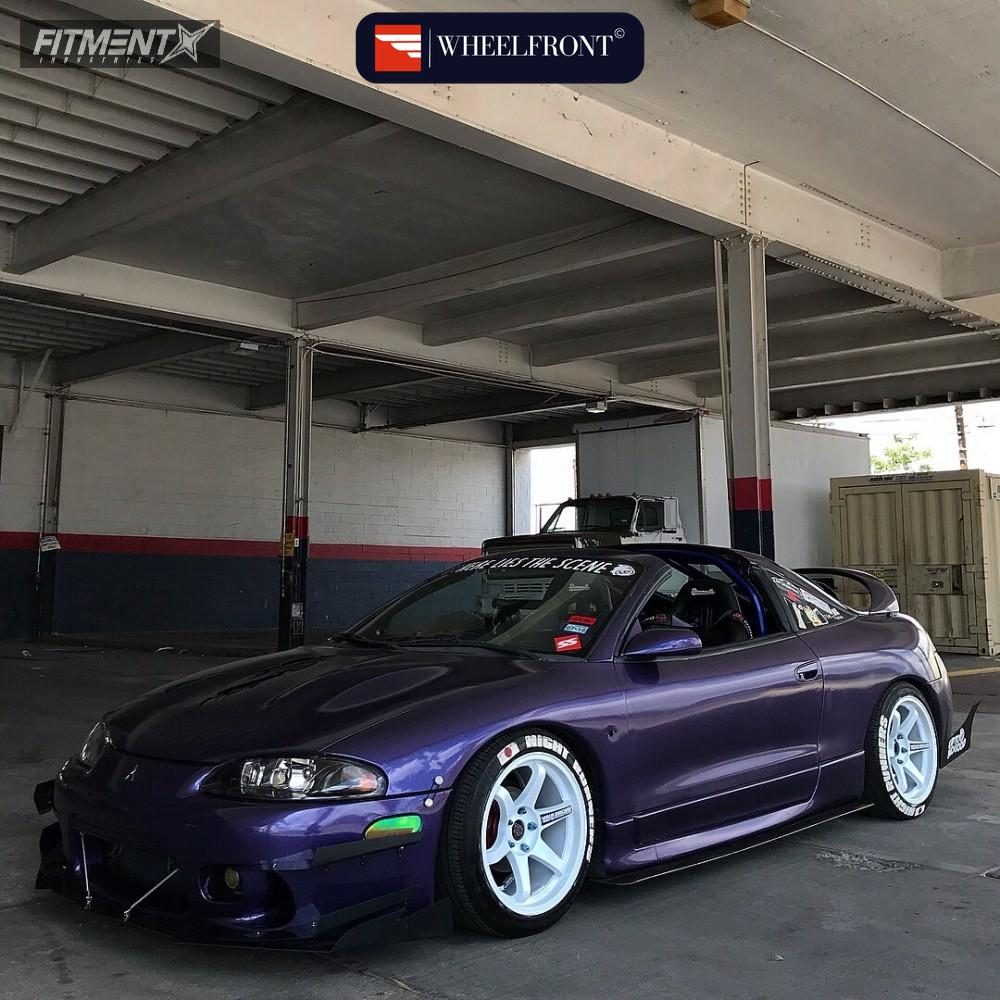
I love the barrel depth on these Rays. They give the car a legit track-ready aesthetic that standard wheels just can't match. The spokes stretch out to the edge, making the 17-inch diameter look slightly bigger than it really is.
The 9.5-inch width is serious business for a GS model. You have to ensure your alignment specs stay tight to avoid uneven wear. This setup isn't just for show, as it clearly prioritizes grip over a lazy stance.
What We Recommend for Mitsubishi Eclipse GS 1998 Owners
If you want to run 9.5-inch wheels like this, you have to be ready to work. We always tell owners to roll their fenders before mounting new rubber. It saves you from shredded tires and paint damage when the road gets rough.
Stick to a square setup if you want predictable handling. Staggered wheels on these cars often cause headaches with the differential and electronic nannies. A square 17x9.5 setup keeps the car balanced through every corner.
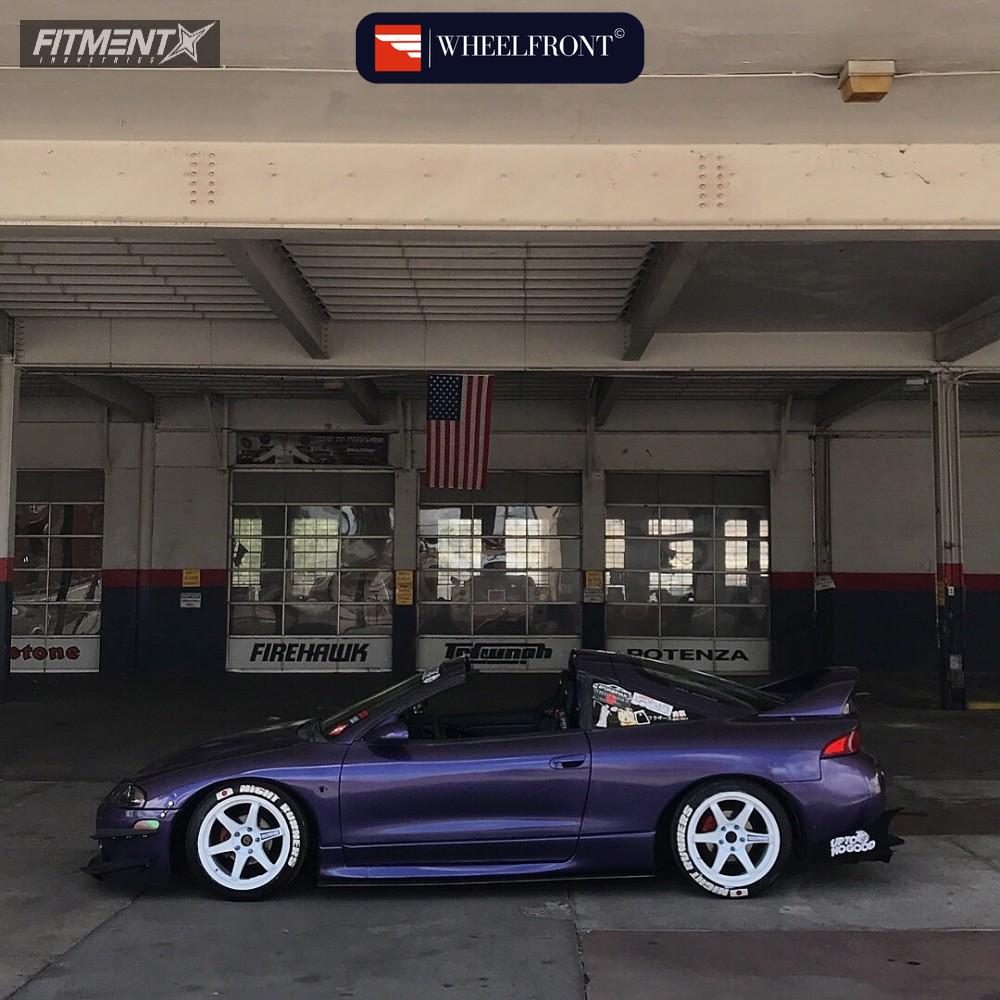
Don't just guess your offset. A +38 is a sweet spot, but anything lower than +30 will poke way too far. You want that flush look, not the skateboard aesthetic that ruins your wheel bearings.
Pick your tires carefully to match your daily driving habits. A slight stretch helps with clearance, but don't overdo it. You want enough sidewall to protect the lip of that beautiful Rays hardware from nasty potholes.
Avoid cheap spacers at all costs. If you need a tiny bit more room, use hub-centric adapters that bolt directly to the studs. Quality over quantity always wins when it comes to rotating mass.
Style and Build Analysis
The white finish on these Rays pops against the body color like nothing else. It feels like a throwback to 90s rally dominance. The contrast is sharp, clean, and impossible to ignore in a crowded parking lot.
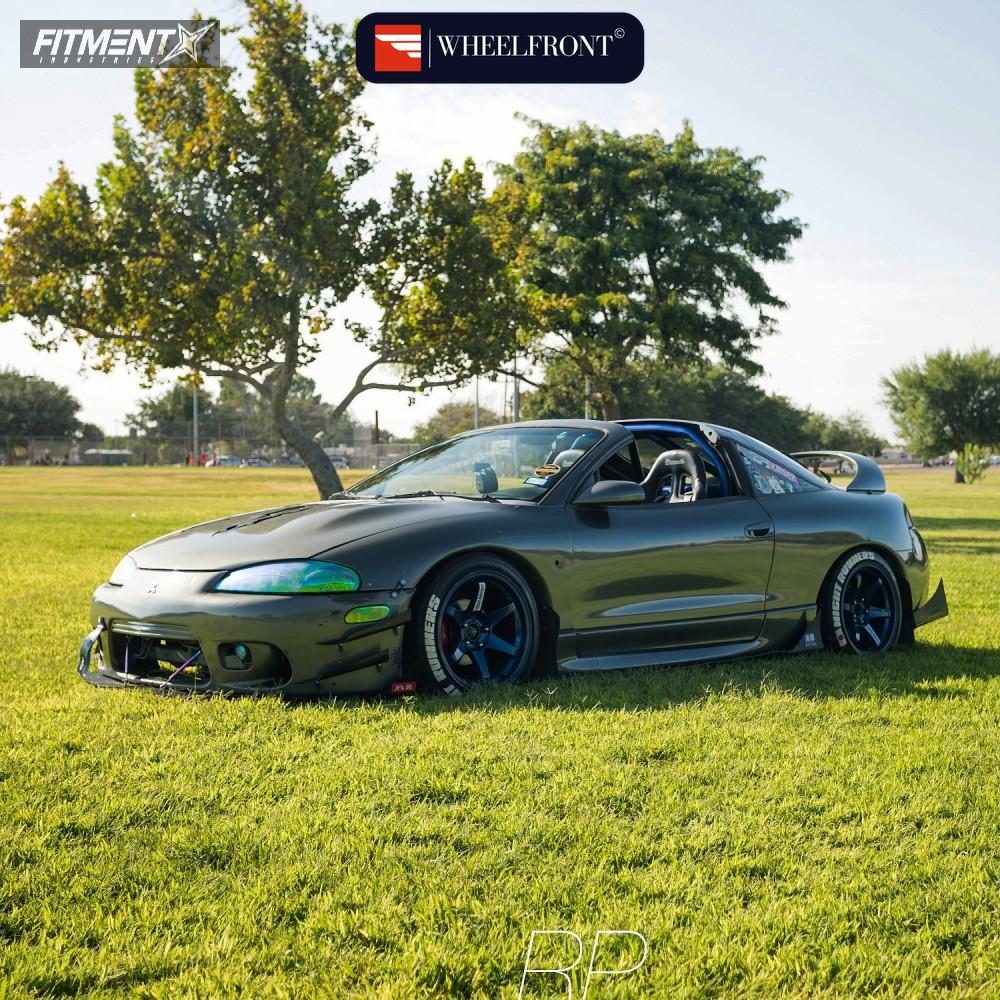
Rays-Engineering knows how to design a spoke that looks fast even when it's parked. These wheels have a timeless geometry that doesn't feel dated. They respect the original lines of the Eclipse while adding a modern edge.
The stance is aggressive but functional. Many builds we see go too low and lose the ability to actually drive. This car sits at the perfect height to attack an on-ramp while still clearing speed bumps.
I compare this to other builds we feature and this one stands out for its restraint. It doesn't need gaudy body kits or massive wings to grab attention. The wheels do all the heavy lifting and define the entire personality of the car.
Proportions are everything in this hobby. A 17-inch wheel is the absolute limit for the 2G Eclipse body. Anything bigger looks like a cartoon, but this size sits in the goldilocks zone of style and performance.
Why We Love This Build
Seeing this Eclipse roll into the lot made my day. The white-on-white aesthetic catches every ray of sunlight, making the wheels glow against the dark pavement. It looks like a predator waiting to strike at the starting line.
We love this build because it captures the spirit of true JDM tuning. The owner didn't take shortcuts or settle for cheap replicas. Every choice on this car shows a deep respect for the history of the Mitsubishi platform.
This is the kind of setup that makes you turn your head twice. It reminds us why we fell in love with cars in the first place. Go get yourself a set of Rays and make your build legendary.
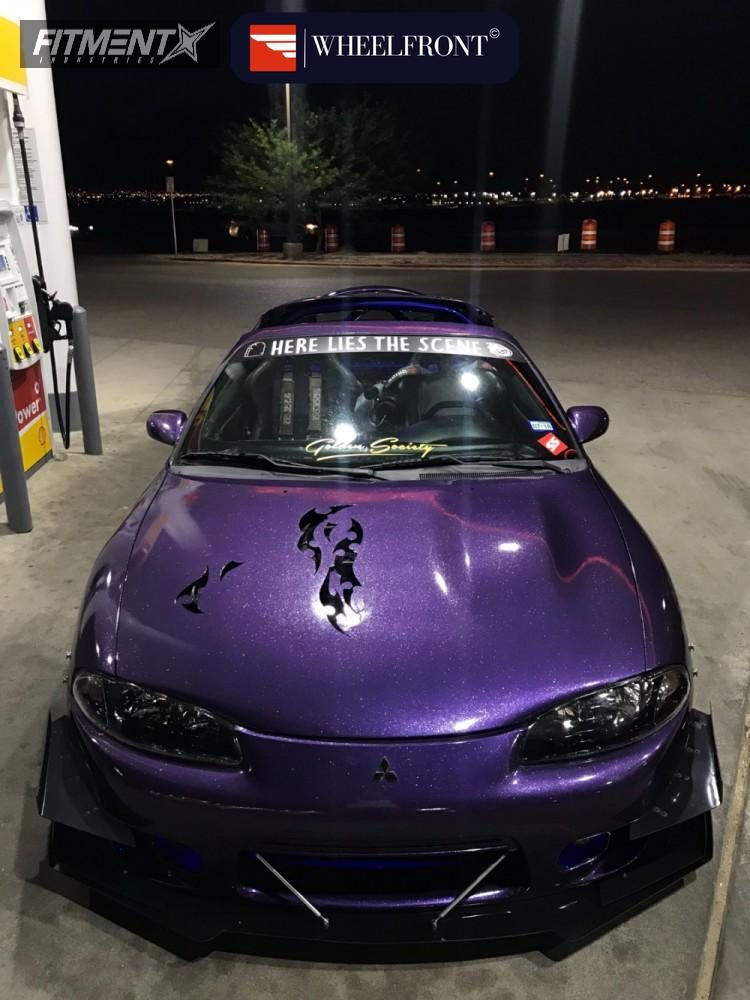
Full Specs Breakdown
Here is exactly what this owner is running. We break down every detail so you can replicate this build or use it as a starting point for your own setup.
- Car Make & Model: Mitsubishi Eclipse GS 1998
- Vehicle Color:
- Wheel Brand & Model: Rays-Engineering
- Wheel Size: 17×9.5 / 17×9.5
- Offset: 38 / 38
- Wheel Finish: White
- Tires: Bridgestone Potenza RE070 225/45 25″x8.9″ / 225/45 25″x8.9″
- Suspension: Lowering Springs
Before You Buy: Fitment Checklist
We talk to Mitsubishi Eclipse GS owners every day. These are the questions we hear most before they pull the trigger on new wheels.
Will 17×9.5 / 17×9.5-inch wheels fit my Mitsubishi Eclipse GS? Yes, but fitment depends on width, offset, and tire size working together. A wrong offset means rubbing. A wrong tire size means poor handling. Always verify all three.
Do I need to modify my fenders? That depends on your offset and suspension. A conservative offset with stock ride height usually fits without modification. Go aggressive and you may need to roll or pull your fenders.
Can I daily-drive this setup? Absolutely. Thousands of Mitsubishi Eclipse GS owners run 17×9.5 / 17×9.5-inch wheels every day. The key is choosing the right tire with enough sidewall to absorb road imperfections.