
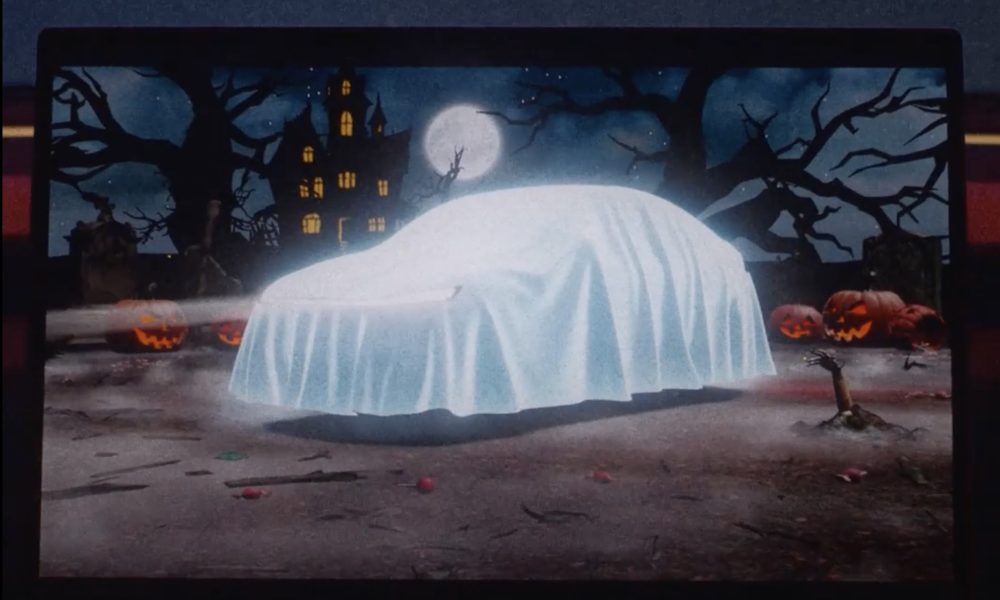


A robotic hand clawing out of a digital graveyard is doing a lot of work for Tesla right now.
The company dropped a short clip on X this week teasing a “Halloween Mode” software update for its vehicles. The animation replaces the standard parked visualization on the center touchscreen with a graveyard scene, the owner’s car draped in a white sheet like a cartoon ghost, and a hand pushing through the dirt in classic zombie fashion. That hand belongs to Optimus V3.
Tesla has not shown its third-generation humanoid robot walking in any real-world setting. But renders pulled from the company’s Android app last month revealed substantially redesigned hands with 22 degrees of freedom, driven by tendon mechanisms with actuators relocated to the forearm. Elon Musk has called the hand the majority of the robot’s engineering difficulty.
So burying it in a holiday Easter egg is a clever way to keep Optimus in public consciousness without having to demonstrate it actually doing anything new.
Optimus does have Halloween form. Last October, the robot handed out candy in Times Square and shuffled around the Tesla Diner in Los Angeles dressed as a zombie. This year’s tease suggests the holiday software drop could mirror the 2025 Holiday Update, which added a Santa sleigh, snowmen, snow effects, and a festive lock chime.
Expect pumpkins, fog, and maybe a jump scare when you unlock your car.
The Halloween clip landed during a week already loaded with Tesla software news. A few days earlier, the company rolled out Emergency Drive Away, a feature that lets drivers shift into Drive and leave a Supercharger stall with the cable still connected. Tesla’s own warning makes the tradeoff plain: “Use of this feature will damage your vehicle and the Supercharger.”
Short camera recordings get sent to Tesla, giving the company footage to distinguish a genuine threat from laziness. That feature requires update 2026.38.3 and works at every U.S. Supercharger without hardware changes. Pre-2021 Model S and Model X vehicles are excluded, and Canada and other markets are not yet supported.
Tesla did not connect Emergency Drive Away to any specific incident, but the timing is hard to ignore. On August 1, a gunman opened fire at an In-N-Out in Twin Falls, Idaho, targeting people in two Teslas at a neighboring Supercharger. A 66-year-old man from Salt Lake City was killed.
Owners had been pushing for a native escape option ever since, many referencing EVject, the aftermarket breakaway connector Tesla sued in 2024 before the two companies reached a settlement involving thermal sensor upgrades.
Meanwhile, Automatic Collision Evasion continues its staged rollout on HW4 vehicles running FSD v14.3.9 and newer. One owner posted video of the system reengaging itself just before a curb strike, and Tesla AI lead Ashok Elluswamy shared the clip with the line, “A guardian angel always looking out for you.” The feature can take over steering, braking, or acceleration on highways below 85 mph when it detects an imminent frontal collision or a distracted driver.
HW3 cars get FSD v14.2 Lite instead, without collision evasion.
Three updates in a single week: one whimsical, one reactive, one pushing the boundary of autonomous intervention. Tesla is layering personality, safety appeal, and real capability into the same software pipeline, betting that owners will talk about all three with equal enthusiasm.
The Optimus hand is still underground. Whether it climbs out before Halloween, or just stays an animation on a screen, will say more about the robot program than any holiday gimmick.
Share this Story