


A protest sign meme is making the rounds on social media. Different people, different photos, all digitally edited to hold signs reading “I want a car that is 0% computer.” The sentiment is spreading fast, and it is completely dishonest.
That’s the sharp observation from Jalopnik’s Brad Brownell, who finally said out loud what anyone who has actually wrenched on an old car already knows. The romance of analog motoring evaporates the first time you’re gapping ignition points on a highway shoulder in August. Or coaxing a cold carburetor to life on a 20-degree morning. Or trying to explain to your spouse why the car won’t start because the choke needs adjustment.
The meme captures a real frustration, though. Modern cars are drowning in software. Touchscreens that control everything from mirror adjustment to climate settings.
Over-the-air updates can change your car’s behavior overnight. Subscription models lock heated seats behind a paywall. Features nobody asked for stacked on top of features nobody uses. The resentment is legitimate even if the proposed solution is absurd.
Brownell pegs his personal sweet spot at roughly 10 percent computer, which he defines as electronic fuel injection and anti-lock brakes. That’s it. The technology level of a 1996 BMW R1100 GS motorcycle. Enough silicon to make the thing start reliably and stop safely, then get out of the way.
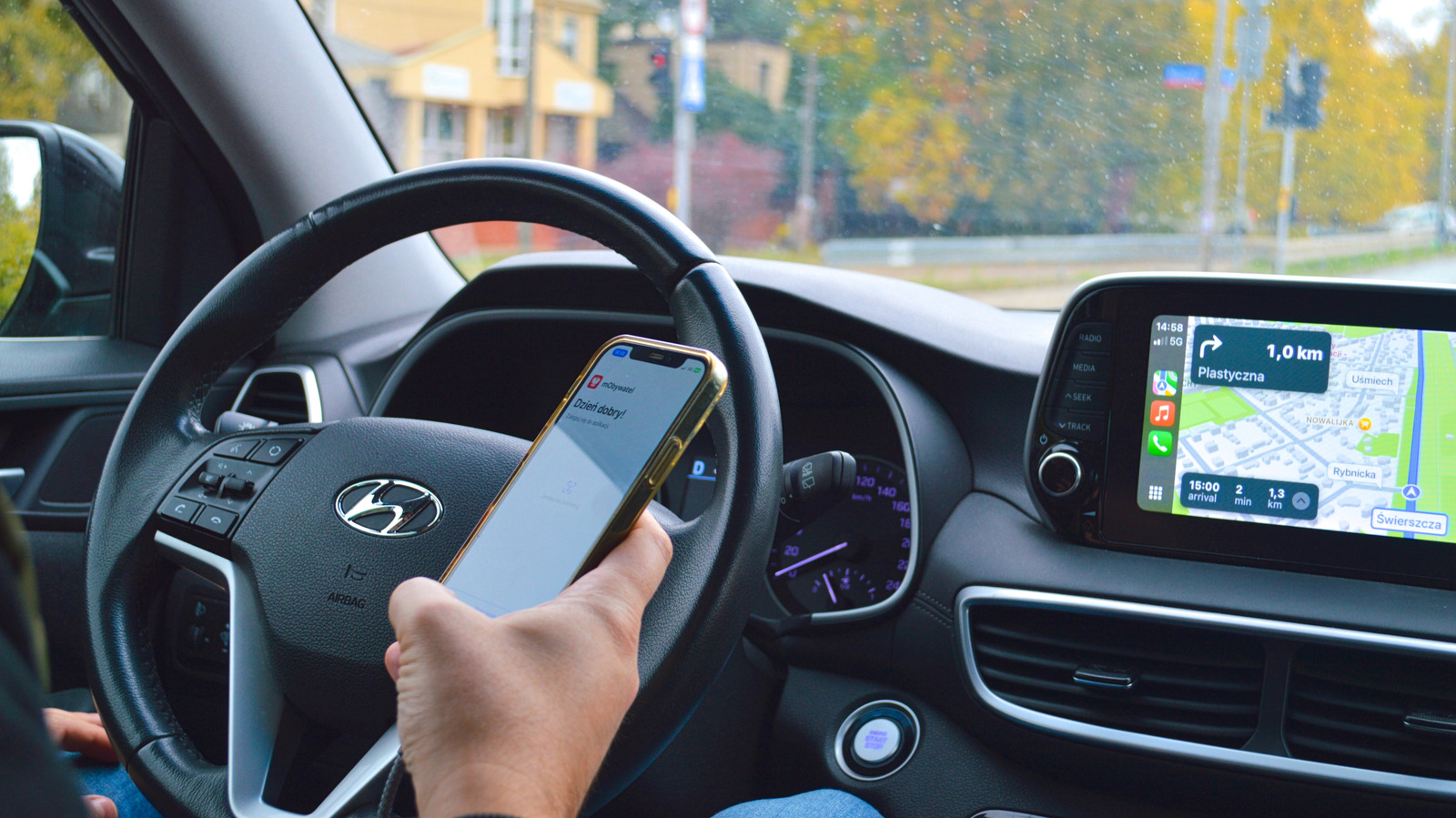
He’s also honest enough to admit that when he climbs into a modern car, he likes Apple CarPlay. He likes adaptive cruise control on long highway grinds. He likes heated seats and dual-zone climate. These are the comfort technologies that lure buyers down the slope from 10 percent to 50 percent computer without anyone noticing the grade change.
And that’s the tension the meme crowd won’t acknowledge. Nobody forced consumers to demand automatic climate control, proximity sensors, keyless entry, magnetorheological suspension, or adaptive cruise. The market asked for every single one of those features, and automakers obliged.
Each one requires a processor, a sensor, a wiring harness, and software to tie it together. Stack enough of them up and suddenly your crossover has more lines of code than a fighter jet.
The real question isn’t whether cars should have computers. That argument ended decades ago when fuel injection proved itself categorically superior to carburetors in every measurable way. The question is where the line sits between technology that serves the driver and technology that serves the manufacturer’s data-harvesting operation or subscription revenue model.
That distinction matters more than any protest sign. A heated seat that works when you push a button is technology serving the driver. A heated seat that works only if you pay $18 a month is technology serving a spreadsheet.
Electronic fuel injection that starts your engine flawlessly at 14,000 feet is engineering. A touchscreen that forces you to swipe through three menus to adjust fan speed is a user interface designed by someone who has never driven in traffic.
The people holding those signs aren’t really asking for zero computers. They’re asking for computers that stay in their lane. They want technology that makes the car better without making the ownership experience worse.
They want an off switch for the parts they didn’t ask for. Brownell threw the question to his readers, and the answers will predictably scatter across the full spectrum. But the honest ones will land somewhere in the middle, right where the meme refuses to go. Because the truth is messy, and a protest sign only has room for a slogan.



Share this Story