
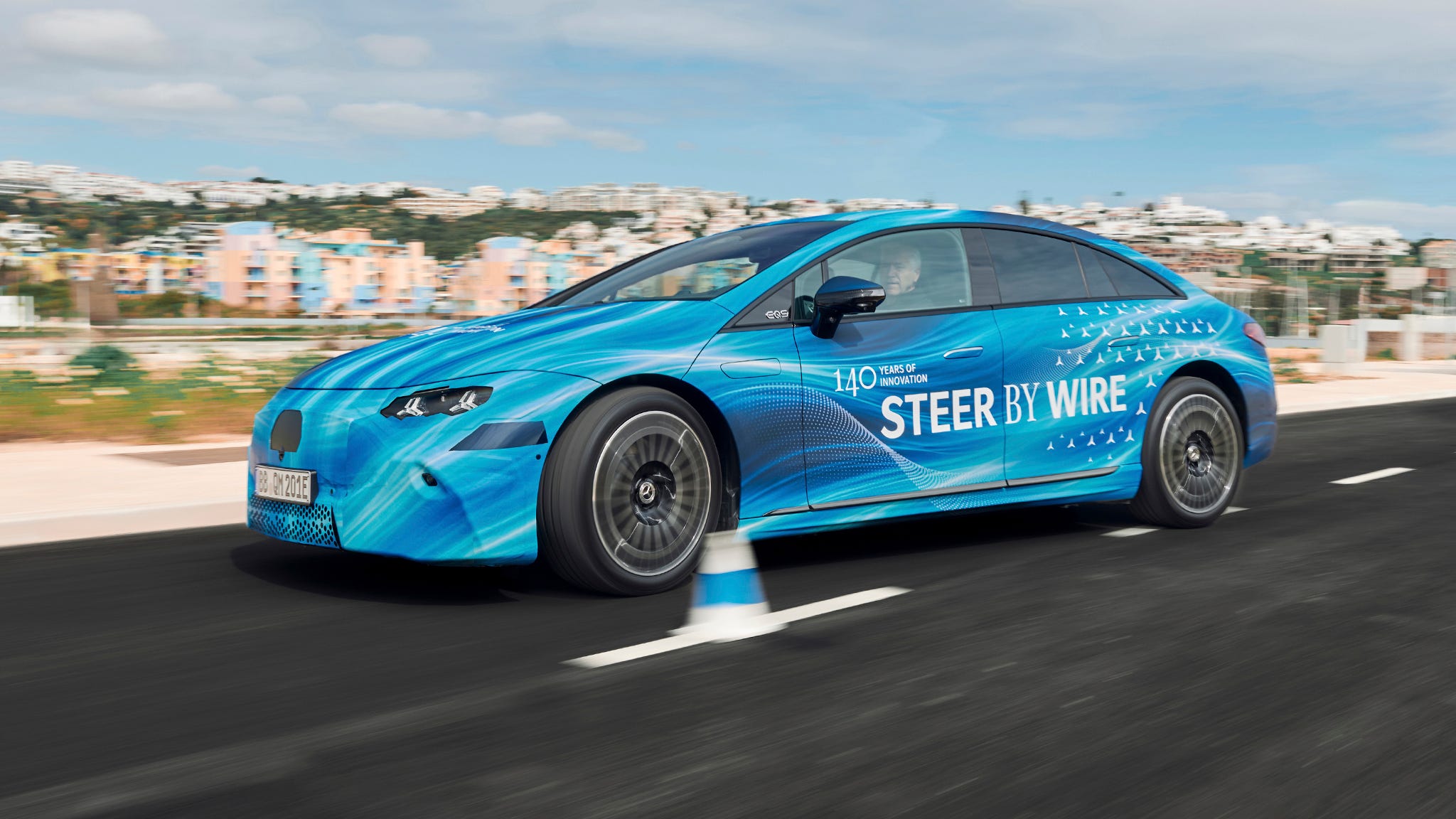


For 140 years, Mercedes-Benz has reminded us it invented the automobile. Now it’s the third company to ship a car without a steering column, trailing Tesla and Nio by roughly two years.
The 2027 EQS will be the first German production car with true steer-by-wire — no mechanical fallback shaft connecting the wheel in your hands to the rack turning the front tires. Mercedes announced the system on April 2, pitching it as a transformation of the driver-vehicle relationship. But calling yourself a pioneer when the Cybertruck has been steering by wire since late 2023 takes a certain kind of confidence only Stuttgart can muster.
The technology itself is genuinely sophisticated. Mercedes has built redundancy upon redundancy: dual DC-DC converters, dual power supplies, dual communication circuits, dual stator windings in both the input and actuation motors. A third set of steering angle sensors stands by as a tiebreaker if the two primary ones disagree — an aerospace-grade protocol shared with Nio but not confirmed by Tesla.
If one circuit fails, the EQS enters a limp-in mode capped at 54 mph. The maximum driving distance in that degraded state is specifically calibrated to let the car exit Norway’s 15.2-mile Laerdal Tunnel, the longest highway tunnel on Earth. If both circuits somehow die simultaneously — a scenario Mercedes describes as vanishingly unlikely — rear-wheel steering and selective braking take over to follow the driver’s intended path. That’s belt, suspenders, and a backup pair of pants.
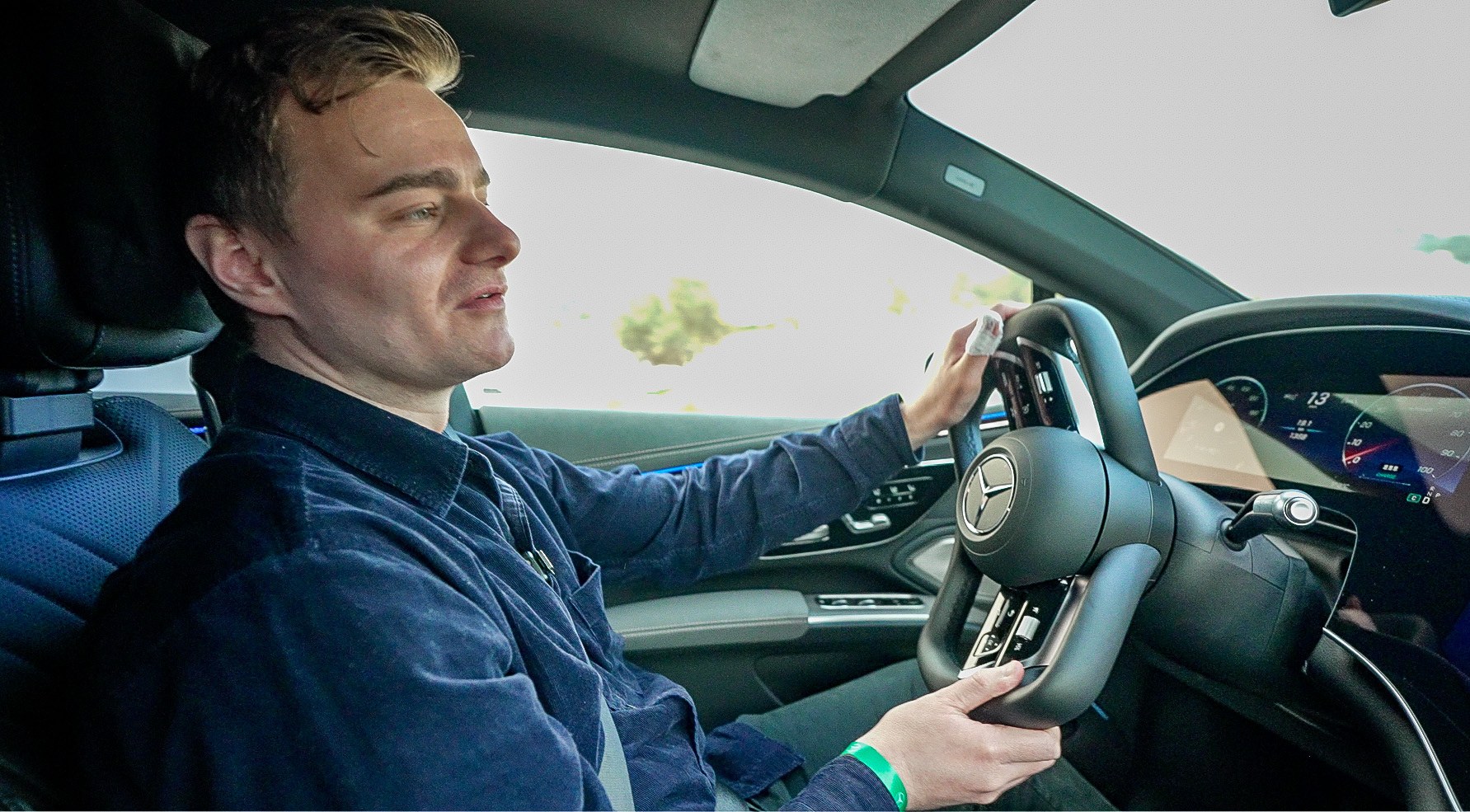
Lock-to-lock rotation drops to just 170 degrees. No more hand shuffling during parking maneuvers. The conventional round wheel gives way to a yoke-style device, letting Mercedes flatten the rim and open up cabin space.
A newly engineered airbag deploys using an internal support and folding architecture since there’s no longer a closed steering wheel rim to brace against. Mercedes says the system has logged over a million test kilometers across benches, tracks, and public roads.
MotorTrend’s early drive of a prototype alongside the Cybertruck and Nio ET9 reveals telling differences in philosophy. Mercedes and Nio both earned safety certification from their respective national regulators. Tesla has offered less transparency into its system’s inner workings.
When faults are detected, Mercedes and Nio force the car to stop relatively quickly. Tesla flashes warnings but lets the driver keep going with reduced functionality and no self-parking endgame.
The EQS will still come standard with a conventional electromechanical steering column. Steer-by-wire is optional, and U.S. availability comes later — Mercedes offered no timeline. Regulatory approval in America remains an open question, one Tesla answered first by simply shipping hardware and iterating.
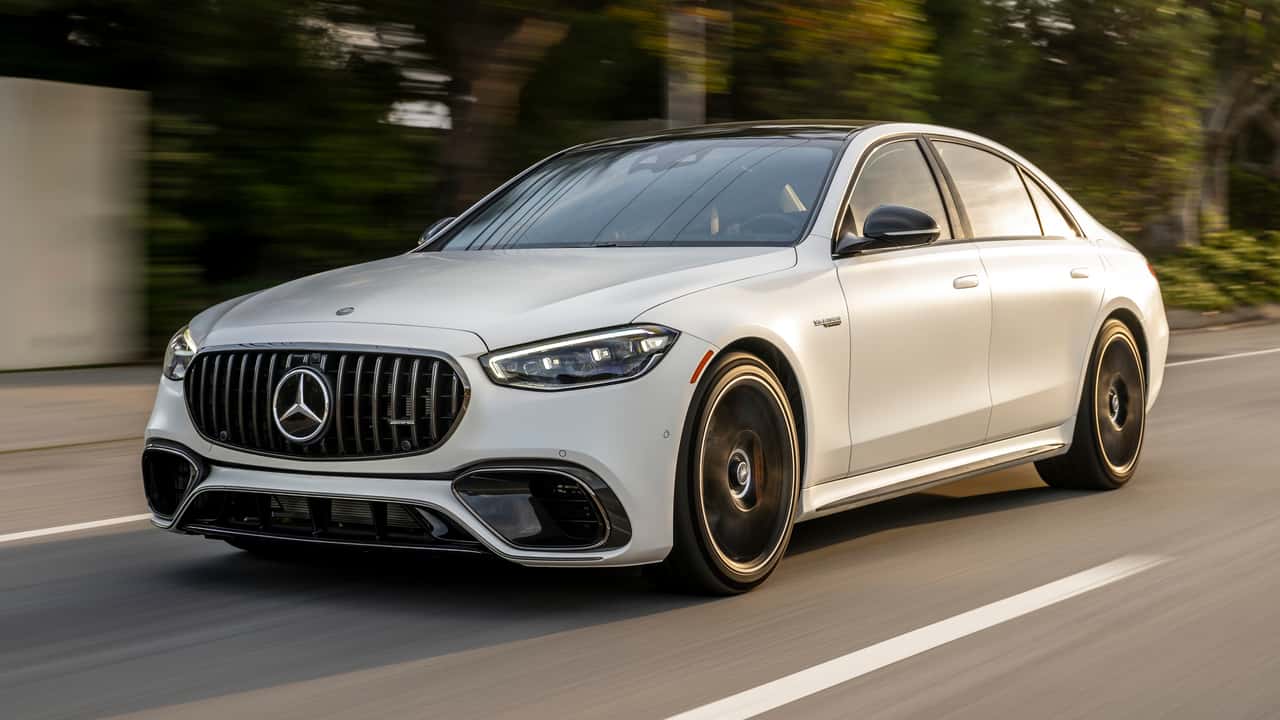
Mercedes frames the technology within its 140th anniversary celebration, a transcontinental publicity tour driving three new S-Class sedans to 140 locations across six continents through October 2026. The company is also rolling out the new CLA, GLC, and S-Class in what it calls the biggest product offensive in its history.
The steer-by-wire system on the EQS is real engineering, painstakingly validated, and likely the most safety-redundant version yet offered. Mercedes built the thing the way you’d expect Mercedes to build it — conservatively, methodically, and expensively.
But the narrative of German engineering leadership takes a hit when a Texas-built pickup truck and a Chinese sedan got there first. Being the most careful doesn’t always mean being the most impressive. Sometimes it just means being third.
Share this Story