
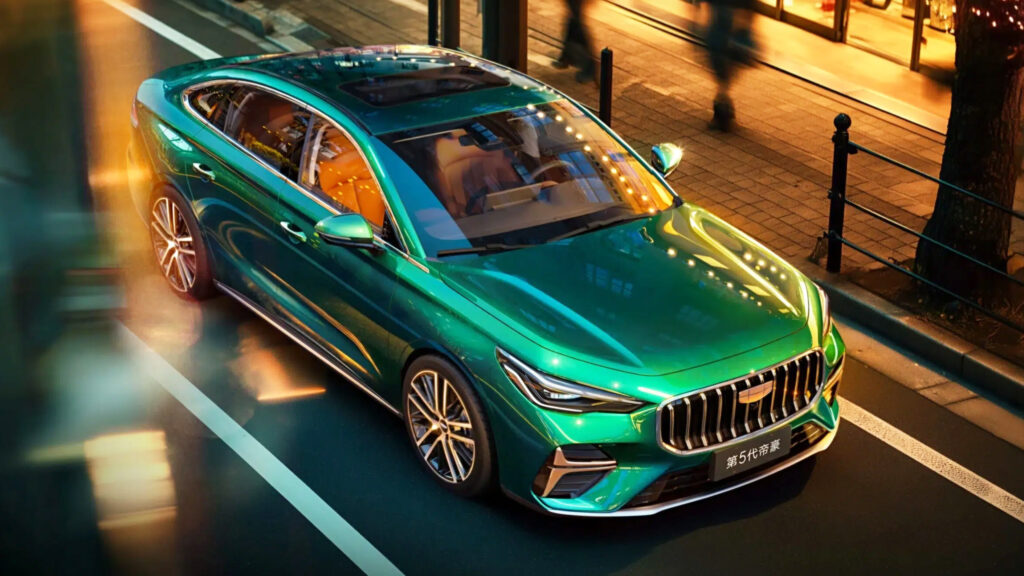


A Geely Emgrand sedan just circled a highway loop in Hunan, China, and sipped fuel at 2.22 liters per 100 kilometers. That figure earned the Chinese automaker a Guinness World Record for the lowest fuel consumption from a mass-produced hybrid vehicle. Toyota, the company that invented the modern hybrid 28 years ago, now has a target on its back from a competitor most Western buyers still barely recognize.
Geely unveiled its new-generation “i-HEV” closed-loop hybrid system at the 2026 Beijing motor show, and the architecture will look familiar to anyone who has studied a Toyota Hybrid Synergy Drive. A 1.5-liter petrol engine pairs with an electric motor for a combined system output of 230 kilowatts. The car can run on pure electric power up to 66 km/h before the combustion engine kicks in, and that engine claims a thermal efficiency of 48.1 percent.
For context, Toyota’s latest fifth-generation hybrid system — the one underpinning the current Prius — tops out around 41 percent thermal efficiency. A seven-point gap is not incremental. It is a generational leap, if the numbers hold up under independent scrutiny.
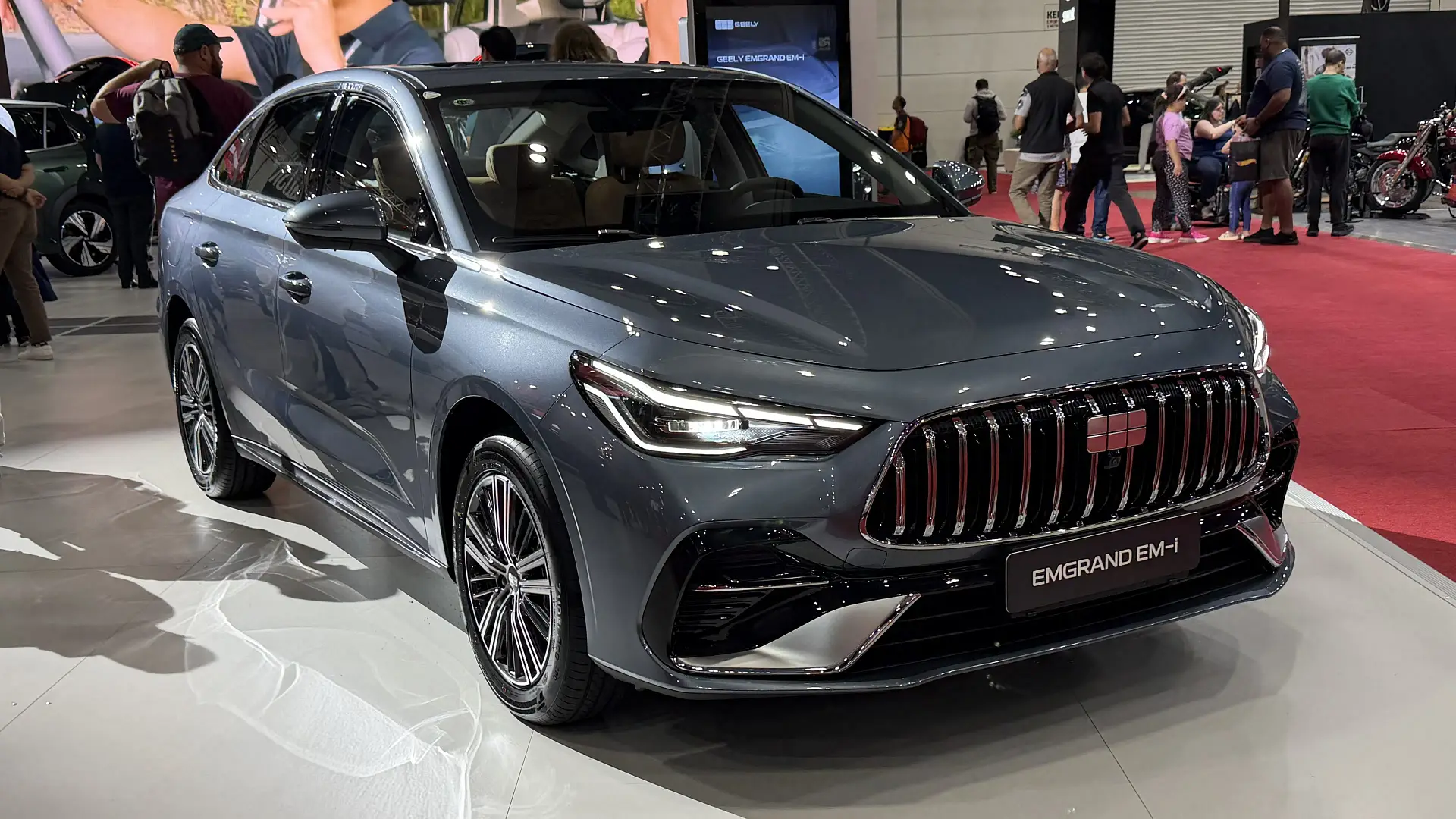
The i-HEV system is distinct from the plug-in hybrid and full-electric drivetrains Geely already sells across its portfolio. This is a self-charging hybrid, the kind that requires no plug, no charging infrastructure, and no range anxiety conversations. It is the exact segment Toyota has dominated globally, and the exact segment where consumer comfort is highest.
Geely is also moving to expand its presence in Australia, a market where Toyota’s hybrid lineup has become the default choice for fuel-conscious buyers. The Emgrand sedan carrying this new powertrain has not been confirmed for Australian sale, but Geely has publicly committed to broadening its model range Down Under. The timing is deliberate.
Australia’s regulatory environment is tightening too. New fuel efficiency standards are pushing automakers toward electrification, and affordable hybrids from Chinese brands could undercut the established players in exactly the segment regulators want to encourage. Toyota has enjoyed a near-monopoly on hybrid credibility for so long that a challenger from Hangzhou feels almost surreal.
But Geely is not some scrappy startup. It owns Volvo Cars, Polestar, Lotus, and a significant stake in Mercedes-Benz parent Daimler. Its willingness to invest in powertrain technology across every electrification pathway — BEV, PHEV, and now conventional hybrid — signals a company playing every card at once.
The real question is whether a Guinness World Record set under controlled conditions on a Chinese highway translates to real-world performance. Toyota’s hybrid systems have earned their reputation not through lab numbers but through millions of kilometers of mundane, unglamorous reliability. A 2.22L/100km figure on a flat highway loop is impressive theater, but repeating it in stop-and-go traffic, in Australian summer heat, over 200,000 kilometers is a different conversation entirely.
Still, the claim itself matters. A decade ago, no Chinese automaker would have dared position a hybrid system as superior to Toyota’s. Today, with 48.1 percent thermal efficiency and a world record on the books, nobody is laughing. They are measuring.
Geely has thrown down the gauntlet. Whether Toyota picks it up — or simply points to its decades of proven durability — will define the next chapter of the hybrid war.
Share this Story