
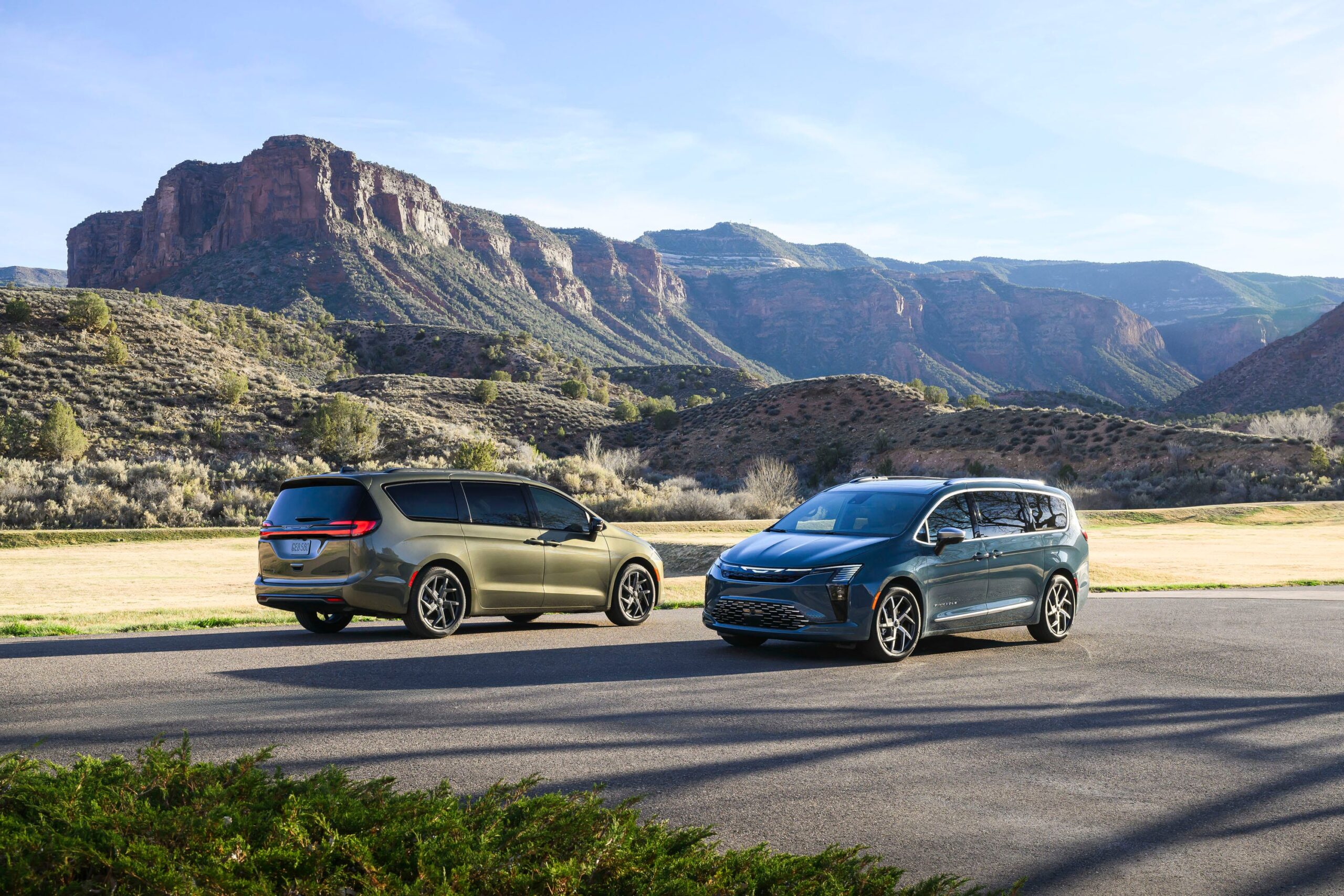


Two years of spy shots. Two years of camouflage-wrapped mules circling test tracks. Two years of anticipation for what Chrysler would do with its aging Pacifica minivan, a vehicle that first arrived for the 2017 model year and has been slowly fossilizing ever since.
The answer, it turns out, is almost nothing.
The 2027 Chrysler Pacifica refresh amounts to revised front-end styling and a new corporate badge. The body, the cabin, and the powertrain carry over untouched. Stellantis didn’t even update the in-car display graphics to reflect the new front end, so the surround-view camera and menu icons still show the old design.
But here’s where it gets genuinely bizarre.
The entry-level 2027 Pacifica LX, which carries forward the 2017-2020 exterior design much like the old Voyager did, wears the previous-generation Chrysler badge on its body. Step inside, though, and the steering wheel sports the brand-new badge. Two different logos on the same vehicle, sold as new in 2027.
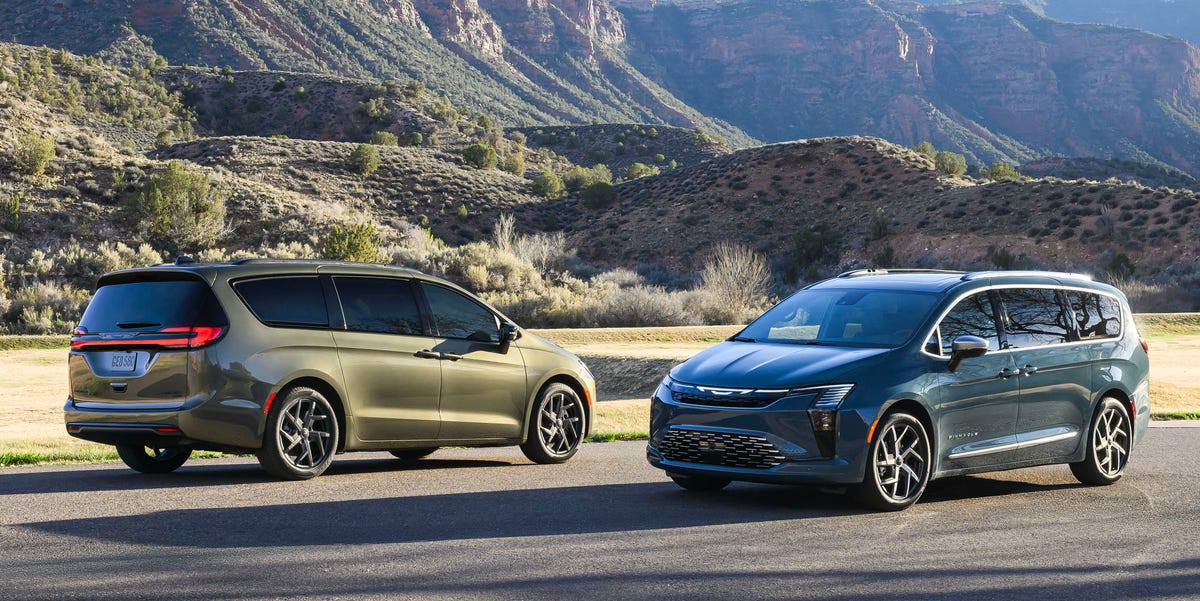
Car and Driver initially thought dealers were posting incorrect photos. They checked listing after listing, then built one on Chrysler’s own configurator. It confirmed the mismatch.
Stellantis apparently decided that producing a separate airbag cover for the LX’s steering wheel, or fitting the updated exterior badges to the carryover body, wasn’t worth the cost. This is a company that introduced its new winged emblem as “the blueprint for the next generation of Chrysler vehicles.” That blueprint apparently includes running two generations of brand identity on the cheapest trim of its only relevant product.
From a functional standpoint, no buyer is harmed. The minivan still carries families. The sliding doors still slide.
But the penny-pinching tells you exactly where the Pacifica sits on Stellantis’s priority list, which is to say, barely on it at all. Chrysler is a brand that sells exactly one vehicle in volume. The Pacifica is it, and this is the level of attention it receives after a decade on the market and two years of supposed development.
Selling older product alongside a refreshed version is standard industry practice. Toyota does it. Nissan does it. What those companies typically avoid is mixing corporate identity elements from different eras on the same car at the same time.
That suggests no one at Chrysler or Stellantis flagged this during the approval process. Or worse, someone flagged it and was overruled by the finance department.
The 2027 Pacifica reportedly costs only about $100 more than the outgoing model, which Stellantis will frame as value. It remains one of the better minivans you can buy, largely because the competition has thinned to almost nothing. The Honda Odyssey and Toyota Sienna are its only real rivals, and neither is exactly fresh either.
Still, the badge situation is a symptom. Chrysler once promised an electric future, a sedan, a crossover, a reinvention. What it delivered is a minivan with mismatched logos and a refresh so thin you need a magnifying glass to find it.
The Pacifica deserved better. Whether Chrysler itself has the resources or the corporate will to deliver better is a question that remains very much open.


Share this Story