
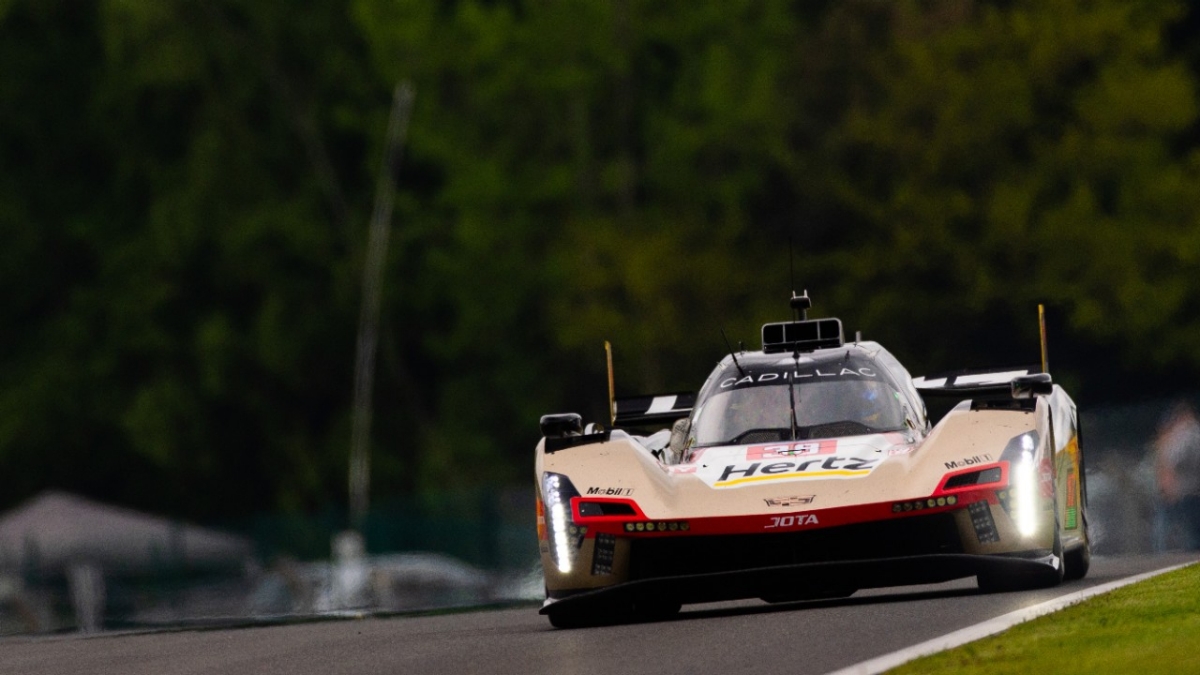


A year ago, Cadillac pulled off something no American manufacturer had done in the modern era of prototype racing. The V-Series.R Hypercars finished first and second at Interlagos, a clean 1-2 sweep in both qualifying and the race itself. It was the brand’s first-ever FIA World Endurance Championship victory, and it announced GM’s return to global endurance racing as something more than a vanity project.
Now Cadillac Hertz Team JOTA heads back to São Paulo for the Rolex 6 Hours on July 12th carrying a very different energy. The 2026 season has been fast but frustrating. At Le Mans, the Cadillacs led significant portions of the race only to finish just off the podium.
Speed without silverware is the story so far.
Earl Bamber didn’t sugarcoat it. We were very disappointed in the end result,” he said of Le Mans. “We’ll be heading to São Paulo looking for a bit of redemption.”
That word — redemption — tells you everything about where this program sits. The car is quick. The driver lineups are deep. The results haven’t materialized.
The No. 12 entry will run with Norman Nato and Will Stevens, minus Alex Lynn, who remains sidelined recovering from surgery. The No. 38 features Jack Aitken, Bamber, and the ever-reliable Sebastien Bourdais, a driver who has been winning races in various disciplines for two decades and knows exactly how thin the margins are at Interlagos.
Bourdais laid out the technical challenge with the kind of specificity that only comes from seat time. “Tire deg is pretty significant there, and the high altitude means the car slides more than at other circuits due to there being less downforce,” he said. “It’s always a bit of a challenge to get the right window.”
He also offered the most telling assessment of the season. “We have a competitive package again this year, with strong pace at all races. The results just haven’t gone our way yet.”
That gap between pace and results is the central tension of Cadillac’s 2026 WEC campaign. In endurance racing, raw speed is only one ingredient. Strategy, reliability, pit execution, and plain luck fill in the rest.
Cadillac has proven it can run at the front. Converting that into trophies against Toyota, Porsche, Ferrari, and the rest of the Hypercar field requires everything to click simultaneously across six or twenty-four hours.
Cadillac Racing Programme Manager Keely Bosn framed the São Paulo return around execution. The focus is now on executing a clean race at São Paulo and turning that potential into another winning result,” she said.
For GM, the stakes extend well beyond one race weekend. The company is simultaneously building a Cadillac Formula 1 team, running Chevrolet in IndyCar and NASCAR, and fielding Corvette customer cars in GT competition.
Cadillac’s WEC program is the tip of a motorsports spear designed to rebuild GM’s credibility as a performance brand. A win validates the investment. A string of near-misses raises uncomfortable questions about resource allocation and operational sharpness.
Interlagos is a short circuit — just 2.677 miles, 15 turns — that punishes mistakes and rewards bravery. The Cadillacs owned it last year. The question now is whether last year’s dominance was a peak or a baseline.
Practice opens Friday. Qualifying and Hyperpole follow Saturday. By Sunday afternoon in São Paulo, we’ll know whether Cadillac’s 2026 season has a signature moment or just another fast car with nothing to show for it.
Share this Story