
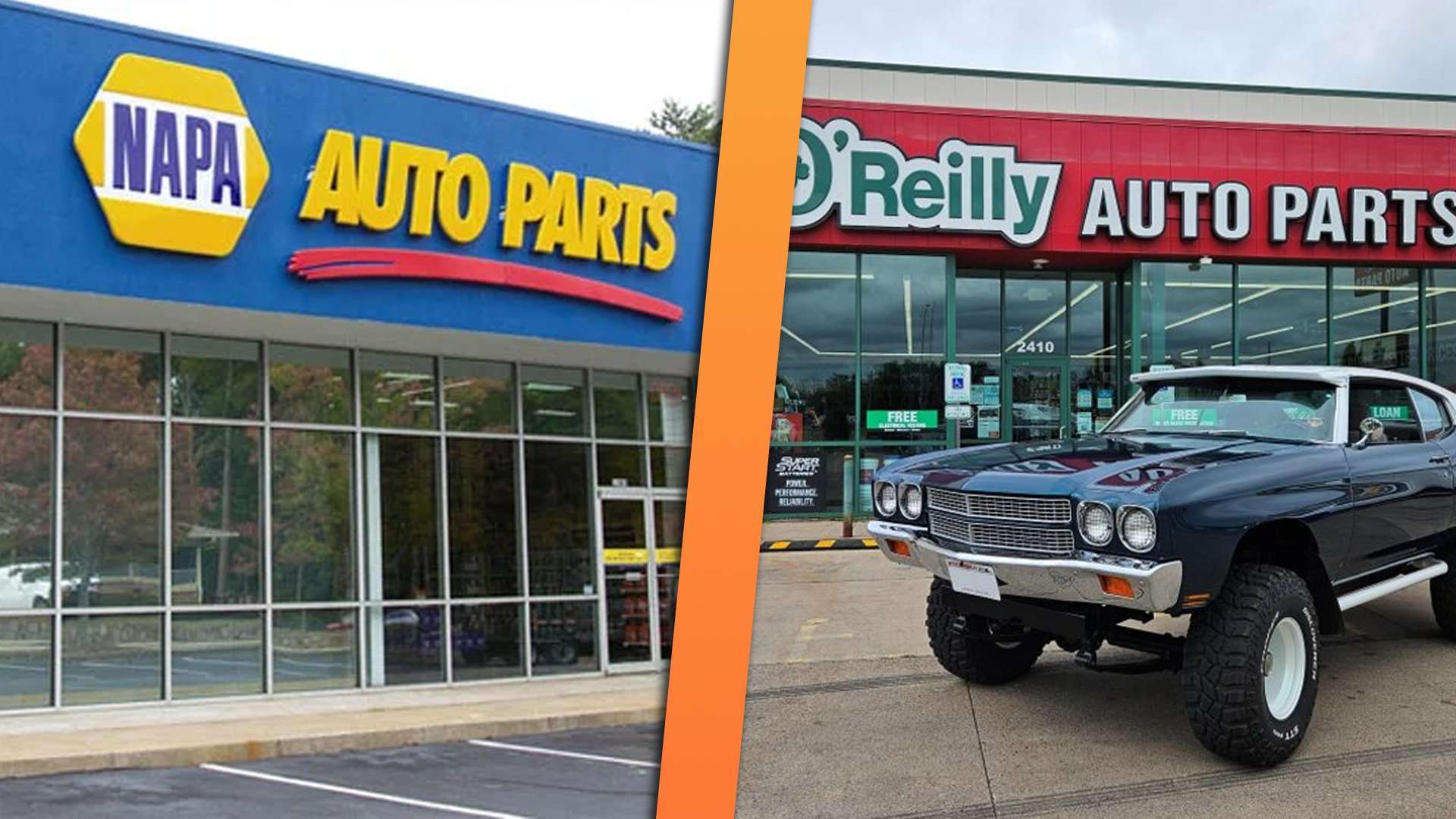


O’Reilly Automotive has made a roughly $10 billion bid to acquire NAPA’s auto parts operations. The move would collapse two of America’s four remaining major parts retailers into one and reshape how car owners buy everything from brake pads to antifreeze.
NAPA’s parent company, Genuine Parts Company, hadn’t put the brand up for sale. It had announced plans to spin NAPA off into an independent entity by 2027. O’Reilly is trying to buy its competitor before that separation even happens.
The tension here runs deeper than corporate maneuvering. These two companies operate on philosophically different models. O’Reilly is a corporate-owned machine with standardized stores, tight inventory systems, and a retail experience replicated with precision across every location.
NAPA runs a franchise hybrid where roughly 4,500 of its 6,000-plus stores are owned by independent operators. Small business people. The kind of shops where the guy behind the counter has been slinging ignition components since Reagan’s second term.
That distinction matters to anyone who has ever walked into a NAPA and gotten a 20-minute education on antifreeze chemistry from a lifer who actually cares. O’Reilly stores can be perfectly fine, but the experience is built by corporate playbook, not local knowledge. If O’Reilly swallows NAPA, the franchise model almost certainly dies with the acquisition, and with it, one of the last avenues for enthusiast-owned parts shops to operate under a nationally recognized banner.
GPC has been struggling. High supply chain costs and economic turbulence hammered its stock, leaving the entire conglomerate valued at roughly $16 billion. O’Reilly, by contrast, carries a market cap near $77 billion.
Wall Street noticed the asymmetry. GPC’s stock climbed on news of the bid. O’Reilly’s dipped slightly, reflecting the debt load and regulatory headaches a deal like this would bring.
Those regulatory headaches are real. Approximately 1,800 O’Reilly stores sit within one mile of a NAPA location. In about 600 of those markets, there is no AutoZone or Advance Auto Parts nearby. A merger in those areas creates an instant monopoly, exactly the kind of concentration the FTC exists to prevent.
Reports suggest the acquisition could close by late summer, though regulatory review and antitrust scrutiny make that timeline optimistic. The question of what happens to NAPA’s brand, its house labels like Carlyle tools and Echlin ignition parts, and its 4,500 franchise operators remains entirely unanswered.
O’Reilly also has international ambitions baked into this play. GPC’s automotive division spans more than 10,000 locations globally. Absorbing NAPA’s international footprint would shortcut years of organic expansion into a single transaction.
The consolidation math is simple. Four major auto parts retailers would become three, controlling virtually every brick-and-mortar parts counter in North America. The “I buy everything online anyway” crowd will shrug, but anyone who has ever needed a water pump on a Saturday afternoon in a town with one parts store knows that fewer competitors means higher prices and fewer options.
GPC’s independent NAPA franchisees, thousands of small business owners who built their livelihoods under that blue-and-yellow sign, are now watching a $77 billion corporation decide their future in a boardroom they will never enter. That is the auto parts business in 2025.


Share this Story